Nearshore virtual bookkeepers and CPAs are both financial professionals — but they solve completely different problems, and confusing the two is one of the most expensive mistakes a growing business can make. Understanding what is the difference between a virtual bookkeeper and a CPA in plain terms will save you money, reduce your tax risk, and let you build a leaner finance team that actually scales. Hiring a CPA to do your monthly reconciliations is like paying a surgeon to take your blood pressure. Hiring a bookkeeper to file your business taxes is a compliance disaster waiting to happen.
This guide breaks down the real difference between a virtual bookkeeper and a CPA — including which tasks belong to each role, what each one costs in 2026, and how outsourced bookkeeping fits into a modern finance stack.
What Does a Virtual Bookkeeper Actually Do in 2026?
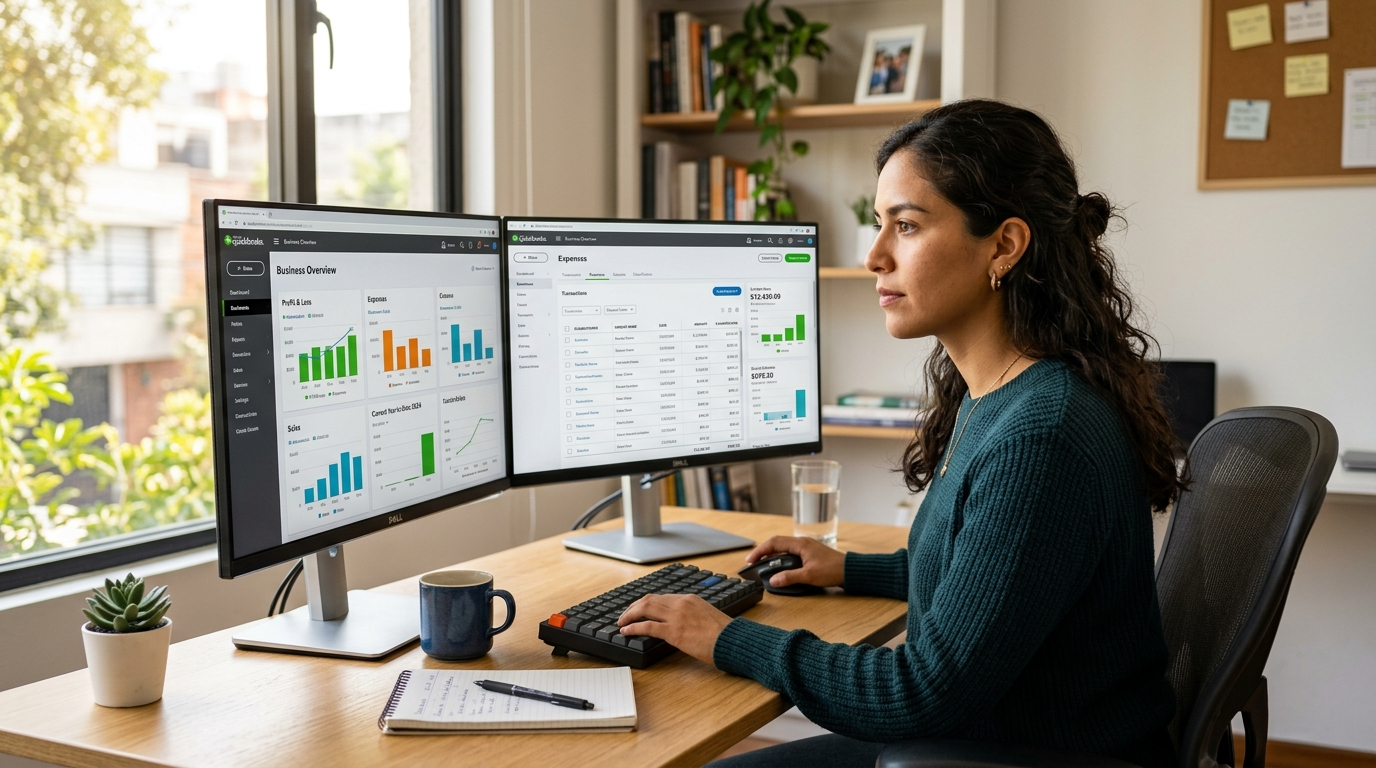
A virtual bookkeeper is a trained financial professional who records, organizes, and reconciles your business's financial transactions — entirely remotely. They categorize income and expenses, manage accounts payable and receivable, produce monthly profit-and-loss statements, reconcile bank and credit card accounts, and keep your books audit-ready throughout the year. They work inside your accounting software — QuickBooks, Xero, Wave, FreshBooks — not outside it.
The "virtual" part simply means they work remotely rather than sitting in your office. It says nothing about their skill level. A well-vetted virtual bookkeeper can handle everything a local bookkeeper does — often faster, because they specialize in a narrower stack of tools and spend 40 hours a week doing nothing but bookkeeping. According to the U.S. Bureau of Labor Statistics (2024), there are over 1.7 million bookkeeping and accounting clerk positions in the United States, making it one of the most widely filled finance roles in the economy.
Virtual bookkeepers are not licensed to prepare or sign tax returns, give tax advice, or represent your business before the IRS in an audit. Those activities require a licensed CPA or Enrolled Agent. That boundary is the single most important line to understand when asking what is the difference between a virtual bookkeeper and a CPA.

What Does a CPA Do — and What Are You Actually Paying For?
A Certified Public Accountant (CPA) is a state-licensed accounting professional who has passed the Uniform CPA Examination, met their state's education and experience requirements, and earned the legal right to sign tax returns, conduct audits, and represent clients before the IRS. That license is the entire point. You hire a CPA for the legal authority and technical judgment their credential confers — not for the hour-by-hour transaction work.
A CPA's highest-value work includes: preparing and filing business and personal tax returns, developing year-round tax strategy to minimize liability, advising on entity structure (LLC vs. S-corp vs. C-corp), representing you in an IRS audit or notice, providing assurance and audit services, and signing off on financial statements for lenders or investors. According to the AICPA (2024), the number of candidates sitting for the CPA exam has declined for four consecutive years, meaning licensed CPA capacity is tightening while demand grows — driving rates higher.
The problem most businesses run into is that they let their CPA — billing at $200–$400 per hour — spend significant time on bookkeeping tasks like categorizing transactions, chasing receipts, and reconciling accounts. That work doesn't require a license. It requires accuracy, consistency, and the right software. Offloading it to a skilled bookkeeper lets your CPA show up to tax season with clean books and spend their licensed hours on strategy, not data entry.
"The biggest mistake small business owners make is treating their CPA like a bookkeeper. A CPA's time is most valuable in planning and compliance — not in categorizing your Uber receipts." — Barry Melancon, President & CEO at AICPA (2023)
Virtual Bookkeeper vs CPA vs In-House Bookkeeper: 2026 Comparison
The table below maps the three most common finance-role options against the dimensions that matter most to a growing business: scope of work, licensing, typical cost, and best fit. This is the clearest way to see the difference between a virtual bookkeeper and a CPA — and why most businesses actually need both, just not one doing the other's job.
| Dimension | Virtual Bookkeeper (Nearshore) | In-House Bookkeeper | CPA / Accounting Firm |
|---|---|---|---|
| Primary work | Transaction recording, reconciliation, AP/AR, reporting | Same as virtual; also handles physical mail/checks | Tax prep, strategy, audit, compliance, entity advice |
| Licensed? | No license required (not legally needed for bookkeeping) | No license required | Yes — state-licensed CPA or EA required |
| Can file taxes? | No | No | Yes |
| Can represent in IRS audit? | No | No | Yes |
| Typical 2026 cost | $2,500/mo flat (Rose — full-time, all-in) | $45,000–$60,000/yr salary + benefits + overhead | $150–$400/hr or $3,000–$15,000/yr for small biz |
| Software proficiency | QuickBooks, Xero, Wave, FreshBooks — role-specific AI copilot included | Varies; training required | Reviews output; rarely works in your software daily |
| Availability | 40 hrs/week, US business hours, dedicated | 40 hrs/week, on-site | Project-based; heavy during tax season |
| Best for | Ongoing daily/weekly bookkeeping at scale | Businesses needing physical presence | Annual tax strategy, compliance, audits |
How a Nearshore Virtual Bookkeeper Hands Off Cleanly to Your CPA in 2026
The most cost-efficient finance setup for a small or mid-sized business in 2026 is a two-layer model: a dedicated virtual bookkeeper handling the ongoing operational work, and a CPA engaged quarterly or annually for strategy and compliance. The key is making sure those two layers communicate cleanly — and that your books are in the right shape when your CPA needs them.
A well-run nearshore bookkeeper closes the books monthly, produces reconciled statements, flags anomalies, and delivers a clean package to your CPA before any filing deadline. Your CPA doesn't have to dig through a year of uncategorized transactions — they start with verified data and spend their licensed hours on planning, not cleanup. That handoff alone typically saves businesses $2,000–$5,000 in annual CPA fees, according to benchmarks cited in Intuit's QuickBooks resource center (2024).
The software layer matters here too. Every bookkeeper placed through Rose ships with a role-specific AI copilot trained on their accounting software — whether that's QuickBooks, Xero, or a property management platform like AppFolio or Buildium. That means they're not learning your tools from scratch; they arrive ready to work inside the same systems your CPA pulls reports from. If your current setup is QuickBooks-based, the Rose model for QuickBooks virtual bookkeeper services is worth a direct look at how the integration works.
Your CPA's hourly rate is a sunk cost every time they touch work your bookkeeper should be doing. The two-layer model — dedicated virtual bookkeeper for daily ops, CPA for annual strategy — is consistently the highest-ROI finance structure for businesses under $10M in revenue.

How to Decide Which Role You Need Right Now
The honest answer is: you probably need both, but you might only be using one. Here's how to diagnose where you actually stand and resolve the question of what is the difference between a virtual bookkeeper and a CPA in your specific situation.
Audit what your CPA is billing you for
Pull your last three CPA invoices and look at line items. If you see "transaction categorization," "bank reconciliation," or "receipt organization," those are bookkeeping tasks — and you're paying CPA rates for them.
Assess your books' current state
Are your accounts reconciled monthly? Is your P&L accurate and current? If the answer is no — or "I'm not sure" — you need a bookkeeper first. A CPA can't optimize what they can't read.
Identify your compliance exposure
Do you have complex entity structures, multi-state nexus, payroll tax obligations, or investor reporting requirements? That's CPA territory. If you're a single-entity business with straightforward revenue, a bookkeeper plus tax software (with CPA review) often covers you.
Price the gap honestly
A full-time nearshore virtual bookkeeper through Rose costs $2,500/month — flat, all-in, with a free replacement if they're not a fit and no long-term contract. Compare that against what you're paying your CPA for work that doesn't require their license. The math usually resolves itself quickly.
What a Virtual Bookkeeper Cannot Do in 2026 — and Why That's Fine
Being clear about the limits of a virtual bookkeeper is just as important as understanding their strengths. When people ask what is the difference between a virtual bookkeeper and a CPA, the licensing boundary is the sharpest answer. A bookkeeper — virtual or otherwise — cannot legally prepare or sign a tax return, cannot represent you in an IRS proceeding, cannot perform a financial audit, and cannot give licensed tax or legal advice. These aren't gaps to paper over; they're the reason CPAs exist and why their license commands a premium.
What a great virtual bookkeeper can do is eliminate the administrative drag that makes your CPA's job harder and more expensive. According to SHRM (2024), remote financial roles have a measurably lower turnover rate than on-site equivalents when structured with clear role scope — which is exactly why the bookkeeper/CPA split works so well in a remote-first model. You're not asking one person to do two jobs; you're giving each professional exactly the work they were trained for.
For businesses in the property management space, the virtual bookkeeper role is particularly high-leverage. Platforms like AppFolio and Buildium generate significant transaction volume — maintenance charges, owner disbursements, tenant payments, vendor invoices — that needs to be categorized and reconciled every single month. Rose's property management virtual staff are trained on exactly these platforms, and the bookkeeping output feeds directly into the clean reports your CPA needs at year-end. If Xero is your platform of choice, the workflow for a Xero-based virtual bookkeeper follows the same clean-handoff model.
Virtual Bookkeeper: Best For
- Daily and weekly transaction categorization
- Monthly bank and credit card reconciliation
- Accounts payable and receivable management
- Generating P&L, balance sheet, and cash flow reports
- Keeping books audit-ready year-round
- Reducing CPA prep time (and your CPA bill)
CPA: Best For
- Preparing and filing business and personal tax returns
- Year-round tax minimization strategy
- Entity structure and S-corp election advice
- IRS audit representation and notice response
- Financial statement audits for lenders or investors
- Multi-state nexus and complex compliance issues
According to IRS guidance on tax professionals (2024), only CPAs, attorneys, and Enrolled Agents are authorized to represent taxpayers before all administrative levels of the IRS — a clear statutory boundary that defines exactly where a bookkeeper's scope ends and a licensed professional's begins.
If you're ready to stop overpaying your CPA for bookkeeping work and want a dedicated, software-trained nearshore bookkeeper in place within the week, the fastest next step is to get started with Rose — $2,500/month flat, no long-term contract, with a free replacement guarantee if the placement isn't right.