
Nearshore software development has crossed a tipping point. When US and Canadian companies began looking seriously at Mexico for technical talent, they expected a cost play — what they found was a timezone-aligned, English-fluent engineering workforce that outperforms offshore alternatives on nearly every operational metric that actually matters. If you're trying to hire a Mexican software developer in 2026, this guide covers the talent landscape, real cost benchmarks, what to look for in a vetting process, and how to staff up without the legal and HR headaches that come with direct cross-border hiring. Unlike offshore destinations in Asia, nearshore Latin American talent shares your working hours, your cultural references, and increasingly, your technology stack.
Mexico's developer population has grown by roughly 11% year-over-year since 2020, driven by a surge in STEM university enrollment and a wave of US tech companies establishing nearshore engineering hubs in Guadalajara, Monterrey, and Mexico City. That growth isn't slowing — according to IDC Research (2024), Latin America as a region is projected to add 1.2 million net-new tech workers by 2027, with Mexico capturing the largest share. For US companies, that means the supply-demand curve is actually moving in your favor right now. The window to hire senior Mexican engineers before demand saturates is narrower than it looks from the outside.
This guide is structured for operators who've already decided nearshore Latin America is the right direction and want the tactical details: where Mexican developers are strongest, how rates actually compare when you account for hidden costs, and how a managed staffing firm removes the cross-border compliance friction that makes direct hiring painful.
Why Mexico Has Become a Top 2026 Destination for Technical Hiring
Three structural factors separate Mexico from every other nearshore or offshore option. First, the timezone overlap: Mexican developers in any major city share 6–8 working hours per day with US teams in every timezone from EST to PST. That real-time collaboration eliminates the asynchronous lag that kills velocity on offshore projects routed through India or the Philippines. Second, cultural alignment: proximity to the US market — both geographically and through decades of cross-border commerce — means Mexican engineers understand US product expectations, Agile workflows, and client communication norms without extensive onboarding. Third, English depth: the top tier of Mexican technical talent consistently tests at B2–C1 English proficiency (CEFR), functional for code reviews, daily standups, and client-facing work.
These aren't soft advantages. According to SHRM's 2024 State of the Workforce Report, companies that experience timezone misalignment with remote engineering teams report 34% longer sprint cycle times versus co-timezone teams. That's not a rounding error — it's roughly one extra business day per two-week sprint, compounded across every quarter. At 26 sprints per year, you're losing the equivalent of more than three full working weeks annually to coordination overhead alone.

If you want to go deeper on specific stack options, Rose has detailed guides on how to hire a nearshore Node.js developer and how to hire a nearshore Python developer — both cover the vetting criteria and typical rate bands in detail. Mexico's talent pool is well-represented in both stacks, and the guides include stack-specific interview frameworks you can use whether you hire through Rose or directly.
How Mexican Developer Rates Compare in 2026: Nearshore vs Offshore vs Onshore
Rate comparisons for software developers are often misleading because they strip out the hidden costs: recruiting time, benefits overhead, turnover expense, and the productivity tax of timezone friction. The table below uses fully-loaded cost estimates — not headline hourly rates — so you're comparing equivalent units of output, not nominal line items.
| Hiring Model | Effective Monthly Cost (Mid-Level) | US Timezone Overlap | English Fluency (Avg) | Typical Ramp Time |
|---|---|---|---|---|
| US Onshore (FTE) | $12,000–$18,000 | Full | Native | 2–4 weeks |
| Nearshore Mexico (via Rose) | $2,500 flat | 6–8 hrs/day | 8/10+ (vetted) | 3–7 days |
| Nearshore Argentina (via Rose) | $2,500 flat | 4–6 hrs/day | 8/10+ (vetted) | 3–7 days |
| Offshore (Asia-based) | $1,800–$3,500 (variable) | 0–3 hrs/day | 6–7/10 (variable) | 2–5 weeks |
The offshore row deserves a closer look. The headline rate looks competitive until you account for what McKinsey Digital (2023) calls "coordination drag" — the 20–30% productivity loss that occurs when distributed engineering teams operate without meaningful real-time overlap. When you adjust for that drag, the effective cost-per-output of an offshore developer frequently exceeds the nearshore Latin American equivalent, even at a nominally lower monthly rate. The math is straightforward: a developer billing $2,000/month but operating at 70% productivity due to async delays costs more per shipped feature than a $2,500/month developer operating at full velocity in your timezone.
It's also worth noting that the nearshore Argentina market offers a comparable talent profile to Mexico. If you're evaluating Latin American options broadly, our guide to hiring an Argentine software developer covers how the two markets differ on rate, stack specialization, and English depth. The short version: Mexico has the larger raw pool and better EST overlap; Argentina has a strong fintech and enterprise software pedigree. Both are available through Rose at the same flat monthly rate.
What Skills to Expect When You Hire a Mexican Software Developer in 2026
Mexico's developer workforce is not homogenous — different cities have different stack concentrations. Guadalajara (Mexico's "Silicon Valley") has historically produced strong Java and enterprise software engineers, partly because of long-standing IBM and Intel presences there. Monterrey leans toward fintech, cloud infrastructure, and DevOps talent, shaped by proximity to the US border and a large financial services sector. Mexico City has the broadest mix: full-stack JavaScript, Python, mobile (React Native and Flutter), and an increasingly strong AI/ML cohort coming out of UNAM and Tec de Monterrey.
"Mexico is producing engineers who are genuinely competitive at the global level — not just on cost, but on the quality of output and the ability to work inside US product culture." — Jordi Gili, CEO at Itnig (Barcelona/LATAM tech ecosystem analyst) (2024)
According to Stack Overflow's 2024 Developer Survey, Mexican developers rank JavaScript, Python, and SQL as their three most-used languages — a profile that maps almost exactly to the needs of US SaaS, e-commerce, and data-driven companies. TypeScript adoption among Mexican developers grew 22 percentage points between 2021 and 2024, signaling a maturing frontend ecosystem that's keeping pace with US engineering standards. For teams running modern React or Next.js frontends, that maturity matters at the code review level, not just the résumé level.
The most underrated advantage of hiring a Mexican software developer isn't the rate — it's that they already know what US product teams expect. Agile, GitHub-first workflows, English standups, and US-style sprint planning are standard operating procedure for senior Mexican engineers, not skills they need to acquire after you hire them. That eliminates weeks of soft-skills onboarding that offshore hires typically require.
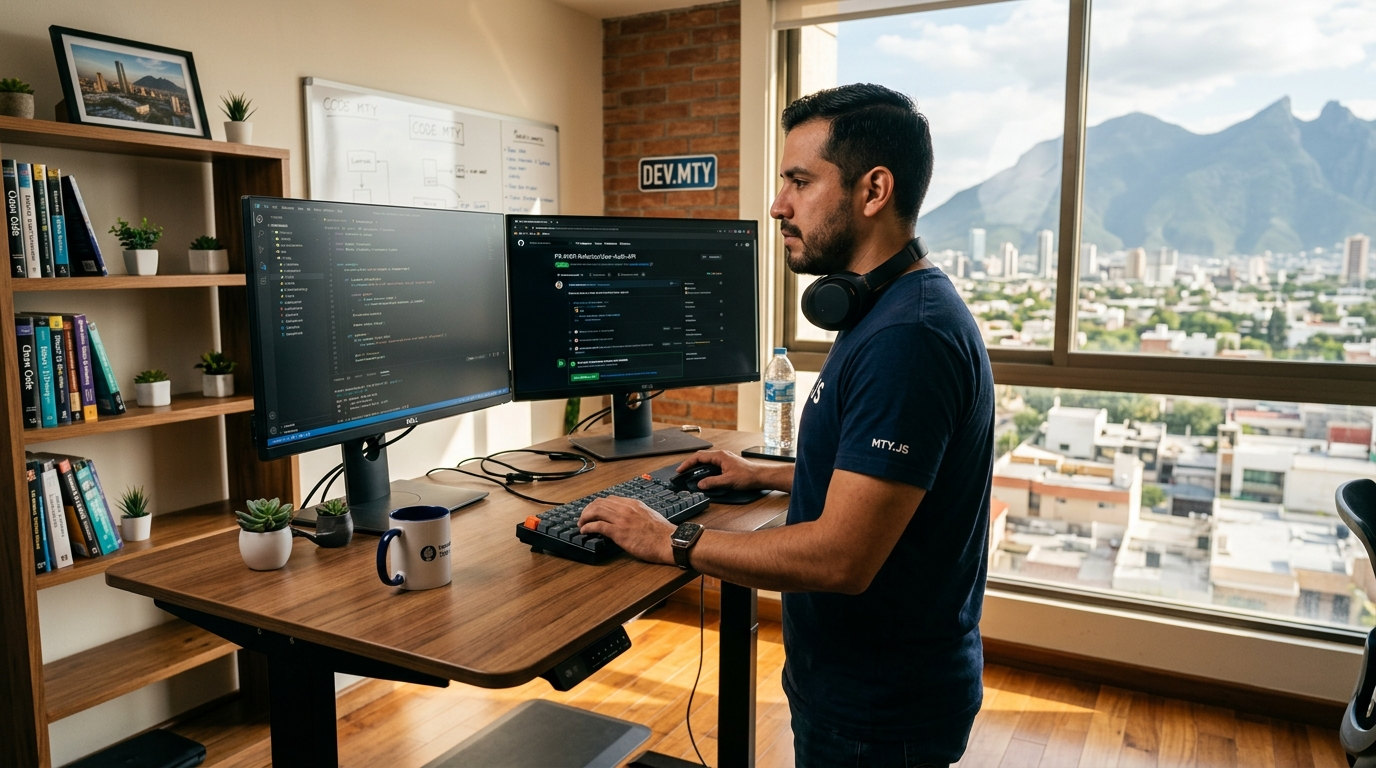
Rose equips every developer placement with a role-specific AI copilot trained on the software stack your team uses — whether that's a specific cloud environment, project management tooling, or codebase convention. That AI layer isn't a chatbot bolted on after placement; it's configured during onboarding to reflect your team's actual tools, reducing the time between day one and first meaningful commit. According to Gallup's State of the Global Workplace Report (2024), employees who feel equipped with the right tools on day one are 43% more likely to still be engaged at the 90-day mark — which directly affects your ramp ROI.
How Rose's 2026 Nearshore Hiring Process Works: From Brief to Day One
Understanding the mechanics of nearshore staffing removes a lot of the perceived risk. Rose Talent Solutions is not a freelance marketplace — it's a managed staffing firm that sources exclusively from Latin America. That means you're not browsing profiles, negotiating rates, or managing contractor compliance yourself. Every team member is based in Latin America, works US business hours, and is employed and managed through Rose's HR infrastructure. Here's how the process runs from the moment you submit a role brief:
Role Brief & Intake Call
You describe the stack, seniority level, working hours, and team structure. Rose's Latin America-based recruiting team uses that brief to filter an existing vetted pipeline — no cold sourcing required.
Vetting & Technical Screen
Candidates are screened on English proficiency (8/10+ floor), technical assessment for the relevant stack, and a cultural-fit interview. You see only finalists who clear every bar.
Your Interview
You interview the shortlisted candidate(s) and make the call. No obligation to proceed if the fit isn't right — and Rose will re-run the process at no additional cost if needed.
Placement & AI Copilot Activation
Once you confirm, Rose handles payroll, HR, and onboards the developer with a role-specific AI copilot tuned to your tools and workflow. Most developers are live within 7 days of intake.
Ongoing Management & Replacement Guarantee
Rose manages HR and performance oversight on an ongoing basis. If the placement isn't a fit at any point, Rose replaces the team member at no additional cost — no long-term contract required.
The $2,500/month flat rate covers everything in that process: recruiting, vetting, payroll, HR, and ongoing management. There's no markup on hours, no separate recruiting fee, and no annual commitment. The engagement runs month-to-month — cancel with 30 days written notice. If you want to see how this same model applies to building a full engineering unit rather than a single hire, the guide to building a dedicated nearshore developer team walks through the team-scaling version of this process, including how to sequence hires by role and seniority level.
Rose's model also extends beyond software development. For operators who need platform-specific technical staff — roles tied to property management software or finance systems — Rose covers property management tech staffing and nearshore bookkeeping and accounting roles, both using the same AI-copilot activation model to compress ramp time on specialized software stacks like AppFolio, Buildium, and QuickBooks.
Nearshore vs Offshore for Technical Roles in 2026: The Honest Tradeoffs
There are legitimate reasons companies still consider Asia-based offshore arrangements for certain technical workloads — primarily pure cost at very high volume, or highly commoditized tasks where timezone gaps matter less. The comparison below is written honestly for US companies evaluating where to place a mid-level software developer role, not for edge cases where offshore is genuinely the right call.
Nearshore Mexico — Pros
- Real-time overlap with all US timezones (6–8 hrs/day)
- Cultural alignment reduces sprint miscommunication and backlog churn
- No ITAR or export-control complications for most tech work
- Same-day issue resolution without async batching delays
- English fluency sufficient for client-facing and PM-adjacent roles
- Latin American labor market; Rose handles all local HR and compliance
Asia-Based Offshore — Tradeoffs
- Nominal rates slightly lower at the low end of the volume market
- 0–3 hrs US timezone overlap creates async-only workflows
- Higher coordination overhead for US Agile teams running tight sprints
- English depth more variable outside the senior tier
- IP jurisdiction considerations for certain product and data categories
The productivity data supports the nearshore case clearly. According to McKinsey's research on distributed workforce costs (2023), engineering teams without meaningful real-time overlap with their primary collaborators take 35% longer to resolve blocking issues — the kind of blockers that sit in a Slack thread overnight when your offshore team clocks out at 2pm EST. Over a full year of product development, that latency materializes as missed release windows, not just slower standups.
According to the US Bureau of Labor Statistics (2024), software developer demand in the United States is projected to grow 25% through 2032 — far outpacing supply. That gap is precisely why nearshore Latin American talent has moved from "interesting option" to "primary strategy" for hundreds of US product companies in the past two years. The talent exists, the timezone works, and the infrastructure to hire without cross-border legal exposure now exists through managed staffing models.
The decision to hire nearshore rather than offshore isn't primarily a cost decision in 2026 — it's a velocity decision. Companies that can ship faster, iterate tighter, and resolve blockers in real time compound those advantages into meaningful market position over 12–18 months. That's the actual ROI argument for Mexico, and it holds regardless of whether you're building a two-person feature team or a 20-person engineering org.
If you're ready to stop evaluating and start building, submit a role brief at Rose — most placements are live within 7 days, the rate is flat at $2,500/month, and if the placement isn't a fit, Rose replaces the team member at no additional cost.