
Nearshore software hiring from Argentina has quietly become one of the sharpest moves a US tech company or scaling startup can make in 2026. Argentina produces more than 115,000 IT graduates annually, according to Argentina's Ministry of Economy – Knowledge Economy Secretariat (2024), and those graduates are working your time zone, speaking fluent English, and clearing technical screens that would satisfy a Silicon Valley engineering manager. If you've been burned by overnight-batch communication with offshore teams in Asia, or by the six-figure salary cost of a domestic hire, read this before you make your next move.
Why Argentine Developers Are Dominating Nearshore Hiring in 2026
Argentina's developer talent pool didn't happen by accident. The country has historically invested heavily in public university engineering programs — the Universidad de Buenos Aires (UBA) and Universidad Nacional de Córdoba routinely rank among Latin America's top five technical institutions, according to QS World University Rankings Latin America (2024). Combined with a cultural affinity for US tech culture — English-language content, US streaming platforms, and close business ties — Argentine developers tend to assimilate into distributed US teams faster than counterparts from non-Spanish-speaking nearshore markets.
The time zone math is also hard to argue with. Argentina runs on UTC-3, which means a developer in Buenos Aires or Córdoba is working real-time alongside your team in New York (UTC-5 in winter), Chicago, or even Denver — with full-day overlap rather than the 2–4 hour slivers you get with offshore partners in Southeast Asia or South Asia. When you're doing agile standups, PR reviews, and Slack-based collaboration, real-time overlap isn't a nice-to-have — it's the difference between a two-day bug fix and a two-hour one.
If you want to understand the broader staffing landscape before committing to a single hire, our overview of the best nearshore software development companies in 2026 lays out what separates the credible providers from the body shops.
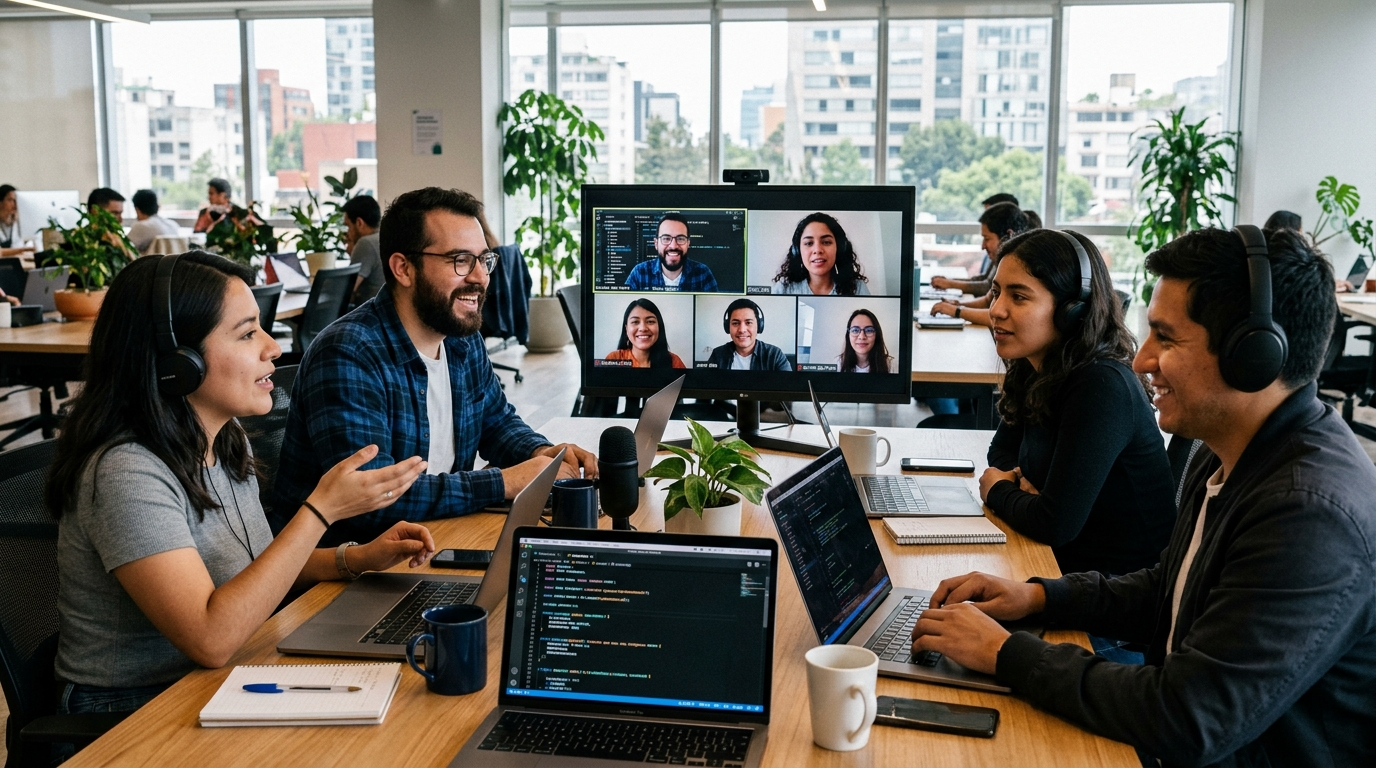
How Argentine Developer Costs Compare in 2026: Nearshore vs. Onshore vs. Offshore
Cost is where the conversation usually starts — but the smarter framing is total cost of engagement, not just hourly rate. A mid-level software engineer in the US commands a median base salary of around $120,000/year before benefits, payroll tax, recruiting fees, and equity, according to the U.S. Bureau of Labor Statistics (2024). Offshore agencies in Southeast Asia can undercut that dramatically on paper — but hidden costs pile up fast when you factor in timezone friction, rework cycles, and turnover.
Argentine nearshore developers sit in a compelling middle band: substantially below US market rates, without the operational overhead of a 10–12 hour timezone gap. Through a managed staffing model like Rose Talent Solutions, you get a full-time (40 hrs/week) vetted developer for a flat $2,500/month — all-in, covering recruiting, vetting, payroll, HR, and ongoing management. No surprise invoices, no offshore communication blackouts.
| Hiring Model | Typical Monthly Cost | Timezone Overlap (US ET) | English Fluency | Avg. Ramp Time |
|---|---|---|---|---|
| US Onshore (FTE) | $8,500–$12,000+ | Full | Native | 4–6 weeks |
| Nearshore Argentine (Rose) | $2,500 flat | Full / Near-full | 8/10+ fluency | 5–10 days |
| Offshore South/Southeast Asia | $1,200–$2,200 | 2–4 hrs at best | Variable (4–7/10) | 3–5 weeks |
| Freelance Marketplace (e.g., Upwork) | $2,000–$5,000+ (variable) | Variable | Variable | Unpredictable |
What Skills Can You Realistically Hire in Argentina in 2026?
Argentina's developer talent base has matured well beyond basic web development. In 2026, you can source strong candidates across the full stack: Python, JavaScript (React, Node.js), Java, Go, Ruby on Rails, and DevOps tooling (Docker, Kubernetes, AWS, GCP). According to Stack Overflow's 2024 Developer Survey, Argentina ranks among the top five non-US countries by developer respondents, which signals a mature and globally engaged technical community rather than a nascent outsourcing market.
If your specific need is Python — for data pipelines, ML model deployment, or backend API work — our dedicated guide on how to hire a nearshore Python developer walks through the vetting criteria and interview questions that separate strong candidates from resume-padders in that niche.
The biggest mistake US companies make when hiring Argentine developers isn't the vetting — it's the onboarding. Argentine devs are technically strong but perform best when integrated into your existing workflow from day one. Managed nearshore providers handle this transition; ad-hoc freelance hires rarely do.
Beyond individual contributors, many scaling companies are now standing up entire nearshore pods — a tech lead plus two to three developers — rather than single hires. If that's your trajectory, the mechanics of building a dedicated nearshore developer team are meaningfully different from placing one role, and worth understanding before you scope the engagement.

What Is a Nearshore Software Developer? (Definition)
A nearshore software developer is a full-time technical professional based in a geographically proximate country — typically in Latin America for US and Canadian companies — who works your business hours and operates within 1–3 time zones of your team. Unlike offshore outsourcing (which prioritizes lowest cost, often at the expense of communication quality and timezone overlap), nearshore hiring prioritizes operational integration: real-time collaboration, shared cultural context, and legal simplicity for North American employers.
The distinction matters because nearshore developers are teammates, not vendors. They attend your standups, commit to your sprints, and are accountable to your engineering leads — not to a project manager halfway around the world batching tickets at 2 a.m. your time.
How Rose Talent Solutions Places Argentine Developers in 2026
Rose Talent Solutions is a managed nearshore staffing agency that sources, vets, and manages full-time developers from Latin America — including Argentina — for US, Canadian, and UK businesses. Every placement is full-time and dedicated (40 hours/week), covered by a single flat rate of $2,500/month with no long-term contract. If the developer isn't a fit, Rose replaces them at no additional cost. That's the complete risk picture — no complicated out clauses, no minimum-term penalties.
One capability that sets Rose apart from simple job boards or staffing agencies: every team member is paired with a role-specific AI copilot trained on the tools your team actually uses — whether that's GitHub workflows, Jira configurations, or specific cloud platforms. This cuts onboarding time significantly, because the developer arrives already oriented to your toolchain rather than spending their first two weeks reading documentation.
Scoping Call
You describe the role, required stack, and team dynamics. Rose confirms fit and timelines — typically same-day.
Candidate Matching
Rose pulls from its pre-vetted Argentine talent pool and runs role-specific technical screens, including a live English proficiency assessment (8/10+ required to advance).
Your Interview
You interview the shortlisted candidate — typically 1–2 finalists — and make the call. No pressure to accept if the fit isn't right.
Placement & Onboarding
Rose handles payroll, HR paperwork, and compliance. Your developer joins your team's tools and standups — usually within the same week.
Ongoing Management
Rose continues managing HR, performance check-ins, and any replacement coordination — so you manage the work, not the employment relationship.
How to Evaluate Whether Argentine Nearshore Hiring Is Right for Your Team in 2026
Not every company is equally positioned to benefit from nearshore hiring. The model works best when you have a clear role definition, existing engineering leads who can onboard and direct a remote contributor, and at least a basic async-communication culture (Slack, Notion, GitHub). According to Gallup's State of the Global Workplace (2023), remote-capable roles now represent roughly 60% of US white-collar positions — software development is among the highest-readiness categories.
The model is a weaker fit if your engineering work is highly classified, requires physical on-site presence, or if your team has no established remote collaboration tooling. Those are honest disqualifiers — and a reputable nearshore provider will tell you so upfront rather than forcing a placement.
Why Argentine Nearshore Works
- Full US business-hours overlap — no async sprint delays
- Strong English fluency from university-level technical programs
- Deep stack coverage: Python, JS, Java, DevOps, cloud platforms
- Flat monthly cost — no recruiting fees, no benefits overhead
- Month-to-month terms — cancel with 30 days written notice
- Free replacement if the developer isn't a fit
When to Think Twice
- Role requires physical on-site presence in the US
- Your team has no remote collaboration infrastructure in place
- Work involves security clearances or ITAR-restricted data
- You need a large team stood up in under 48 hours (realistic lead time is ~7 days)
If you're ready to move past evaluation and into placement, the Rose intake process takes under five minutes to initiate — you'll get a scoping call scheduled within one business day.
"Latin America has produced a generation of developers who are not just technically capable, but culturally and operationally aligned with US product teams in a way that pure cost-arbitrage offshore markets rarely achieve." — Martín Aguinis, former Google Argentina Country Director, speaking at Argentina's National Tech Conference (2023)
Argentina's developer talent story is backed by macro investment too. The country's Ley de Economía del Conocimiento (Knowledge Economy Law) provides tax incentives for tech exporters, which has accelerated foreign investment in Argentine dev studios and driven up both the supply and quality of talent available for nearshore engagement, according to Argentina's Knowledge Economy Secretariat (2024). For US companies, that structural tailwind means more experienced candidates in the pipeline — not fewer — as the decade progresses.
For companies that need broader support beyond pure development — think technical project coordination, QA, or back-office roles that complement your dev team — Rose's managed staffing service pages cover the full scope of roles available through the same flat-rate model.