
Nearshore developer teams have moved from a cost-cutting experiment to a core hiring strategy for US, Canadian, and UK tech companies in 2026. If you are running a product sprint, scaling an engineering org, or simply trying to close a critical skills gap without the six-figure domestic salary, a dedicated nearshore developer team gives you real-time collaboration, shared timezone, and technical output that competes with any in-house hire. This guide breaks down exactly how that model works, what it costs, how to vet vendors, and where the traps are.
What Is a Dedicated Nearshore Developer Team in 2026?
A dedicated nearshore developer team is a group of full-time software engineers based in a geographically close, lower-cost region — in the US context, that means Latin America — who work exclusively on your product, inside your tools, during your business hours. "Dedicated" is the operative word: these are not shared freelancers juggling five clients. They attend your standups, commit to your repos, and are accountable to your sprint goals the same as any W-2 employee would be.
The nearshore model is distinct from offshore (Philippines, India, Eastern Europe) primarily because of timezone alignment. A developer in Bogotá, Mexico City, or Buenos Aires works within 0–3 hours of US Eastern Time. That means your Slack message at 2 PM gets answered at 2 PM — not at 2 AM the next morning batched into a summary email. When evaluating vendors, this is the first filter that separates a genuinely collaborative engagement from an async hand-off model dressed up as "dedicated." If you want to go deeper on which vendors are leading this space right now, our breakdown of the best nearshore software development companies in 2026 is a useful companion read.

How Nearshore Compares to Offshore and Onshore in 2026
Before committing to any hiring model, you need an honest side-by-side. The table below uses real market data to compare onshore (US-based), nearshore (Latin America), and traditional offshore (India/Philippines) for a single full-time mid-level software developer role. According to the US Bureau of Labor Statistics (2024), the median annual wage for a US software developer is $132,270 — which translates to roughly $11,000 per month in fully-loaded cost before benefits, payroll tax, and equipment.
| Factor | Onshore (US) | Nearshore (Latin America) | Offshore (India / Philippines) |
|---|---|---|---|
| Typical monthly cost (mid-level) | $11,000–$15,000 | $2,500–$5,000 | $1,200–$2,800 |
| Timezone overlap with US EST | Full (0 hrs) | Strong (0–3 hrs) | Minimal (9–13 hrs) |
| Real-time collaboration | Yes | Yes | Rarely |
| English proficiency (avg.) | Native | High (B2–C1) | Variable (B1–B2) |
| Average ramp-to-productivity | 2–4 weeks | 1–2 weeks | 3–6 weeks |
| Long-term contract required? | Often | No long-term contract (Rose) | Often 6–12 month minimums |
| Cultural alignment (US business norms) | High | High | Moderate |
"When we talk about the future of software outsourcing, timezone proximity is emerging as the dominant variable — not hourly cost. Teams that can actually collaborate synchronously ship 40% faster on average." — Ariel Camus, CEO at Microverse (2023)
How to Structure a Dedicated Nearshore Developer Team That Actually Delivers
Most engagements that fail do so not because the developers lacked skill, but because the structure was wrong from day one. A dedicated nearshore developer team needs the same organizational scaffolding as an in-house team — defined roles, clear sprint ownership, and a communication rhythm that removes ambiguity. According to McKinsey's Developer Velocity research (2023), software teams with clearly defined tooling and processes outperform unstructured teams by up to 60% on delivery speed. That gap widens when the team is remote.
The most successful nearshore team setups Rose has facilitated follow a consistent pattern: one technical lead or team anchor based in-house (even part-time) who owns the relationship, paired with nearshore developers who own execution. The nearshore team attends all standups, has full repo access from day one, and is brought into product planning — not just handed tickets. When you treat a nearshore developer as a trusted execution partner rather than an order-taker, output quality shifts immediately. Research from Gallup's workplace research (2023) consistently shows that remote employees who feel genuine ownership over their work deliver 21% higher productivity — and nearshore developers, when properly integrated, qualify directly for that uplift.
Define the Role Before You Post It
Write a specific job description with the stack, the sprint methodology, and the expected output metrics. Vague briefs attract vague candidates — specificity filters for engineers who have genuinely done this before.
Vet for Timezone Discipline, Not Just Skills
Ask candidates how they handle overlap hours, what their daily standup cadence looks like, and whether they have experience with US-based product teams. Timezone alignment only works if the developer actively prioritizes it.
Onboard With the Same Rigor as a Local Hire
Set up their accounts, repo access, Slack channels, and documentation access on day one. A slow onboarding experience creates learned helplessness in remote developers — front-load the setup and watch ramp time collapse.
Run a 30-Day Fit Review
At the 30-day mark, evaluate velocity, communication quality, and sprint completion rate. This is also when a replacement guarantee from your staffing partner matters — if something is off, you want to know the path forward costs you nothing extra.
How Rose Talent's AI Advantage Changes Nearshore Developer Placement in 2026
Every Rose team member ships with a role-specific AI copilot trained on the tools and workflows relevant to their position. For developer roles, that means pre-configured familiarity with the project management and code collaboration stack your team actually uses — from Jira and Linear to GitHub Actions and Notion-based documentation systems. This is not a generic ChatGPT wrapper; it is tooling calibrated to the specific job function before the developer writes their first line of code in your environment. You can explore the full scope of what that looks like on the Rose AI Advantage page.
According to SHRM's workforce research (2024), the average time-to-productivity for a new technical hire is 3.2 months when onboarding is unstructured. AI-assisted onboarding — where the new team member has a trained copilot answering tool-specific questions in real time — cuts that window meaningfully. A separate analysis from Pew Research Center (2023) found that workers who regularly use AI tools for job-specific tasks report completing complex assignments in significantly less time compared to those without AI support — a finding that maps directly to faster developer onboarding when the copilot is role-calibrated rather than generic. When your nearshore developer already knows how your sprint board is configured and what your PR review conventions look like before the first standup, that 3.2-month window compresses fast.
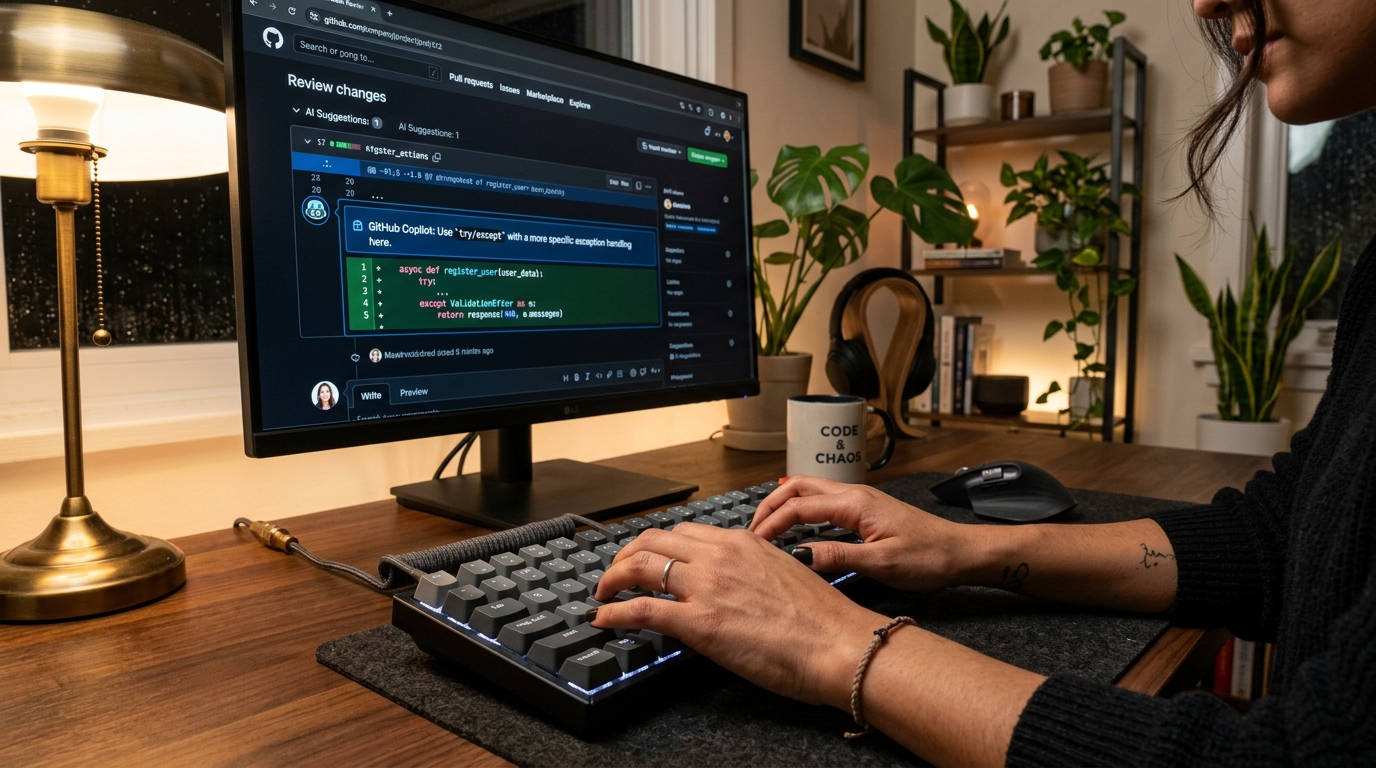
The hidden cost of a nearshore developer who ramps slowly is not the salary — it is the 6–8 weeks of senior engineering time spent answering questions and reviewing low-confidence commits. An AI-equipped developer cuts that mentorship tax by arriving already fluent in your toolchain's conventions.
What Does a Dedicated Nearshore Developer Team Actually Cost in 2026?
Pricing in the nearshore staffing market varies widely depending on the model — staff augmentation agencies, freelance platform aggregators, and full-service staffing firms all operate differently. At Rose Talent Solutions, the model is intentionally simple: $2,500 per month, flat. That covers a full-time (40 hours per week) Latin American developer, fully vetted, with recruiting, HR, payroll, and ongoing management included. There is no long-term contract — you can cancel with 30 days written notice. If the team member is not a fit, Rose replaces them at no additional cost.
For context, Statista's 2024 global developer salary data shows that mid-level software developers in Colombia, Mexico, and Argentina command annual salaries in the $18,000–$32,000 range in local market terms — a fraction of their US equivalent at $132,000+. Rose's flat fee sits well inside that window while wrapping the entire hiring and management infrastructure around the placement, so you never touch payroll compliance, local labor law, or HR administration. The comparison to a domestic hire is not even close on a fully-loaded cost basis.
If your needs extend beyond pure development — think bookkeeping, operations support, or executive assistance — Rose's broader staffing capabilities cover those verticals too. The Rose bookkeeping and accounting staffing page is a good reference for finance-adjacent roles that often complement a growing tech team.
Why Nearshore Works
- Real-time collaboration within 0–3 hours of US time zones
- High English proficiency — Rose requires 8/10+ on all placements
- Cultural alignment with US business cadence and product norms
- Significantly lower cost than domestic hires without offshore timezone pain
- Flat-rate pricing eliminates surprise invoices and agency markups
- Month-to-month terms — no long-term contract lock-in
Where to Watch Out
- Lower cost does not mean zero management — nearshore developers need clear sprint ownership like any engineer
- Not every "nearshore" vendor actually has team members in Latin America — verify locations explicitly
- Role-fit vetting matters enormously; a generic developer hire rarely outperforms a role-specific placement
- Internet reliability varies by country and city — always confirm connectivity standards with your vendor
How to Start Building Your Nearshore Developer Team Through Rose in 2026
Getting started does not require a lengthy procurement process or a legal team reviewing a multi-year contract. Rose's intake process is built for operators who need to move fast. You describe the role, the stack, and the output you need. Rose handles recruiting, vetting (including the English proficiency screen and technical evaluation), and placement — typically within days. From there, the developer joins your team, your tools, and your workflow. If at any point the fit is not right, the replacement guarantee means you never absorb that cost.
The Rose start page walks through the intake steps in detail. For companies that have also considered broader technical staffing beyond pure development — QA engineers, product coordinators, or dev-adjacent operations roles — the Rose property management staffing page shows how the same nearshore model scales across different technical and operations functions. The underlying infrastructure — Latin American talent, US-hours availability, AI-equipped onboarding, flat-rate pricing — is consistent across every role type Rose places.
In 2026, the companies pulling ahead in product velocity are not necessarily the ones with the largest engineering budgets. They are the ones who figured out earlier than their competitors that nearshore is not a compromise — it is a structural advantage when the model is built correctly. A dedicated nearshore developer team, placed through a staffing partner with real vetting standards and a genuine replacement guarantee, is one of the highest-ROI talent decisions available to a US tech company right now.