
Nearshore virtual assistants are quietly becoming the most cost-effective growth lever available to small and mid-size businesses in 2026. While hiring locally still costs upward of $55,000 per year for a full-time administrative employee, according to the U.S. Bureau of Labor Statistics (2024), nearshore staffing lets you put a dedicated, English-fluent professional in your corner for a fraction of that price — without sacrificing quality, availability, or time-zone alignment. If you're running a business that's growing faster than your current team can handle, this post will show you exactly what to look for in a virtual assistant company, how nearshore compares to every alternative, and what the real numbers look like.
What Is a Virtual Assistant Company for Growing Businesses?
A virtual assistant company for growing businesses is a staffing or agency partner that recruits, vets, places, and manages remote professionals on your behalf. Unlike freelance marketplaces — where you post a job, interview strangers, and hope for the best — a dedicated VA company handles the entire employment infrastructure: recruiting pipelines, skills assessments, English proficiency screening, payroll, HR compliance, and ongoing performance management. You get a person; they handle the paperwork.
The best companies go further. They match candidates to your specific software stack, your industry workflows, and your culture. For growing businesses, that specificity matters. A 10-person company doesn't have six months to train a general admin. You need someone who can open a QuickBooks file or log into your CRM on day one. That's the standard a serious VA company should hold itself to — and it's the bar Rose Talent Solutions sets for every placement through our AI-powered onboarding system.
Growing businesses — companies moving from 5 to 50 employees, or from $1M to $10M in revenue — face a specific operational squeeze: demand is outpacing capacity, but payroll budgets haven't caught up. A virtual assistant company solves that gap without locking you into a long-term contract or requiring months of HR lead time. According to Statista (2023), the global outsourcing market surpassed $700 billion — a figure driven largely by small and mid-size businesses seeking flexible staffing alternatives. You can read more about the top virtual assistant services ranked for US small businesses to see how different models stack up before you commit.
How Nearshore VAs Outperform Offshore Options for Growing Businesses in 2026
The offshore model — hiring from the Philippines, India, or Eastern Europe — has been around for 20 years. It works for some use cases. But for a growing business that needs real-time collaboration, rapid iteration, and a team member who feels like an extension of your staff (not a ticket queue), offshore creates friction that compounds over time.
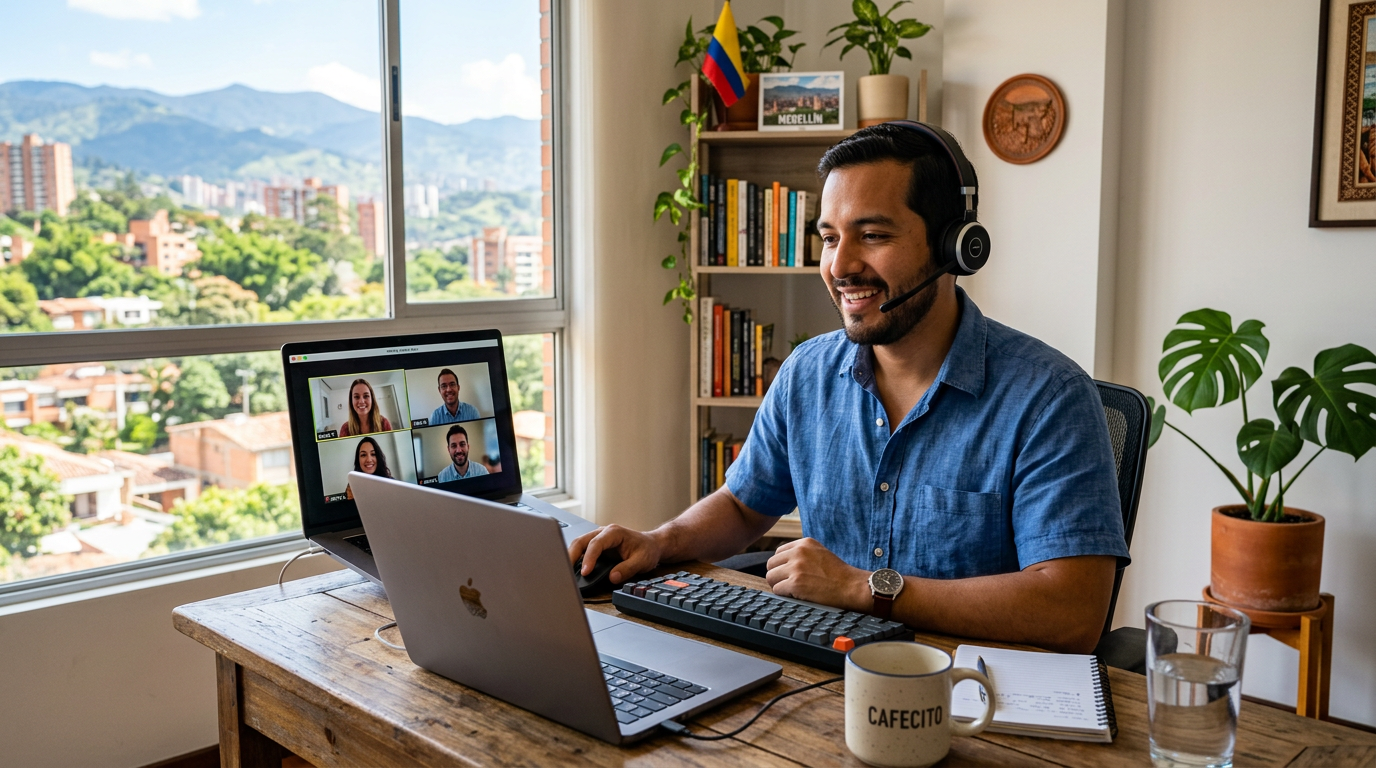
Nearshore VAs work your business hours — EST, CST, PST — because Latin America sits in or near US time zones. A VA based in Colombia or Mexico City is never more than two hours off New York. That means your 10am standup happens at 10am for everyone. Contrast that with a Manila-based hire who starts their workday at midnight US time: every approval, question, or course correction gets batched into an async thread and answered the next calendar day. For a growing business, that lag is a real operational cost.
For a deeper breakdown of how the three models compare, Rose has published a full nearshore vs. offshore vs. onshore virtual assistant comparison that covers cost, quality signals, and use-case fit in detail.
"The number one complaint I hear from operators who tried offshore VAs is the time-zone problem. By the time they get an answer, the tenant has already called three more times." — Jeremy Ramos, Director of Operations at a mid-size property management group, interviewed in PM Magazine (2024)
How to Compare Virtual Assistant Companies in 2026: The Real Criteria
Most comparison articles give you a bullet list of features. Here's what actually separates a VA company that works from one that wastes six months of your time and budget.
| Criteria | Nearshore (Latin America) | Offshore (Philippines / India) | Onshore (US-Based) |
|---|---|---|---|
| Monthly cost (full-time) | ~$2,500 all-in | $1,200–$2,000 (variable) | $4,500–$7,000+ |
| Time-zone alignment (US) | Excellent (0–2 hrs offset) | Poor (10–13 hrs offset) | Perfect (same zone) |
| English proficiency | High (8/10+ screened) | Moderate–High (varies widely) | Native |
| Software pre-training | Yes (role-specific AI copilot) | Rare | Occasional |
| Ramp time to productivity | 3–7 days | 2–6 weeks | 1–3 weeks |
| Contract flexibility | Month-to-month, 30-day notice | Varies (often locked) | Usually full employment |
| Replacement guarantee | Yes (no additional cost) | Rare | N/A |
The table above shows why nearshore has become the default recommendation for growing businesses that need real collaboration at a price that doesn't blow the budget. The time-zone alignment and software pre-training columns alone explain why nearshore hires ramp faster and stay longer than offshore alternatives. If you want to understand how pricing shakes out per region, this breakdown of the average virtual assistant salary in Latin America is worth reading before you negotiate with any agency.
What Roles Can a Virtual Assistant Company Fill for Your Business in 2026?
This is where most agencies lose growing businesses — they pitch a generalist and call it a day. Generalists burn out when your workload spikes. The better model is role-specific matching: finding a VA whose entire background aligns with the function you're hiring for, then layering a software-trained AI copilot on top of their existing skills.
The hidden cost of a generalist VA isn't their hourly rate — it's the six to eight weeks you spend training them on software, workflows, and industry terminology that a role-specific hire already knows on day one. Specificity at the matching stage saves months of ramp time downstream.
Here are the highest-demand roles Rose places for growing businesses:
- Administrative coordinators — calendar management, inbox triage, CRM data entry, travel booking, internal communications
- Bookkeeping and accounting support — invoicing, reconciliation, payables, QuickBooks and Xero maintenance. See Rose's dedicated bookkeeping and accounting VA service for role details.
- Property management coordinators — tenant communication, maintenance dispatching, lease administration, AppFolio and Buildium data entry. Rose's property management VA team specializes in this vertical.
- Customer support reps — live chat, email queues, ticket resolution, escalation routing
- Marketing and content assistants — social scheduling, blog formatting, basic graphic asset prep, email campaign support
- Operations and project assistants — SOP documentation, vendor management, reporting, internal follow-up tracking
Every Rose placement ships with a role-specific AI copilot — a pre-trained assistant built on the actual software your VA will use. A bookkeeping VA gets a QuickBooks-trained copilot. A property management coordinator gets one trained on AppFolio or Buildium. This isn't a chatbot add-on; it's a structured knowledge layer that compresses ramp time and improves accuracy from the start. Learn more about how it works on the AI advantage page.
According to McKinsey's State of AI report (2024), companies that embed AI tools into support roles see a 20–40% improvement in task throughput within the first quarter. That's not a distant promise for enterprise firms — it's accessible today to any growing business willing to hire strategically.

How the Rose Talent Placement Process Works for Growing Businesses
Most VA agencies take two to four weeks just to present candidates. Rose's process is built to move faster than that — without cutting corners on vetting. Here's the sequence from your first conversation to your VA's first productive day.
Intake call (Day 1)
Rose maps your role requirements, software stack, time-zone needs, and culture fit signals. This shapes the entire search — there's no generic job posting sent to a mass database.
Candidate sourcing and vetting (Days 2–5)
Rose screens for English proficiency (8/10+ floor), role-relevant experience, software fluency, and professionalism signals. You only see candidates who passed all four filters.
Your interview round (Days 5–7)
You interview your shortlist — typically two to three candidates — and make the call. Rose facilitates but you have final say on who joins your team.
AI copilot activation and onboarding (Days 7–10)
Rose activates your VA's role-specific AI copilot and completes payroll and HR setup. Your VA is ready to work your hours from day one.
Ongoing management (Month 1+)
Rose handles HR, payroll, performance check-ins, and issue resolution. If the placement isn't a fit, Rose replaces the team member at no additional cost — no debate, no delay.
The total cost is $2,500 per month, flat. That covers recruiting, vetting, payroll, HR infrastructure, the AI copilot, and ongoing management. There are no add-on fees for replacement. Terms are month-to-month — cancel with 30 days written notice. No long-term contract required. Ready to see who's available? Start your search here.
Why the Onshore vs. Offshore Debate Misses the Point in 2026
The traditional framing pits US-based VAs against overseas VAs, as if those are the only two choices. That framing was outdated by 2022. The real spectrum is onshore → nearshore → offshore, and for most growing businesses, nearshore occupies the optimal position: close enough in time zone and culture to work like a local hire, priced well below what a US market demands.
Nearshore VA: Strengths
- Works US business hours in real time
- English proficiency screened before you meet them
- Cultural alignment with North American business norms
- All-in flat pricing — no payroll surprises
- Month-to-month terms protect your budget
- Role-specific AI copilot included
Nearshore VA: Limitations
- Not the rock-bottom cheapest option (offshore undercuts on raw hourly rate)
- Smaller talent pool than global offshore markets
- Not suitable if you need 24/7 overnight coverage without a second shift
If you're still weighing the two-way decision between US and overseas hiring, Rose also published a plain-language breakdown of the onshore vs. offshore virtual assistant tradeoff that's worth bookmarking. But for most businesses at the growth stage — where real-time communication and software fluency matter more than squeezing the last dollar per hour — nearshore wins on the metrics that actually compound.
According to Gallup's Future of Hybrid Work study (2022), employees who work in time-zone-aligned remote setups report 23% higher engagement scores than those operating asynchronously across large time gaps. Engagement isn't just a feel-good metric — it correlates directly with retention, output consistency, and error rates. Retention matters even more for VAs than onshore employees, because every replacement cycle costs you ramp time you've already invested.
The Society for Human Resource Management (SHRM) estimates that replacing a single employee costs 50–200% of their annual salary when you factor in recruiting, training, and lost productivity. Even at the low end of that range, a single VA turnover event would cost more than Rose's flat monthly fee. The math on retention-by-design is not subtle.
Pew Research Center data reinforces the broader remote-work trend underpinning this shift: Pew Research Center (2022) found that 60% of workers whose jobs can be done remotely say they want to continue working from home most or all of the time. For growing businesses, that preference across the talent market means the best candidates — in Latin America and elsewhere — are already set up and optimized for remote work. You're not asking someone to adjust; you're hiring into a workflow they've already mastered.