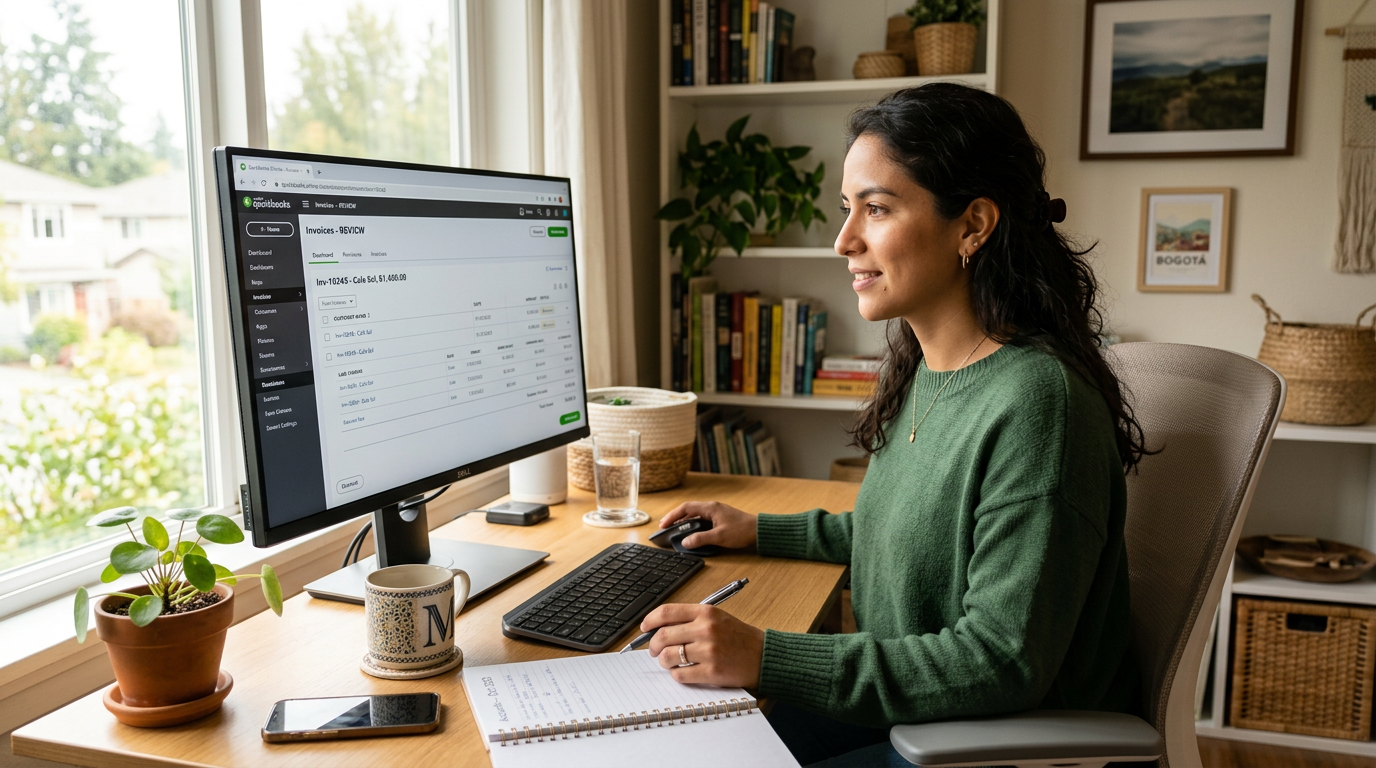
Nearshore accounts payable outsourcing is quietly becoming the default move for ecommerce operators who are drowning in vendor invoices, late payment fees, and reconciliation backlogs. If you're running a product-based online store — whether you're on Shopify, Amazon, or a multi-channel setup — your AP workload scales faster than your team does. The moment you hit 50+ vendor relationships, managing payables in-house stops making sense. This guide breaks down exactly how to outsource accounts payable services for ecommerce in 2026, what it costs, and what to look for in a provider.
What Does It Mean to Outsource Accounts Payable for Ecommerce?
Accounts payable (AP) outsourcing means assigning your invoice intake, three-way matching, vendor payment scheduling, dispute resolution, and month-end AP reconciliation to an external specialist rather than an in-house employee. For ecommerce businesses specifically, AP is more complex than in most industries: you have supplier invoices in multiple currencies, freight and 3PL billing, platform fees from Amazon or Shopify, and returns-related credit memos — all hitting your books simultaneously.
An outsourced AP specialist handles the full cycle: receiving invoices, coding them to the correct cost of goods or expense account, routing approvals, scheduling payments, and reconciling the AP ledger at month-end. When that specialist is nearshore — meaning based in Latin America, working US business hours, and fluent in English — the communication overhead drops to near zero compared to traditional offshore models.
If you want a broader look at how this fits into your overall financial operations, our guide to outsourcing ecommerce accounting services covers the full accounting stack, not just AP.
Manual invoice processing is the single biggest AP drain for ecommerce brands, according to the Institute of Finance & Management (IOFM) (2024). When your team is copying invoice data into QuickBooks or Xero by hand, errors compound — and in ecommerce, a miscoded COGS entry can throw off your entire gross margin calculation for the month.
How Nearshore AP Specialists Outperform Offshore in 2026
The word "offshore" gets used loosely, but for AP work it matters enormously. An offshore AP specialist in a timezone 8-12 hours ahead of you means every vendor dispute, approval request, or coding question goes unanswered for half a business day. For ecommerce, where supplier relationships and cash flow timing are critical, that lag is genuinely costly.
Nearshore specialists — based in countries like Colombia, Mexico, or Peru — work 9am–6pm EST or PST alongside your team. You can Slack them a question about a disputed freight invoice at 10am and have it resolved before lunch. That's a qualitatively different working relationship.
English fluency is the other variable that rarely gets surfaced until it causes a problem. Rose Talent Solutions screens every team member to an 8/10 or higher English proficiency standard before placement. That matters when your AP specialist needs to negotiate a credit memo with a vendor, flag a duplicate invoice to your ops manager, or clarify a PO discrepancy on a call.
The timezone and language advantages are also why nearshore AP outsourcing for e-commerce consistently outperforms generic offshore models on quality metrics — not just cost.
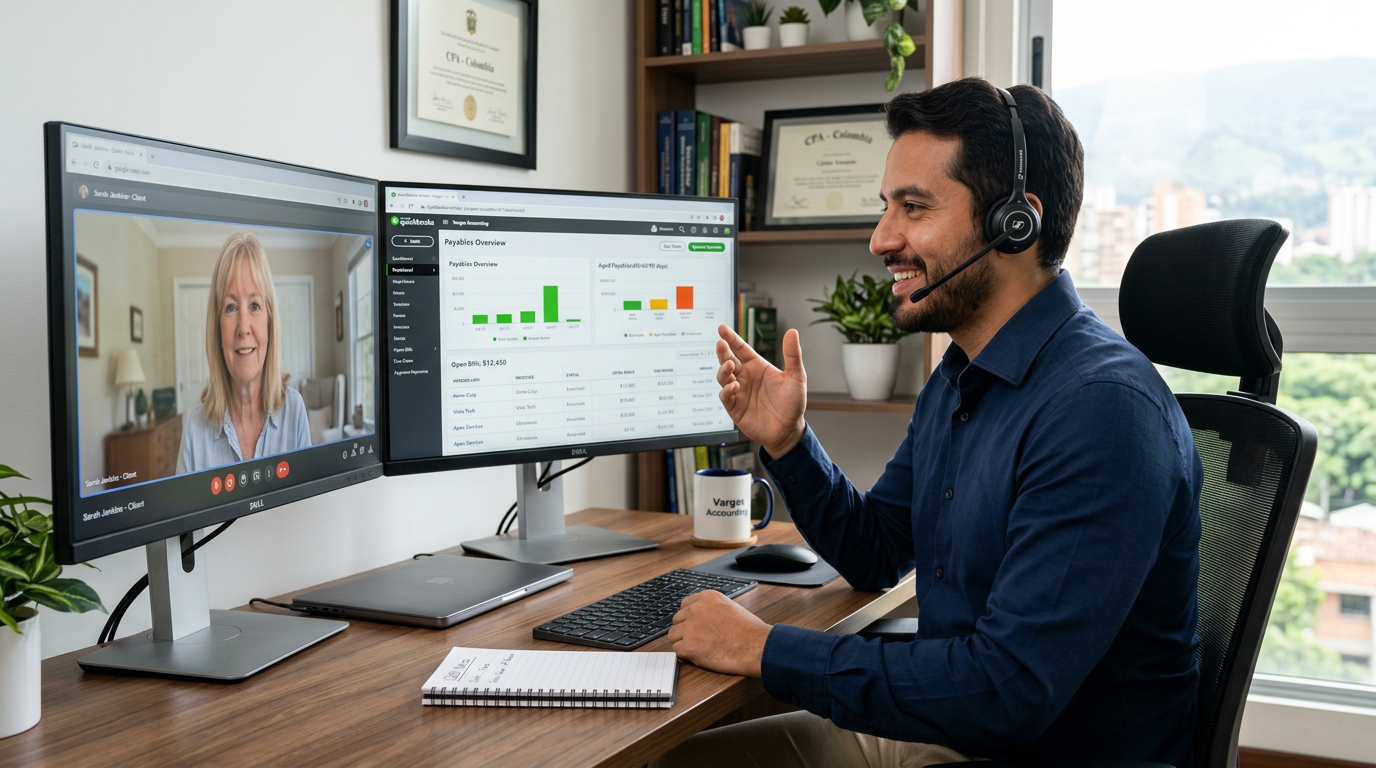
The hidden cost of offshore AP outsourcing isn't the hourly rate — it's the 8–12 hour timezone gap that turns every vendor dispute or approval bottleneck into a next-day problem. For ecommerce brands managing 50–200 supplier relationships, that delay compounds into late payment fees and strained vendor terms.
How to Compare AP Outsourcing Options in 2026: Onshore vs. Nearshore vs. Offshore
Not all AP outsourcing is equal. The three main models differ on cost, communication quality, and how well the specialist integrates with your existing team. Here's a direct comparison:
| Factor | Onshore (US-Based) | Nearshore (Latin America) | Offshore (India / Philippines) |
|---|---|---|---|
| Monthly Cost (Full-Time) | $5,000–$8,000+ | $2,500 flat (Rose) | $1,200–$2,000 |
| Timezone Overlap (US Hours) | Full overlap | Full overlap | Little to none (8–12 hr gap) |
| English Fluency | Native | High (8/10+ screened) | Varies widely |
| Software Proficiency (QuickBooks, Xero, etc.) | High, but requires self-sourcing | High — role-specific AI copilot included | Variable — training burden on you |
| Ramp Time | 4–8 weeks (hiring cycle) | ~7 days to placement | 2–6 weeks |
| Replacement If Not a Fit | Full re-hire cost | Free replacement (Rose) | Varies by agency |
| Cultural / Business Alignment | Strong | Strong | Can require adjustment |
The nearshore model hits a sweet spot that offshore can't match on communication and that onshore can't match on cost. At $2,500/month all-in — recruiting, vetting, payroll, HR, and ongoing management included — a dedicated nearshore AP specialist costs roughly half what a US-based bookkeeping hire costs, with comparable day-to-day working experience.
"The biggest misconception in AP outsourcing is that cheaper automatically means slower or lower quality. The real variable is timezone alignment — a team that works your hours, at half the cost, consistently outperforms a cheaper team you can only reach by email at 3am." — Chris Stark, VP of Finance Operations at Acuity (2023)
What Tasks Can an Outsourced AP Specialist Handle for Ecommerce in 2026?
One of the biggest misconceptions about AP outsourcing is that it only covers "paying bills." In reality, a well-trained AP specialist handles the full payable cycle — and for ecommerce, that cycle is surprisingly deep. Here's what a Rose nearshore AP specialist typically owns from day one:
- Invoice intake and coding — receiving supplier invoices by email, uploading to QuickBooks or Xero, coding to the correct expense or COGS account
- Three-way matching — matching purchase orders, receiving reports, and vendor invoices before approving payment
- Vendor payment scheduling — batching ACH, wire, or check payments according to your payment terms (Net 30, Net 60, etc.)
- Freight and 3PL billing reconciliation — a unique ecommerce need; matching carrier invoices to shipment records
- Platform fee reconciliation — reconciling Amazon seller fees, Shopify subscription charges, and ad platform billing
- Dispute resolution — following up on credit memos, short-pays, and billing errors directly with vendors
- Month-end AP aging report — producing the payables aging summary for your bookkeeper or CFO
- 1099 prep support — tracking vendor payments for year-end 1099-NEC and 1099-MISC filing
Every Rose AP specialist ships with a role-specific AI copilot trained on their primary software stack — whether that's QuickBooks Online, Xero, or a combination. That means they're not learning your tools from scratch; they arrive knowing the AP workflows inside the platform you already use. You can read more about how this works on our AI advantage page.

For ecommerce brands already using Xero as their accounting platform, our guide to working with a Xero virtual bookkeeper explains exactly how to structure the AP workflow inside Xero's bill management and payment modules.
How the Rose AP Outsourcing Process Works: From Intake to Day One
A common concern is how long it takes to actually get a dedicated AP specialist working on your books. Rose's process is built to move fast — most ecommerce clients have a placed specialist within a week of starting. Here's the sequence:
Discovery Call
A Rose team member spends 30 minutes understanding your AP volume, software stack (QuickBooks, Xero, etc.), vendor count, and any specific pain points — late fees, reconciliation backlogs, 1099 gaps. This shapes the specialist profile.
Specialist Matching
Rose matches you with a pre-vetted, English-fluent AP specialist in Latin America whose experience aligns with your industry and software. You review the profile and approve before anyone starts.
Onboarding & AI Copilot Setup
Your specialist receives access to your accounting platform and is set up with their role-specific AI copilot trained on your software. Most specialists are processing real invoices by day 3–5.
Ongoing Management
Rose handles payroll, HR compliance, and performance management. You manage the day-to-day work tasks. If the fit isn't right, Rose replaces the specialist at no additional cost — no questions asked.
The pricing is straightforward: $2,500/month flat, full-time (40 hours/week), with no long-term contract. You can cancel with 30 days written notice. If the specialist isn't the right fit, Rose replaces them at no additional cost — that's the risk reversal built into every engagement.
Ready to stop managing AP manually? You can get started at rosetalentsolutions.io/start.
What Does It Cost to Outsource AP Services for Ecommerce in 2026?
Cost is where most ecommerce operators are surprised — in a good way. The U.S. Bureau of Labor Statistics (2024) puts the median annual salary for a full-time accounts payable specialist in the US at roughly $47,000 — and that's before benefits, payroll taxes, software licenses, recruiting fees, and management overhead. Total fully-loaded cost is typically $65,000–$80,000/year for a single US-based AP hire.
At $2,500/month, a Rose nearshore AP specialist costs $30,000/year — all-in, including recruiting, vetting, HR, payroll, and management. That's a $35,000–$50,000/year saving over a comparable US hire, with the same real-time availability and communication quality. For an ecommerce brand doing $2M–$10M in revenue, that's a meaningful margin improvement.
Outsourcing also eliminates the hidden cost categories that make in-house AP expensive beyond salary: turnover (the average AP clerk tenure is under 2 years, according to SHRM (2023)), training time, software seat costs, and the management bandwidth your ops or finance lead spends supervising an in-house hire.
For a deeper breakdown of how AP outsourcing fits within the broader financial operations of an ecommerce company, see our post on outsourced accounting services for ecommerce companies — it covers AP alongside bookkeeping, payroll, and controller-level work.
If you're looking at the accounting function more broadly, Rose's bookkeeping and accounting services page outlines the full range of financial roles available, from AP specialists to full-charge bookkeepers.
The Real Risks of Not Outsourcing AP — and How to Mitigate Them
Keeping AP in-house at scale isn't a neutral decision — it carries active risks. Late payment fees typically run 1.5–2% per month on outstanding balances, according to standard vendor terms. For an ecommerce brand with $500K/month in COGS, a single missed payment cycle can cost $7,500–$10,000 in fees alone. That's three months of AP outsourcing cost for one error.
Beyond fees, manual AP creates audit risk. The IRS requires businesses to maintain documentation supporting every deduction — including vendor invoices, payment records, and receipts. When AP is managed manually across email threads and spreadsheets, that documentation trail breaks down fast. An outsourced AP specialist maintains a clean, auditable record inside your accounting software from day one.
Vendor relationship damage is the third risk. Suppliers talk — especially in concentrated product categories. Consistent late payment or payment disputes, even small ones, can result in tightened payment terms (Net 15 instead of Net 30), lost volume pricing, or being deprioritized during supply shortages. A dedicated AP specialist who knows your vendor relationships and payment history prevents these issues proactively.
Outsourcing AP: What You Gain
- Real-time AP coverage during your business hours
- Clean, auditable invoice and payment records
- Specialist expertise in QuickBooks, Xero, or your existing platform
- Flat, predictable monthly cost — no benefits, no turnover cost
- Vendor disputes resolved same-day, not next-day
- Scales with your vendor count without adding headcount
What You Give Up (And How to Manage It)
- Direct in-office presence — mitigated by full real-time communication
- Physical check signing (most ecommerce AP is ACH/wire anyway)
- Some onboarding time — mitigated by Rose's 7-day placement and AI copilot ramp
The data on outsourcing outcomes is consistent. McKinsey & Company (2023) found that finance functions that outsource transactional processes like AP reduce processing cost per invoice by 40–60% while improving accuracy rates. For ecommerce operators, that accuracy improvement directly protects gross margin.
According to Deloitte's Global Outsourcing Survey (2024), 65% of companies that outsource finance and accounting functions cite cost reduction as the primary driver — but 57% cite access to specialized skills as equally important. For ecommerce, that specialization is the real value: an AP specialist who understands 3PL billing, multi-currency supplier invoices, and platform fee reconciliation is genuinely hard to hire full-time in most markets.