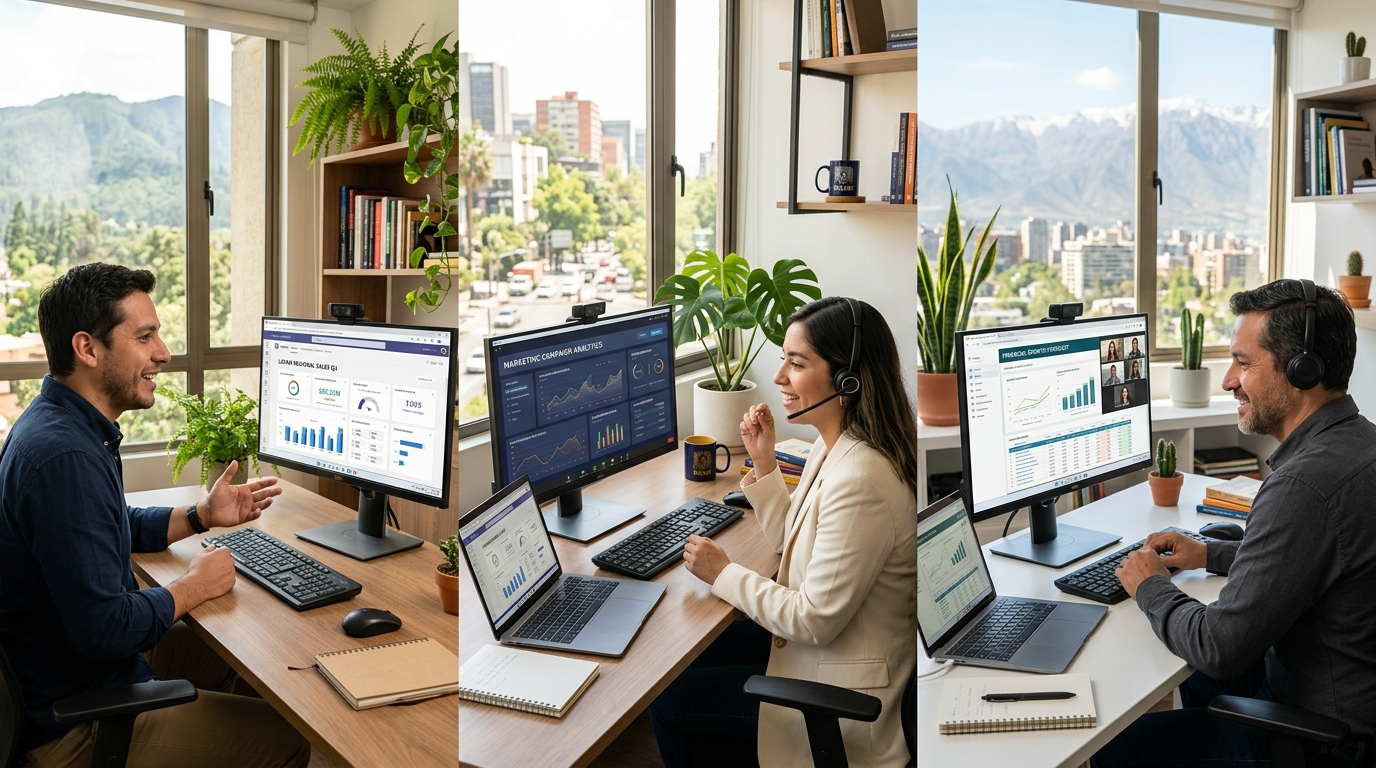
Nearshore virtual assistants from Latin America have become the go-to staffing move for US, Canadian, and UK businesses that need real-time support without the six-to-eight hour timezone gap that offshore models create. But "Latin America" is not one market — and the Mexico vs Colombia vs Argentina virtual assistants debate is one of the most common questions US operators ask when they start exploring nearshore hiring. Each country has distinct talent pools, English proficiency levels, timezone alignments, and economic conditions that make them better or worse fits depending on what role you're hiring for. This guide breaks down all three markets honestly so you can make the right call in 2026.
What Is a Nearshore Virtual Assistant — and Why Does the Country Matter in 2026?
A nearshore virtual assistant is a remote professional based in a geographically close country who works your business hours, communicates in fluent English, and operates within a timezone that overlaps with your own. Unlike offshore VAs in the Philippines or India — who typically work while you sleep — nearshore VAs from Latin America are online when your clients call, your tenants email, and your vendors need a decision. That real-time presence is the defining advantage, according to McKinsey Global Institute (2021), which found that roles requiring frequent coordination and real-time judgment are the least suitable for asynchronous offshore arrangements.
When comparing Mexico vs Colombia vs Argentina virtual assistants, the country you hire from matters because it affects English proficiency scores, the depth of the local talent pipeline, cultural proximity to US business norms, and compensation expectations. If you want a deeper look at how the nearshore model compares to offshore and onshore options before diving into country specifics, Rose's complete nearshore vs offshore vs onshore comparison covers the full framework.

How Mexico Compares as a Virtual Assistant Market in 2026
Mexico is the most obvious nearshore choice for US companies for one simple reason: timezone parity. Mexico City runs on Central Standard Time (UTC-6), which means a VA in Guadalajara has near-perfect overlap with teams in Dallas, Chicago, or Atlanta. Border cities like Monterrey and Tijuana have produced mature bilingual talent pipelines thanks to decades of NAFTA/USMCA-era cross-border commerce. According to EF Education First's English Proficiency Index (2023), Mexico scores in the "Moderate Proficiency" band globally — but the university-educated urban talent pool that nearshore staffing agencies recruit from skews significantly higher than the national average.
Mexican virtual assistants tend to excel in customer-facing roles: inbound leasing calls, tenant communication, appointment scheduling, and bilingual support. If your business serves Spanish-speaking clients in the US Southwest, a Mexican VA can switch languages seamlessly mid-call — a capability that is genuinely difficult to replicate with any offshore market. The one limitation: the deepest technical and finance-specific talent (think senior bookkeeping or SaaS product support) is more abundant in Colombia and Argentina than in Mexico's current pipeline.
Mexico is the strongest default choice for US businesses that need real-time phone coverage and bilingual client-facing support, particularly in property management, real estate, and healthcare administration. When you're weighing Mexico vs Colombia vs Argentina virtual assistants purely on timezone fit, Mexico wins for anyone operating on Central or Mountain Time.
How Colombia Stacks Up for English Fluency and Admin Talent in 2026
Colombia has quietly become the standout nearshore VA market for US businesses that prioritize English communication quality above all else. Bogotá and Medellín have invested heavily in English immersion programs over the past decade, and the results show up in hiring screens. EF's English Proficiency Index (2023) ranks Colombia above Mexico in overall English proficiency, and Colombian professionals often speak with neutral, easily-understood accents that US clients respond to positively. That accent neutrality matters in roles where your VA is the voice of your brand.
"The Medellín tech and services sector has produced a generation of bilingual professionals whose communication quality rivals anything you'd find in a traditional nearshore hub. The talent density there is genuinely surprising to first-time hirers." — Andrés Gutiérrez, Partner at Nearshore Americas (2023)
Colombian virtual assistants are particularly well-suited to administrative and operations roles: executive assistance, bookkeeping, CRM management, and back-office coordination. Colombia's timezone (UTC-5, Colombia Time) gives full overlap with US Eastern and Central business hours, and partial overlap with Mountain and Pacific — workable for most business types. Rose places a significant share of its bookkeeping and accounting VAs from Colombia precisely because of the combination of English quality and finance-adjacent training in the talent pool.
If you want to understand what English fluency screening actually looks like before you hire from any Latin American market, Rose's post on whether nearshore virtual assistants speak fluent English explains the proficiency standards and how agencies verify them.
How Argentina's Talent Pool Differs — and What the Economic Volatility Means for Hirers in 2026
Argentina produces some of the most technically skilled professionals in Latin America. Buenos Aires in particular has a deep pipeline of software-adjacent talent, data analysts, financial modelers, and experienced project managers — professionals who have worked in demanding environments and have strong independent problem-solving instincts. Bureau of Labor Statistics international comparisons (2022) consistently show Argentina's workforce has among the highest tertiary education attainment rates in Latin America.
The complexity with Argentina is macroeconomic. Argentina has experienced significant currency instability and inflation over the past several years, which creates a two-sided dynamic for US hirers: Argentine professionals are often willing to accept USD-denominated compensation at rates that feel low relative to their skill level, but economic volatility can affect turnover as local conditions shift. Reputable nearshore staffing agencies manage this risk by handling payroll, currency conversion, and compliance infrastructure on your behalf — so you never deal with it directly.
Argentina's timezone (UTC-3) is the furthest from US Pacific time of the three markets, which means a Buenos Aires-based VA working a standard shift will finish their day around 2-3pm Pacific. That's workable for most East Coast and Central businesses, but can create a genuine coverage gap for California-based operations that need afternoon support. In the Mexico vs Colombia vs Argentina virtual assistants timezone debate, Argentina is the clear third-place finisher for West Coast companies.
Argentina's talent is exceptional — but the timezone offset and economic volatility make it a specialist's choice. It's best suited for technical, analytical, or project-based roles where deep skill matters more than real-time phone availability. For general admin and client-facing work, Mexico and Colombia are lower-friction starting points.
Mexico vs Colombia vs Argentina Virtual Assistants: Side-by-Side Comparison for 2026
The table below compares all three markets across the six criteria that US business owners consistently ask about when making a nearshore hiring decision. These ratings reflect the general talent pools these markets produce — individual candidates will always vary, which is why rigorous pre-screening by your staffing partner matters more than the country label alone.
| Criteria | Mexico | Colombia | Argentina |
|---|---|---|---|
| Timezone Overlap (US) | ⭐⭐⭐⭐⭐ Full overlap (CST/MST) | ⭐⭐⭐⭐ Full overlap (EST/CST) | ⭐⭐⭐ Partial (EST full; PST partial) |
| English Proficiency | ⭐⭐⭐ Moderate (urban talent higher) | ⭐⭐⭐⭐ High — neutral accent | ⭐⭐⭐⭐ High — mild accent |
| Technical / Finance Depth | ⭐⭐⭐ Strong in admin and CX | ⭐⭐⭐⭐ Strong across most roles | ⭐⭐⭐⭐⭐ Deepest technical pipeline |
| Bilingual (Spanish/English) | ⭐⭐⭐⭐⭐ Native Spanish — huge advantage | ⭐⭐⭐⭐ Strong bilingual talent | ⭐⭐⭐ Spanish native, less US-facing exp. |
| Talent Pool Size | ⭐⭐⭐⭐⭐ Largest market | ⭐⭐⭐⭐ Fast-growing | ⭐⭐⭐ Smaller but deep |
| Economic Stability | ⭐⭐⭐⭐ Stable | ⭐⭐⭐⭐ Stable | ⭐⭐ Currency volatility — manage via agency |
| Best Role Fit | CX, leasing, bilingual admin, PM | Executive admin, bookkeeping, ops | Technical, analytical, project mgmt |

How Rose Talent Solutions Sources Across Mexico, Colombia, and Argentina in 2026
Rose doesn't limit placements to a single country. The sourcing approach is role-first: Rose defines the role requirements with you, then matches across whichever Latin American market produces the strongest candidate — whether that's a Monterrey-based leasing coordinator, a Bogotá-based bookkeeper, or a Buenos Aires-based operations analyst. Every candidate clears an 8/10+ English proficiency screen regardless of market, plus role-specific skill vetting and a background check before you ever see a profile.
One structural advantage worth highlighting: every Rose team member comes equipped with a role-specific AI copilot trained on the software they'll actually use — AppFolio, Buildium, QuickBooks, and others. You can learn more about how that works on the AI advantage page. This means a Colombian bookkeeper isn't just bilingual and timezone-aligned — they're also pre-trained to navigate your accounting stack from day one, which cuts ramp time significantly.
The engagement model is straightforward: $2,500/month flat, full-time at 40 hours per week, with recruiting, vetting, payroll, HR, and ongoing management included. There's no long-term contract — you continue month-to-month and cancel with 30 days written notice. If the team member isn't the right fit, Rose replaces them at no additional cost. To see what roles are available across all three markets right now, visit the get started page.
Define Your Role
Rose scopes the position with you — tasks, tools, hours, and which Latin American market produces the strongest candidate pool for that specific role type.
Vetting and Matching
Candidates clear English proficiency screens (8/10+ floor), skill assessments, and background checks. You review the top match — typically within seven days of kickoff.
Onboarding with AI Copilot
Your new team member starts with a role-specific AI copilot pre-trained on your software stack, so ramp time is measured in days, not months.
Ongoing Management Support
Rose handles payroll, HR, and compliance across Mexico, Colombia, or Argentina — you manage the work, not the back-office employment logistics.
How to Choose Between Mexico, Colombia, and Argentina Virtual Assistants for Your Specific Role
The decision framework is simpler than it looks once you anchor it to role type and schedule requirements. For US businesses hiring property management VAs — leasing coordinators, maintenance dispatchers, tenant communication specialists — Mexico is the natural starting point because of the bilingual advantage and full timezone alignment. If you're already researching that use case, the property management VA page outlines what those roles look like in practice.
For bookkeeping, executive administration, and operations roles, Colombia's combination of strong English fluency and finance-adjacent training makes it the most versatile market. According to Gallup's Future of Hybrid Work report (2022), communication quality and responsiveness ranked as the top two factors managers cited when rating remote employee performance — Colombia's neutral accent and high proficiency scores directly address both.
For technical, analytical, or specialized project-based work, Argentina's depth of skill justifies working through the timezone and economic complexity — especially when your staffing partner handles the currency and compliance infrastructure. Rose's post on how to manage a nearshore VA remotely covers the operational playbook for getting maximum output regardless of which market your team member comes from.
One more resource worth bookmarking if you're still in early research mode: Rose's roundup of the best nearshore virtual assistant companies in 2026 gives a broader view of how agencies differ in how they source and vet across these markets.
Why Nearshore Latin America Wins
- Real-time timezone overlap with US business hours — no overnight batching
- University-educated talent at 60-70% below equivalent US in-house cost
- Neutral or easily understood English accents across all three markets
- Cultural proximity to US business communication norms
- Native Spanish fluency — a genuine business advantage for bilingual markets
What to Watch For
- Argentina's timezone creates partial gaps for US Pacific-time businesses
- Argentina's economic volatility requires agency-managed payroll to de-risk
- Mexico's national English proficiency average is lower — screen carefully or use an agency with a documented proficiency floor
- Talent pool depth varies by specialty — no single country is best for every role type
The bottom line: when evaluating Mexico vs Colombia vs Argentina virtual assistants, the country is a starting variable, not the final answer. A well-run nearshore staffing agency that draws on all three markets and applies rigorous screening criteria will outperform any single-country approach. According to SHRM's workforce research (2023), businesses that use structured third-party vetting for remote hires report 34% lower early turnover than those who self-screen — which is precisely the argument for using a managed nearshore agency rather than trying to source directly from LinkedIn in an unfamiliar market.