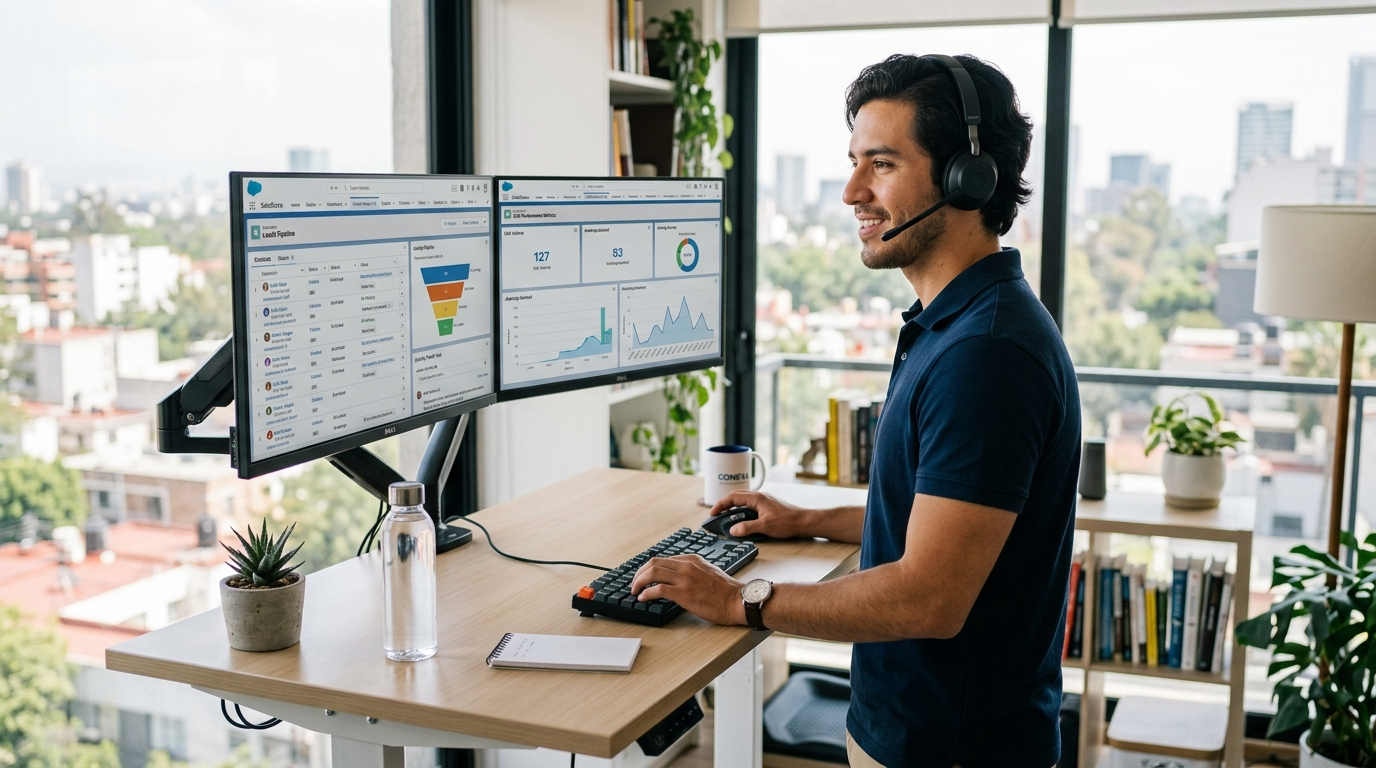
Nearshore outsourced SDRs are closing the performance gap with in-house sales teams faster than most revenue leaders expected — but raw conversion rates still vary wildly depending on who you hire, how they're managed, and what market they're working. If you've been asking "what is the typical conversion rate for an outsourced SDR," you deserve a straight answer with real benchmarks, not a vague range buried in vendor marketing copy. This post gives you that, plus the variables that push numbers up or down.
What Is an Outsourced SDR? (A Working Definition)
An outsourced SDR (Sales Development Representative) is a prospecting specialist hired through a third-party staffing or agency model rather than placed on your direct payroll. Their job is top-of-funnel: sourcing leads, running outbound sequences, qualifying inbound interest, and booking meetings for your account executives. The outsourced model shifts recruiting, vetting, and HR overhead to the provider while keeping the SDR embedded in your sales motion.
Outsourced SDRs are not glorified cold-callers reading from a script. The best ones — particularly in the nearshore Latin America model — work your US business hours, use your CRM natively, and carry the same ICP knowledge as an in-house rep. The difference is cost structure and speed to deploy, not quality ceiling. If you want to understand the structural distinctions more deeply, this breakdown of what separates an outsourced SDR from an in-house hire covers the tradeoffs precisely.
What Is the Typical Conversion Rate for an Outsourced SDR in 2026?
Let's break this into the three conversion stages that actually matter to a revenue leader:
- Cold outreach to reply: 2–8% reply rate across email and LinkedIn sequences, according to Sales Hacker's industry benchmarks (2023).
- Reply to booked meeting: 15–30% of engaged prospects agree to a discovery call when the SDR follows a multi-touch sequence with a clear value prop.
- Booked meeting to closed-won: RAIN Group (2024) reports that 27% of B2B meetings booked by SDRs convert to pipeline opportunities, with 20–30% of those closing.
Blending those stages, a well-run outsourced SDR hitting 200 cold touches per week should generate 4–10 booked meetings, with 1–3 progressing to real pipeline. That's not a pessimistic number — that's what the data says when ICP targeting is tight. When it's loose, you're looking at the bottom of every range.
The channel mix matters enormously. Cold email alone produces 1–3% meeting conversion, while a coordinated email-plus-LinkedIn-plus-phone sequence can push that to 4–6%, according to Gartner's SDR Productivity research (2024). SDRs who work all three channels concurrently outperform single-channel reps by a factor of 2–3x.
How SDR Model Choice Shapes Conversion Rates in 2026
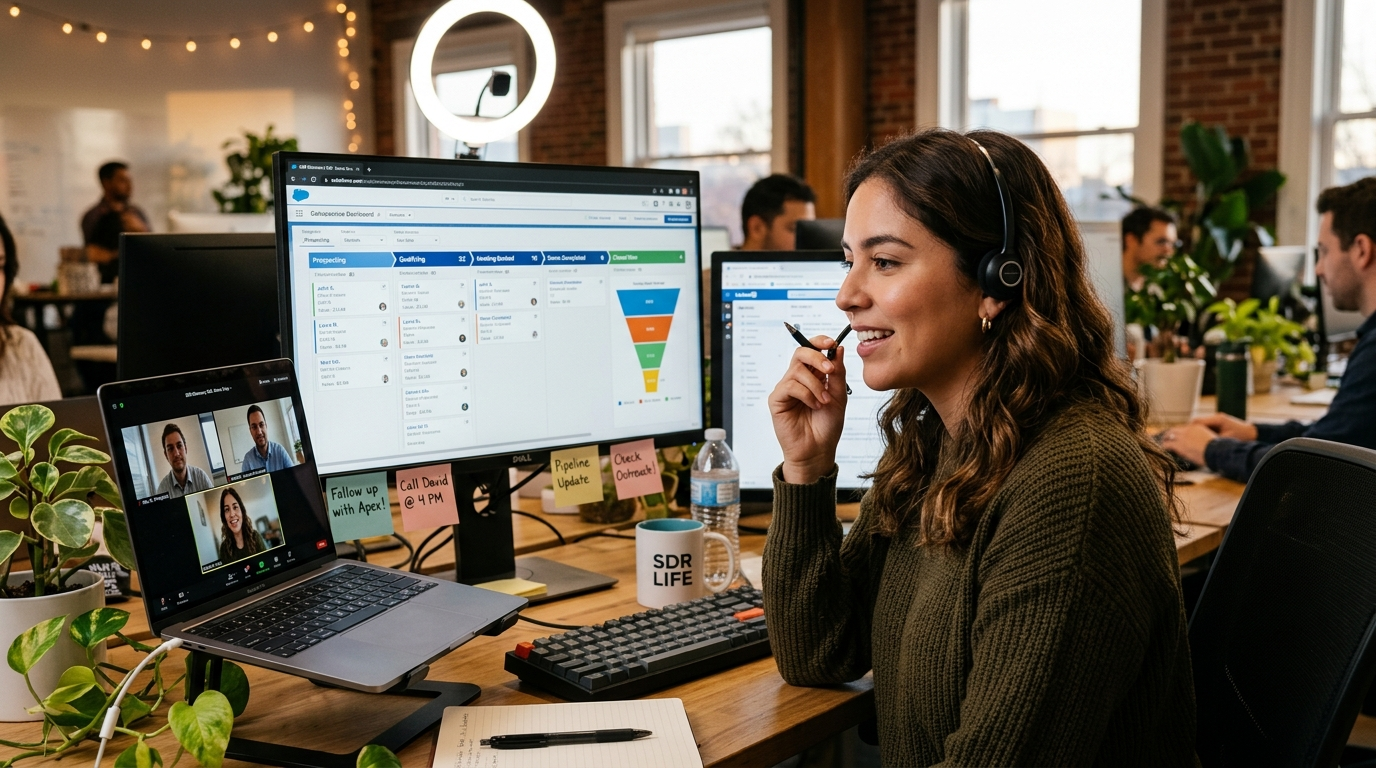
Not all outsourced SDR models perform the same. The three dominant options — onshore agency, nearshore staffing, and offshore outsourcing — produce meaningfully different conversion outcomes. The gap isn't primarily skill; it's timezone alignment, language fluency, and cultural proximity to your buyers.
| Model | Typical Meeting Conversion Rate | Monthly Cost (Full-Time SDR) | Timezone Overlap (US) | English Fluency Bar |
|---|---|---|---|---|
| Onshore Agency SDR | 3–6% | $6,000–$12,000+ | Full | Native |
| Nearshore SDR (Latin America) | 3–6% | $2,000–$3,500 | Full (US business hours) | 8/10+ screened |
| Offshore SDR (Philippines / India) | 1–3% | $800–$2,000 | Partial (6–12 hr gap) | Variable, unscreened |
Nearshore SDRs based in Latin America match onshore conversion performance at roughly one-third the cost. The timezone parity is the critical driver: a prospect who replies to an email at 10 a.m. EST gets a phone follow-up within 20 minutes from a nearshore rep — not a batch callback 18 hours later from an offshore team operating on Manila time. That speed-to-follow-up gap alone accounts for the 2–3 percentage point conversion difference between nearshore and offshore models, consistent with Lead Response Management Institute research showing response within 5 minutes produces 100× higher contact rates than a 30-minute delay.
"The companies that win at outbound in 2024 are the ones treating SDR response time as a product feature, not an afterthought." — Kyle Coleman, CMO at Copy.ai and former VP of Growth at Clari (2024)
How to Diagnose Why Your Outsourced SDR Conversion Rate Is Below Benchmark
If your current outsourced SDR is converting at under 1.5%, the problem is almost never the SDR's fault in isolation. The four most common culprits — in order of frequency — are weak ICP definition, low outreach volume, poor sequence structure, and misaligned handoff to AEs.
The most underdiagnosed reason outsourced SDR conversion rates underperform is not the rep — it's that the hiring company never documented a crisp ICP. An SDR prospecting into a fuzzy target list will always underperform a mediocre rep with a surgical target list.
ICP clarity: According to Gartner (2024), SDRs with a clearly defined Ideal Customer Profile hit quota at 2× the rate of those working a broad, unqualified list. Before blaming conversion rates, audit the list quality. If you're still figuring out how to structure the outsourced engagement itself, this guide on how to hire outsourced SDR services for SaaS companies walks through the intake process that prevents ICP drift from day one.
Volume: A full-time SDR should send 80–150 personalized touches per day across channels. If your outsourced rep is hitting 30–40, you have a management or tooling problem, not a conversion problem. Sequence tools like Salesloft, Outreach, or Apollo need to be provisioned on day one — not week three.
Sequence structure: The data consistently shows that 7–12 touch sequences outperform 3-touch sequences by 2–4× in meeting booked rate, per Sales Hacker (2023). If your SDR is stopping at two emails and one call, the sequence is the problem.
AE handoff: Booked meetings that don't get accepted and prepped by AEs within 24 hours show a 40% higher no-show rate. Conversion doesn't end when the meeting is booked — it ends when the deal is closed or disqualified. For companies comparing the full economics, this outsourced vs. in-house SDR ROI comparison quantifies where hidden costs accumulate on both sides of the equation.
How AI Tools Are Changing Outsourced SDR Conversion Rates in 2026
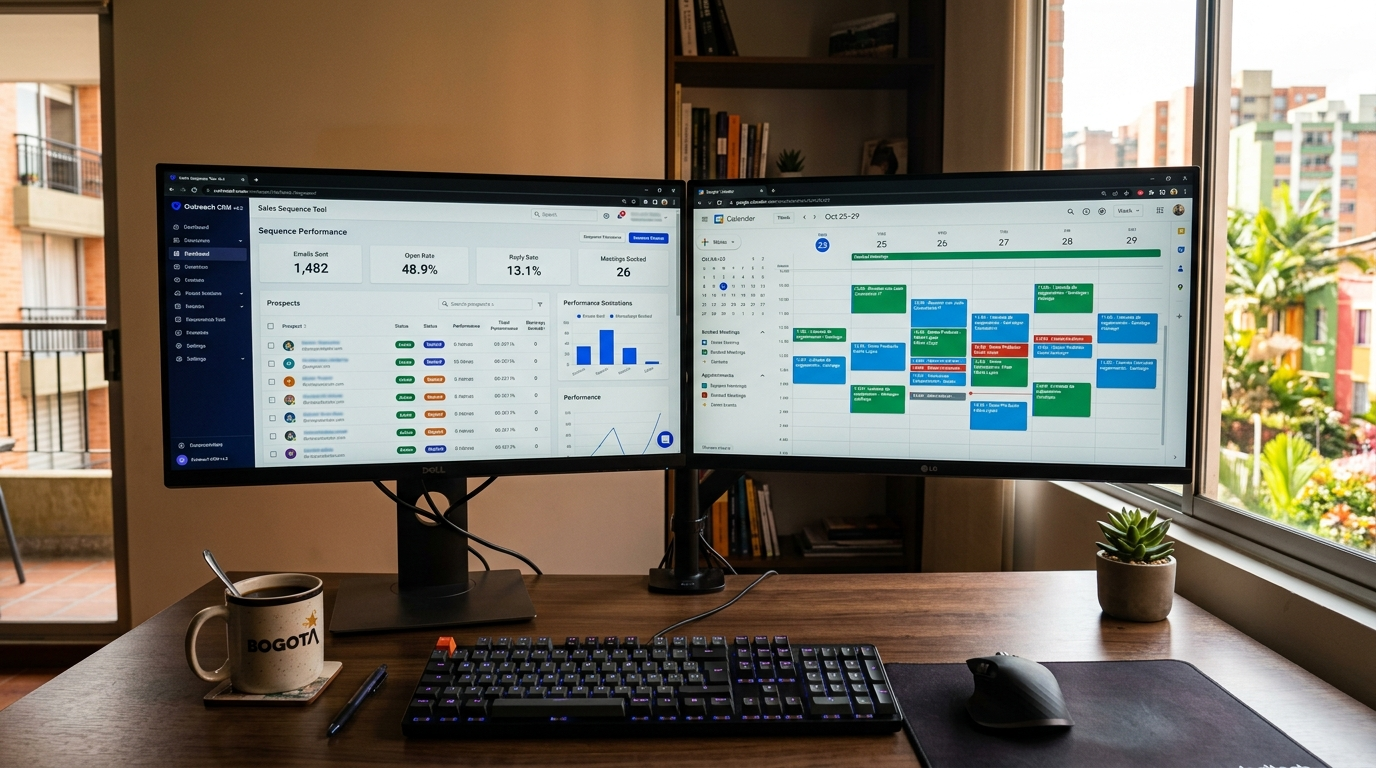
The biggest shift in SDR performance benchmarks heading into 2026 is AI-assisted prospecting. SDRs using AI writing assistants for sequence personalization, intent-data platforms like 6sense or Bombora to prioritize accounts, and AI call coaching tools are converting at the high end of the 4–6% range — sometimes above it. The manual-only SDR is now a structural disadvantage.
Rose builds role-specific AI copilots into every team member's workflow. For SDRs, that means personalization at scale, real-time call coaching, and CRM hygiene that doesn't require a RevOps manager to babysit. The AI advantage framework Rose uses trains each rep on their specific tools — whether that's HubSpot, Salesforce, or Apollo — before their first dial. The result is faster ramp and higher conversion from week one.
For smaller teams without a large outbound budget, the AI lift is even more pronounced. Research from McKinsey & Company (2024) found that sales teams using AI tools for outbound prospecting increased their lead conversion rates by up to 50% versus non-AI peers. An outsourced SDR with AI tools is not a cheaper version of an in-house rep — it's a structurally different and often better-equipped prospecting engine.
Define your ICP in writing
Document firmographics, technographics, and trigger events before the SDR sends a single email. This is the single highest-leverage pre-launch activity.
Provision tools on day one
Sequence platform, CRM access, LinkedIn Sales Navigator, and a verified email/phone data source must be live before the SDR's first shift — not week two.
Set a 30-day volume baseline
Track touches-per-day, reply rate, and meeting rate weekly for the first 30 days. Don't optimize the message before you've established the volume baseline.
Run weekly sequence reviews
Review open rates, reply rates, and positive-reply rates by sequence step. Kill underperforming steps at day 21, not day 90.
Close the AE handoff loop
Require AEs to log meeting prep notes and no-show reasons back to the SDR. Closed-loop feedback is what pushes nearshore SDRs from 3% to 5%+ over 60–90 days.
Is an Outsourced SDR Right for Your Business in 2026?
Outsourcing SDR work makes quantitative sense for most companies under 200 employees that don't have a dedicated sales ops function. The fully-loaded cost of an in-house SDR — salary, benefits, recruiting, management time, tools — runs $80,000–$120,000 per year in most US markets, per Bureau of Labor Statistics occupational data (2024). A nearshore SDR through Rose runs $2,500/month flat — $30,000/year — with recruiting, vetting, payroll, HR, and ongoing management included.
That's not a rounding error. It's a structural cost advantage that lets early-stage companies run a full outbound motion previously only accessible to Series B+ companies. For companies under 20 employees wondering where SDR outsourcing fits in their growth stack, this overview of B2B lead generation services built for small teams shows how outsourced SDRs compare to other lead gen options at that scale.
Why Outsourced SDR Works
- 50–70% lower cost vs. in-house, same conversion potential
- No recruiting lag — deployed in days, not months
- Month-to-month terms, no long-term contract
- AI-equipped from day one, no RevOps setup required
- Free replacement if the SDR isn't the right fit
Where It Requires Work
- You must document ICP and messaging — SDRs don't invent strategy
- AE capacity must exist to absorb meetings
- Tool provisioning falls on your team (CRM, sequencer, data)
- First 30–45 days are a calibration period, not a conversion period
Rose operates on a month-to-month basis with no long-term contract. If the SDR placement isn't performing after a fair calibration window, Rose replaces them at no additional cost — that's the only guarantee that matters in this category, and it's the only one Rose makes. To see how the engagement works from intake to first dial, visit the get started page and review the matching process.