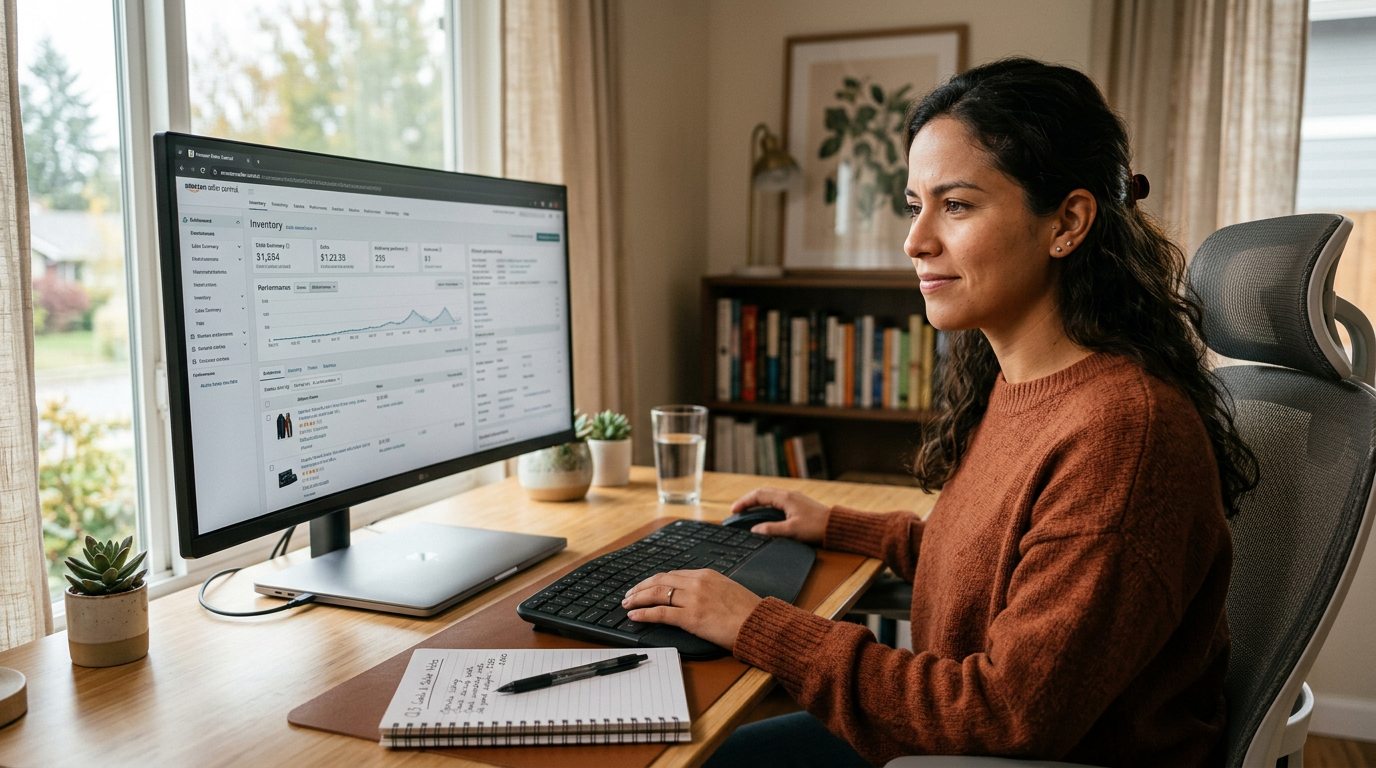
Nearshore FBA assistants have become the quiet engine behind some of the fastest-growing Amazon businesses in North America. If you're running an FBA operation and still handling listing updates, inventory alerts, and supplier emails yourself, you're doing $12-an-hour work with a founder's brain — and that's the core problem a skilled FBA assistant solves. This guide breaks down exactly what an FBA assistant is, what tasks they own, what they cost in 2026, and how to choose the right model so you stop being the bottleneck in your own business.
What Is an FBA Assistant, Exactly?
An FBA assistant is a virtual team member who manages the operational layer of an Amazon Fulfillment by Amazon (FBA) business. FBA is Amazon's program where sellers send inventory to Amazon's warehouses and Amazon handles picking, packing, and shipping to customers. The logistics are handled by Amazon — but everything upstream (sourcing, listings, inventory planning, PPC monitoring, customer messages, returns) still falls on the seller. That's what an FBA assistant takes off your plate.
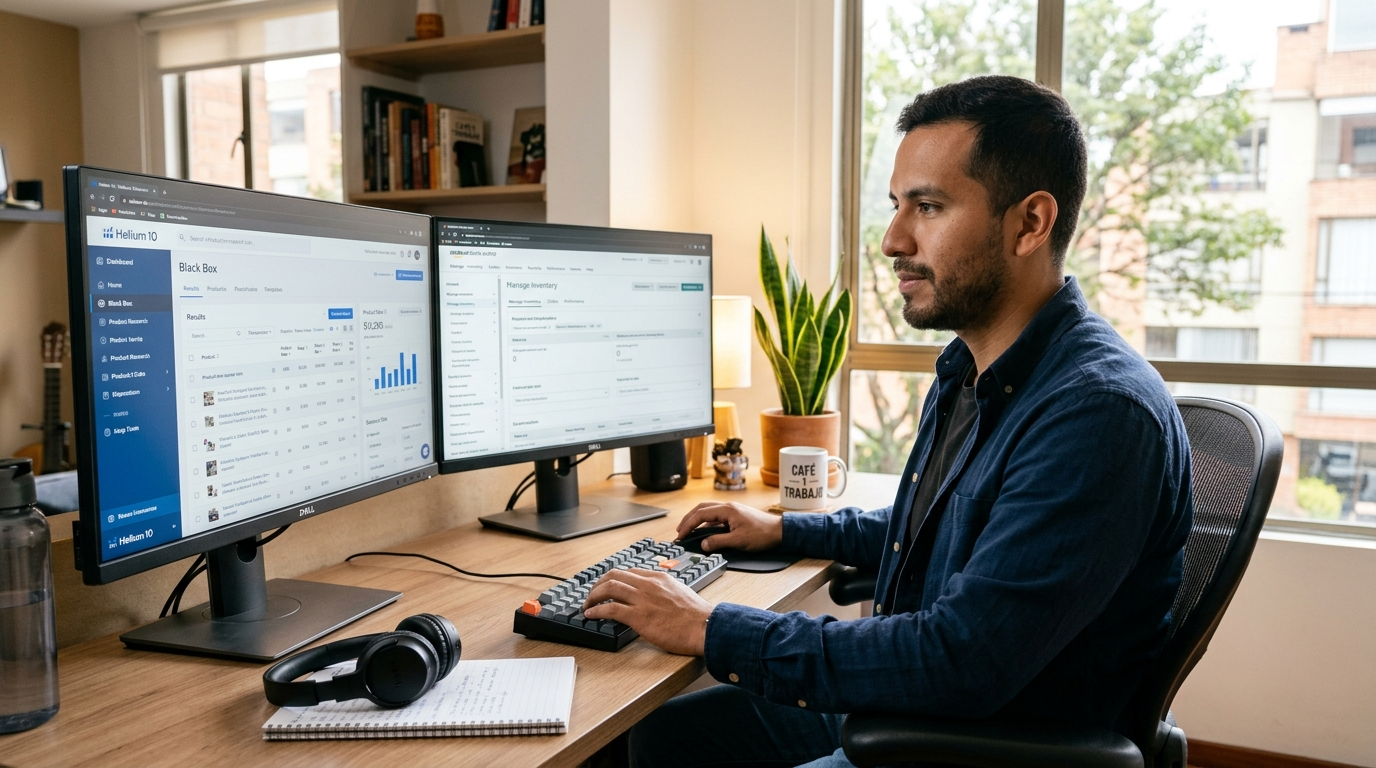
A strong FBA assistant typically handles: product listing creation and optimization, keyword research using tools like Helium 10 or Jungle Scout, inventory reorder tracking, shipment creation in Seller Central, supplier communication, review monitoring, and basic PPC campaign reporting. Senior FBA assistants can also run full PPC campaigns, manage brand analytics, and coordinate 3PL handoffs. The role is not a generalist VA role — it requires platform-specific knowledge of Amazon Seller Central and comfort with third-party seller tools.
According to Statista (2024), third-party sellers now account for more than 60% of Amazon's total sales volume — meaning competition for shelf space, rankings, and buy-box ownership is fiercer than ever. Sellers who delegate operations to a trained FBA assistant move faster and respond to market shifts without burning out.
What Does an FBA Assistant Actually Do in 2026?
The day-to-day scope of an FBA assistant has expanded significantly in 2026 as Amazon's ecosystem has grown more complex. Here's what a full-time FBA assistant typically owns across a 40-hour work week:
- Listing management: Writing and updating titles, bullets, A+ content, and backend search terms based on keyword data from Helium 10 or Data Dive.
- Inventory monitoring: Tracking stock levels, flagging reorder points, creating FBA shipment plans in Seller Central, and coordinating with suppliers or 3PLs.
- Customer service: Responding to buyer messages within Amazon's 24-hour SLA, handling returns and refund requests, and monitoring product reviews for policy violations.
- PPC support: Downloading campaign reports, flagging underperforming ad groups, adjusting bids based on target ACoS, and building out negative keyword lists.
- Supplier coordination: Communicating with overseas manufacturers, tracking purchase orders, confirming shipment timelines, and updating master SKU sheets.
- Competitive monitoring: Tracking Buy Box status, flagging pricing shifts from competitors, and alerting you to listing suppressions or policy warnings.
The U.S. Bureau of Labor Statistics projects that demand for administrative and operations support roles — including virtual assistants — will remain strong through 2026 as remote work infrastructure matures, according to the BLS Occupational Outlook Handbook. For Amazon sellers, that translates directly into a broader, more skilled talent pool to hire from — especially when you look beyond U.S. borders.
How Nearshore FBA Assistants Compare to Offshore and Onshore in 2026
When sellers start looking for an FBA assistant, they usually encounter three hiring models: onshore (U.S.-based), offshore (Philippines, India, Pakistan), and nearshore (Latin America). The differences in cost, communication quality, and timezone alignment are significant — and they compound over time. If you want a fuller breakdown, this complete comparison of nearshore vs. offshore vs. onshore virtual assistants goes deep on every dimension.
The table below summarizes the key differences for FBA-specific use cases:
| Factor | Onshore (U.S.) | Nearshore (Latin America) | Offshore (Philippines/India) |
|---|---|---|---|
| Monthly cost (full-time) | $4,500–$7,000+ | $2,500 flat (Rose) | $800–$1,800 |
| Timezone overlap with U.S. | Full overlap | Full overlap (same hours) | 6–12 hour gap |
| English proficiency | Native | 8/10+ (fluent) | Varies widely (4–8/10) |
| Amazon Seller Central familiarity | High (costly to retain) | High (pre-vetted) | Variable |
| Response time to U.S. sellers | Real-time | Real-time | Next-day batched |
| Recruiting + HR overhead | High (DIY or agency) | Fully managed (Rose) | Medium–High |
| Replacement if not a fit | Start over | Free replacement (Rose) | Start over |
The timezone issue deserves more attention than it typically gets. Amazon's 24-hour buyer message SLA means a VA who starts their day at midnight U.S. Eastern Time will routinely push you close to the response deadline. A nearshore assistant working U.S. business hours handles those messages in real-time, with no batch delay. For a head-to-head look at how onshore and offshore VA models actually compare in practice, that post lays out the tradeoffs clearly.
"The VA market has matured to the point where Latin American talent is genuinely competitive with any offshore market — and the timezone alone makes them worth the small price premium over Asia-Pacific options." — Matthew Capala, Founder at Alphametic, speaking on remote talent strategy (2024)
How the AI Copilot Advantage Changes What an FBA Assistant Can Do
In 2026, the best-trained FBA assistants don't just know Seller Central — they work alongside AI tools purpose-built for the platforms they use daily. At Rose, every team member ships with a role-specific AI copilot trained on the software they use most: Helium 10, Jungle Scout, Amazon Seller Central, and QuickBooks for sellers who also need bookkeeping support. This isn't a generic ChatGPT wrapper — it's a tool calibrated to the actual workflows your assistant runs every day.
The practical impact: an AI-augmented FBA assistant can draft an A+ content brief in 20 minutes instead of 90, generate a competitor gap analysis in Helium 10 in real-time, and build a reorder forecast from your velocity data without waiting for you to compile a spreadsheet. According to McKinsey's analysis of generative AI's economic potential (2023), AI tools can lift knowledge worker productivity by 20–45% depending on task type — and FBA operations are squarely in the high-impact zone.
An AI copilot doesn't replace your FBA assistant — it multiplies them. A trained nearshore VA with the right AI tools can cover the output of 1.5–2 untrained generalist assistants, at the same monthly cost. That's the leverage point most sellers miss when they compare on price alone.
If you're also managing the financial side of your FBA business — tracking COGS, reconciling Amazon payouts, categorizing ad spend — Rose's bookkeeping and accounting VAs can run that layer in parallel, inside the same flat monthly model. Many sellers pair an FBA operations assistant with a bookkeeping VA as their business scales past $1M in annual revenue.
How Much Does an FBA Assistant Cost in 2026?
Cost is where most sellers get surprised — either by how expensive U.S.-based help is, or by how much hidden overhead comes with cheap offshore options. Here's the real picture in 2026:
Onshore FBA assistants typically run $25–$45/hour, putting a full-time hire at $4,000–$7,200/month before benefits, payroll taxes, recruiting fees, and HR overhead. Offshore assistants in the Philippines or India run $5–$12/hour, which sounds cheap until you factor in the management overhead of a large timezone gap, inconsistent English proficiency, and the time cost of re-recruiting when a hire doesn't work out.
Nearshore assistants through a managed agency like Rose sit at $2,500/month flat — full-time (40 hours/week), all-in. That price includes recruiting, vetting, payroll, HR, and ongoing management. There's no long-term contract, and if the team member isn't a fit, Rose replaces them at no additional cost. For context on what that rate looks like relative to market rates across Latin America, this breakdown of average Latin America VA salaries shows why the region offers such strong value at this price point.
According to SHRM's HR cost research, the total cost of a bad hire averages 50–200% of annual salary when you include recruiting, onboarding, and lost productivity. For sellers hiring offshore VAs independently with no vetting infrastructure, that risk is real. A managed nearshore model shifts that risk to the agency.
How to Get Started with a Nearshore FBA Assistant in 2026
The process of hiring through Rose is designed to get you to a working assistant in roughly one week. If you've previously used a Latin America staffing agency and found the process slow or opaque, Rose's model is built to solve exactly that frustration.
Intake call (Day 1)
You describe your FBA operation: volume, tools used (Helium 10, Jungle Scout, etc.), current bottlenecks, and the tasks you want off your plate. Rose uses this to write a role spec.
Matching and vetting (Days 2–5)
Rose screens candidates against your role spec, administers English proficiency and platform-knowledge assessments, and shortlists 2–3 candidates for your review.
Interview and selection (Day 5–6)
You interview your top match — or let Rose select on your behalf. Most sellers pick their assistant in one round.
Onboarding and AI copilot setup (Day 7)
Your assistant gets access to your Seller Central account, tools, and their role-specific AI copilot. Rose manages payroll and HR from day one.
Ongoing management (Month 1+)
Rose handles HR, performance check-ins, and any escalations. If the assistant isn't the right fit, the replacement guarantee kicks in at no extra cost.
If you're ready to stop being the operational bottleneck in your FBA business, the fastest next step is to start your search with Rose — the intake process takes under 30 minutes and most sellers have a matched candidate within five business days.
Why nearshore FBA assistants win
- Full U.S. timezone overlap — real-time responses, no batch delays
- 8/10+ English fluency means clear communication with suppliers and your team
- Flat $2,500/month covers recruiting, payroll, HR, and management
- AI copilot pre-loaded for Seller Central, Helium 10, and QuickBooks
- Free replacement if the match isn't right — no restart cost
Where sellers run into friction
- Requires a clear SOP or willingness to document workflows during onboarding
- Not the cheapest option vs. raw offshore hourly rates (but total cost is competitive)
- Best suited for sellers doing $250K+ annual revenue with consistent operational volume
The Amazon FBA landscape in 2026 rewards operators who build systems, not founders who grind tasks. An FBA assistant — especially one trained on the right tools, working in your timezone, and backed by a managed staffing model — is one of the highest-leverage hires you can make. According to Gallup's employee engagement research (2023), workers who have clear role definitions and consistent management support perform measurably better — a core reason managed nearshore models outperform freelance marketplaces for sustained FBA operations.