
Nearshore virtual assistant transcription is quietly becoming one of the highest-leverage administrative investments a US business can make in 2026. When every sales call, client meeting, deposition, podcast episode, or property walkthrough generates audio that never gets documented, your team is hemorrhaging institutional knowledge daily. A nearshore VA based in Latin America converts that audio into clean, searchable, actionable text — in real time, during your business day, without the overnight lag you get from providers operating outside your timezone.
This guide covers exactly what virtual assistant transcription is, what it costs, how to evaluate providers, and why the nearshore model consistently outperforms every alternative. If you're a business owner who's been burning hours on manual note-taking or paying for clunky automated tools that miss context, keep reading.
What Is Virtual Assistant Transcription in 2026?
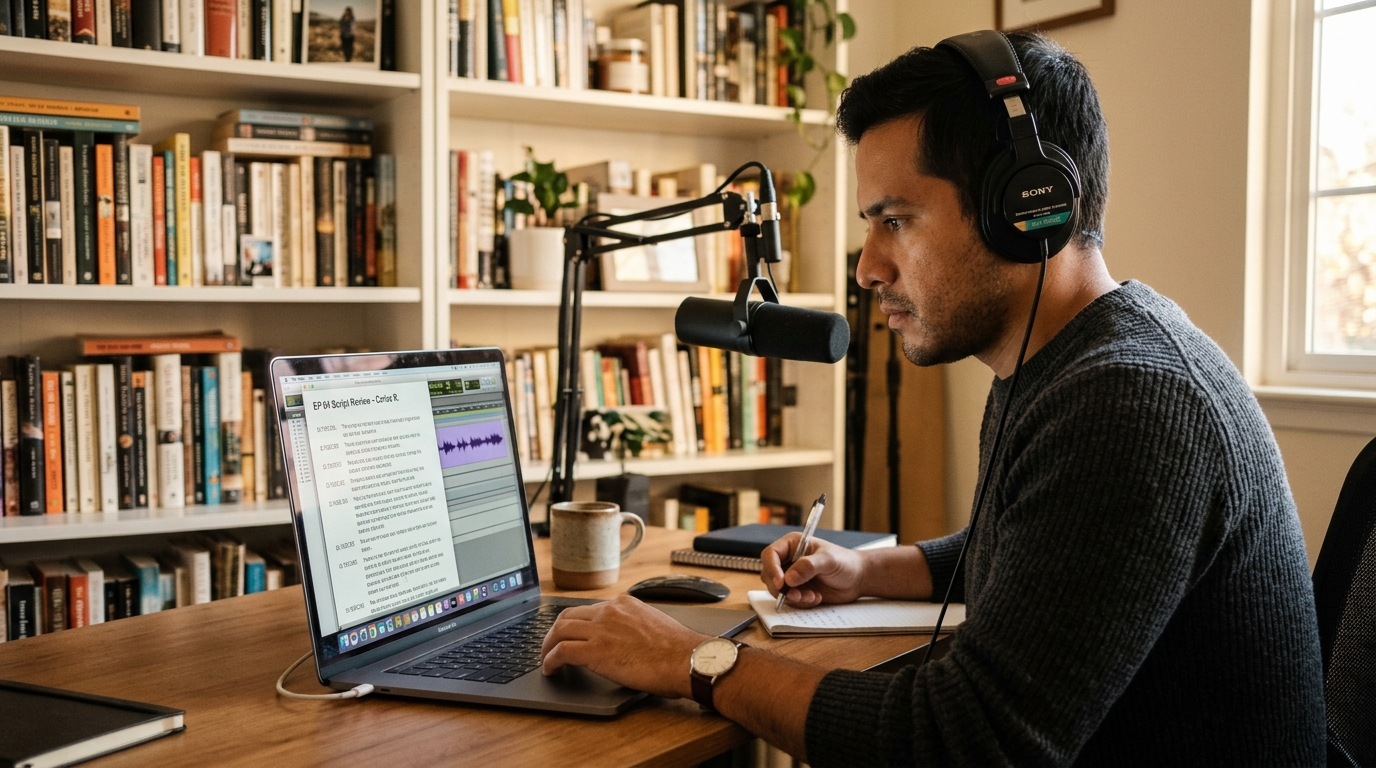
Virtual assistant transcription is the practice of delegating audio-to-text conversion work to a remote, dedicated team member. The VA listens to recorded or live audio — calls, Zoom meetings, dictations, court hearings, medical consultations, podcast interviews — and produces an accurate written transcript. Unlike automated speech-to-text software, a skilled VA applies judgment: she distinguishes speakers, catches industry-specific terminology, notes tone, and formats the final document according to your style requirements.
What makes 2026 different from even two years ago is the AI layer. The best virtual assistant transcription setups today pair the VA's human judgment with AI transcription tools — think Otter.ai, Fireflies, or Whisper-based models — so the VA isn't typing from scratch. She's reviewing, correcting, formatting, and contextualizing an AI draft. This hybrid approach produces near-perfect accuracy at a fraction of the time cost of fully manual transcription.
At Rose Talent Solutions, every transcription VA ships with a role-specific AI copilot trained on the tools and terminology relevant to your industry — whether that's legal, real estate, medical, or business operations. That means your VA isn't starting from zero on day one with your software stack.
How Nearshore VAs Outperform Offshore for Transcription Work in 2026
The single biggest problem with far-offshore transcription arrangements is the timezone gap. When your business day ends at 6 PM Eastern and your VA's workday begins late in your evening, every transcription request becomes an overnight batch job. You send audio Monday afternoon and get a transcript Tuesday morning. That delay kills the usefulness of same-day meeting notes, real-time CRM updates, and fast-turnaround client deliverables.
Nearshore VAs in Latin America work your business hours. Colombia is on Eastern Time. Mexico City is on Central. Argentina is one or two hours ahead of Eastern at most. That means your transcription VA can sit on your Zoom calls live, have a formatted transcript in your inbox within 30 minutes of the call ending, and be available on Slack if you need a correction. This isn't a marginal improvement — it's a fundamentally different workflow.
English proficiency is the second lever. Rose screens every candidate to an 8/10 or higher on English proficiency, which means your VA understands nuance, idiom, and industry jargon — not just literal words. A VA who doesn't fully understand what she's hearing will produce transcripts full of plausible-sounding errors that are worse than useless because they look accurate. If you want the full breakdown of how the nearshore model stacks up, our complete comparison of nearshore vs. offshore vs. onshore virtual assistants goes deep on every dimension.
"The quality difference between a human reviewer and a raw AI transcript is enormous in specialized fields — legal, medical, financial. The human layer isn't optional; it's the product." — Josh Millet, Founder & CEO at Criteria Corp, speaking on AI-assisted hiring and assessment workflows (2024)
According to the U.S. Bureau of Labor Statistics (2024), medical transcription alone is a multi-billion-dollar services category, and the demand for human review of AI-generated transcripts is growing — not shrinking — as AI error rates in specialized terminology remain high enough to require human correction.
Nearshore vs. Offshore vs. Onshore vs. Automated: 2026 Transcription Comparison
Not all transcription solutions are equal. The table below compares the four main options across the dimensions that matter most to a US business owner: accuracy, turnaround, cost, timezone fit, and the ability to handle sensitive or specialized content.
| Dimension | Nearshore VA (Latin America) | Far-Offshore VA (distant timezone) | Onshore VA (US-based) | Automated Only (AI tools) |
|---|---|---|---|---|
| Accuracy on specialized content | High — human review + AI assist | Medium — dependent on individual | High — native speaker advantage | Low–Medium — misses jargon, speakers |
| Turnaround (same-day) | Yes — works US hours | No — overnight batch typical | Yes — works US hours | Yes — but raw output requires editing |
| Monthly cost (full-time) | ~$2,500 flat (all-in) | $1,200–$2,000 (varies widely) | $4,500–$7,000+ | $30–$500/mo (but needs human QA) |
| Timezone alignment (US) | Excellent — 0–2 hr offset | Poor — 10–13 hr offset | Perfect | N/A — async tool |
| Sensitive/confidential content | Yes — dedicated, vetted hire | Variable — depends on platform | Yes — dedicated hire | Risk — data sent to third-party servers |
| Scalability | High — add roles as needed | Medium | Low — cost limits headcount | High — but quality ceiling exists |
For businesses that have explored the landscape of virtual assistant companies in Latin America, the pricing and quality picture is now well-established: nearshore consistently wins on the value-adjusted basis once you factor in timezone, English quality, and turnaround reliability.
What Types of Transcription Can a Virtual Assistant Handle in 2026?
A well-trained transcription VA is not limited to typing up Zoom calls. The range of use cases has expanded significantly as businesses realize that any recorded audio represents undocumented business intelligence. Here are the most common transcription categories Rose VAs handle:
- Sales call transcription — converting recorded prospect calls into CRM notes, objection logs, and follow-up action items
- Client meeting notes — structured summaries with decision points, owners, and deadlines pulled from meeting recordings
- Legal transcription — depositions, hearings, client intake calls, and attorney dictation (requires high accuracy and confidentiality protocols)
- Real estate transcription — property walkthrough notes, landlord-tenant call logs, lease negotiation recordings
- Medical transcription — provider dictation, patient intake notes, telehealth session summaries (HIPAA-aware workflows)
- Podcast and video transcription — episode transcripts for SEO, show notes, and repurposed content
- Financial dictation — advisor call notes, earnings call summaries, bookkeeping-related audio documentation
The last category — financial transcription — connects naturally to broader administrative support. If your VA is already handling transcription of advisor or client calls, the logical next step is integrating that documentation into your bookkeeping workflows. Our bookkeeping and accounting VA services page covers how that integration works in practice.
The hidden cost of relying on automated transcription alone isn't the subscription fee — it's the 15–30 minutes per document your highest-paid team members spend correcting AI errors, reformatting output, and chasing down missed action items. A dedicated VA eliminates that tax entirely.
According to McKinsey's analysis of generative AI's economic potential (2023), knowledge workers currently spend an estimated 20–25% of their workweek on tasks that could be delegated — documentation and transcription being among the highest-volume categories. Reclaiming even half that time per senior employee pays for a full-time VA many times over.
How the Rose Talent Solutions Transcription VA Hiring Process Works in 2026
Getting a transcription VA placed through Rose is a structured process — not a marketplace scroll. Here's the sequence from inquiry to first transcript:
Discovery Call
You tell us your transcription volume, content type (legal, medical, business, podcast), software stack, and turnaround expectations. We define the role spec together — this is not a form-fill exercise.
Candidate Matching
Rose recruits, vets, and English-screens candidates specifically for your role. Every candidate clears our 8/10+ English proficiency bar and passes a transcription accuracy assessment before you see their profile.
Interview & Selection
You interview your top match — usually within 5–7 business days of kickoff. You make the final call. If nobody feels right, we keep searching at no extra cost.
Onboarding & AI Copilot Setup
Your VA is onboarded with a role-specific AI copilot — typically Otter.ai or Whisper-based tooling — calibrated to your industry's vocabulary. By day one, she's working in your actual workflow, not learning from scratch.
Ongoing Management
Rose handles payroll, HR, compliance, and performance management. You manage the work. If the fit isn't right at any point, we replace the VA at no additional cost — that's our replacement guarantee.
The flat rate is $2,500/month. That covers everything: recruiting, vetting, payroll, HR, and ongoing management. No long-term contract — month-to-month with 30 days written notice. If you're ready to scope your role, the fastest way in is through the get started page.
How to Evaluate Whether Nearshore Transcription VAs Are Right for Your Business
Not every business is the right fit for a full-time dedicated transcription VA. Here's an honest framework for deciding.
Strong fit — hire a transcription VA if:
- You generate 5+ hours of recorded audio per week that goes undocumented
- Your team spends meaningful time on manual note cleanup after meetings
- You operate in legal, medical, real estate, or financial services where transcription accuracy is compliance-relevant
- You need same-day turnaround and have been burned by overnight delays from far-offshore arrangements
- You want a dedicated person who learns your terminology, speakers, and preferences over time
Wait or use automation if:
- Your audio volume is under 2 hours/week — automation tools cost less at that scale
- Your content is entirely informal and low-stakes — AI output is good enough for internal Slack recaps
- You don't have the 30–60 minutes of onboarding investment to properly set up a VA's workflow
For businesses that clear that threshold — especially in real estate, legal, and professional services — the ROI math is straightforward. A senior associate or manager billing at $100+/hour who spends 5 hours/week on transcription-adjacent tasks is burning $500/week, or $2,000/month, on work a dedicated VA handles better. That's the full cost of the VA right there, before you count output quality improvements.
The Latin America staffing agency model — vetted, managed, nearshore — is structurally different from a freelance marketplace hire. You're not posting a job and hoping. You're getting a recruited, screened, managed team member who shows up to your business like an employee, without the overhead of domestic employment.
According to SHRM's talent acquisition research (2023), the average cost of a bad hire equals 50–200% of that role's annual salary. Vetting quality — not just price — is the variable that determines whether a VA hire pays off or becomes another sunk cost. That's why Rose's replacement guarantee exists: if the placement isn't a fit, we replace at no additional cost.
If you want to understand the full landscape before deciding, the onshore vs. offshore virtual assistant comparison is a useful reference — it covers the structural tradeoffs that apply to transcription roles specifically. And if you're exploring the broader category of property management virtual assistant support, transcription is frequently one of the first tasks PM operators delegate once they see how much audio their business generates from tenant calls, maintenance walkthroughs, and owner reports.
According to Pew Research Center's analysis of AI exposure by occupation (2023), administrative and documentation roles rank among the highest for AI augmentation potential — meaning the best near-term outcome isn't replacing the human, it's pairing a skilled VA with AI tools to 3–5x her output per hour. That's exactly the model Rose deploys for transcription roles in 2026.
According to Gallup's State of the American Workplace report (2023), employees who spend the majority of their time on low-skill administrative tasks report significantly lower engagement scores — and transcription is consistently flagged as one of the top tasks that skilled professionals most want removed from their plates. Delegating it to a dedicated nearshore VA is one of the fastest ways to reclaim focus time for your highest-value people.