
Nearshore staffing from Guadalajara has quietly become the most practical answer to a problem every US business owner knows well: you need skilled, reliable, full-time support — but domestic hiring costs are brutal, and the traditional offshore route leaves you managing a 10-hour time zone gap. Guadalajara, Mexico's second-largest city, sits in Central Time and has produced one of Latin America's deepest pools of English-fluent, tech-literate professionals. This guide breaks down exactly what a nearshore staffing firm in Guadalajara offers in 2026, how pricing works, what to watch out for, and how to pick the right partner.
What Is a Nearshore Staffing Firm — and Why Does It Matter in 2026?
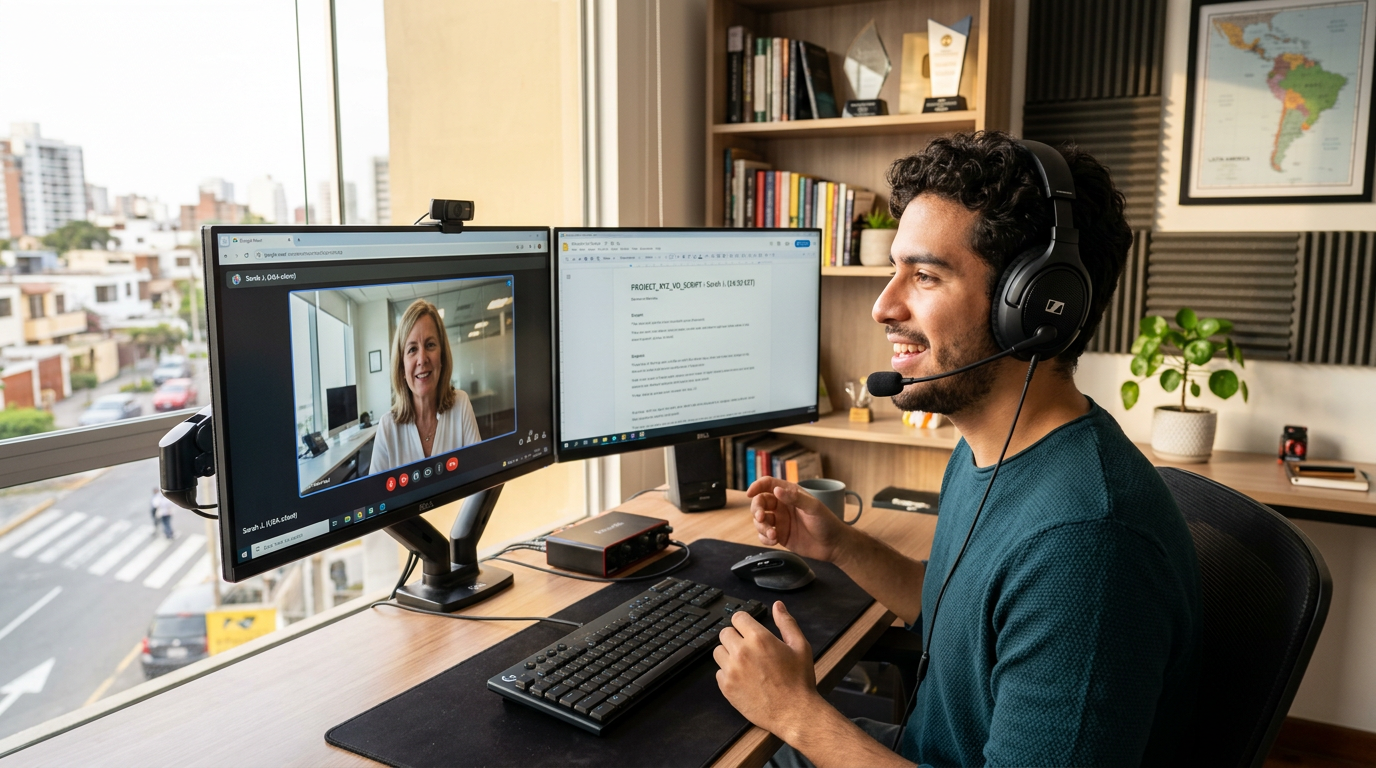
A nearshore staffing firm recruits, vets, and places full-time workers from nearby countries — in this context, Latin America — to support businesses in the US, Canada, or UK. The "near" in nearshore refers to geographic and cultural proximity, not just cost. Team members work your business hours, join your Slack, answer your phones, and live in overlapping time zones. That last point is not a minor detail: it changes everything about how fast decisions get made and how naturally remote collaboration flows.
Nearshore is distinct from offshore (Philippines, India, Eastern Europe) where you're typically dealing with a 9–13 hour time gap and cultural frameworks that require heavier management overhead. If you want a deeper breakdown of how these models compare on real operational dimensions, Rose's detailed guide on nearshore vs offshore vs onshore virtual assistants lays out the full picture. In short: nearshore wins on collaboration; offshore wins on raw cost; onshore wins on nothing except domestic familiarity.
Guadalajara specifically has earned the nickname "Mexico's Silicon Valley." The city is home to over 600 multinational tech and services companies, a massive bilingual workforce shaped by NAFTA-era commerce, and a university ecosystem producing tens of thousands of business and tech graduates each year, according to Mexico's Secretaría de Economía (2023). That talent concentration is why serious nearshore firms anchor their recruiting pipelines there.
How Nearshore and Offshore Staffing Models Compare in 2026
The staffing market has splintered into three camps, and most buyers conflate them until they've made a painful hiring mistake. The table below gives you a clear side-by-side so you can evaluate any firm — including Rose — against an objective framework.
| Factor | Nearshore (Latin America) | Offshore (Philippines / India) | Onshore (US-based VA) |
|---|---|---|---|
| Time Zone Overlap | Full overlap — US business hours | Minimal — 9–13 hr gap; night shifts required | Full overlap |
| Typical Monthly Cost (FT) | $2,000–$3,500 all-in | $800–$1,800 all-in | $4,500–$7,000+ all-in |
| English Fluency | High — 8/10+ screened | Moderate — accent variance; screening inconsistent | Native |
| Cultural Alignment (US) | Strong — shared media, geography, commerce | Moderate — requires training on US norms | Native |
| Ramp / Onboarding Speed | Fast — 1–2 weeks to productive | Slower — timezone delays compound feedback loops | Fast — but expensive to replace if wrong fit |
| Contract Flexibility | Month-to-month (Rose) | Varies — often 6–12 month minimums | At-will but no management support |
| AI Tooling Included | Yes — role-specific AI copilot (Rose) | Rarely included at base price | DIY — you provide tools |
The cost column alone doesn't tell the full story. Offshore might look cheaper at $1,200/month, but factor in the management overhead of async-only communication, the ramp time lost to night-shift scheduling friction, and the higher turnover rates at low-cost offshore providers — and the true cost picture shifts. SHRM research (2024) consistently shows that the hidden productivity cost of timezone misalignment averages $8,700 per hire per year for knowledge-work roles.
How a Guadalajara Nearshore Firm Actually Staffs Your Business in 2026
The mechanics matter as much as the pitch. A strong nearshore firm doesn't just post a job ad in Mexico City and hope. It maintains an active pipeline of pre-vetted candidates, runs structured assessments, and places someone who's already been tested on the tools your business uses. Here's how the Rose process works, which is representative of what the best Guadalajara-adjacent firms do:
Role Discovery Call
You spend 20–30 minutes with a placement specialist mapping your workflows, software stack, and team communication style. This is where Rose determines whether you need a property management coordinator, a bookkeeping and accounting specialist, or another role entirely.
Candidate Matching
Rose surfaces 2–3 pre-vetted candidates from its Latin America pipeline — all screened for English proficiency (8/10+ floor), technical skills, and cultural fit. You review profiles and interview your top pick.
AI Copilot Setup
Before day one, Rose configures a role-specific AI copilot trained on your software — AppFolio, Buildium, QuickBooks, or whatever your stack requires. This is part of Rose's AI advantage included at no extra cost.
Day-One Onboarding
Your team member starts during your business hours, joins your communication channels, and begins ramping immediately. Rose handles payroll, HR compliance, and ongoing performance management in the background.
Ongoing Support + Replacement Guarantee
If the team member isn't the right fit at any point, Rose replaces them at no additional cost. Month-to-month terms mean you're never locked into a long-term contract.
This structure is why the nearshore model consistently outperforms DIY offshore hiring for small and mid-size businesses. You're not managing a contractor — you're getting a managed team member. For a broader look at how Latin America staffing agencies structure these relationships, Rose's overview of Latin America staffing agencies covers the full landscape of firm types and pricing structures.
What Does a Nearshore Staffing Firm in Guadalajara Cost in 2026?
Pricing in the nearshore space ranges from murky to crystal clear, depending on the firm. Some charge a placement fee plus a monthly management retainer. Others charge hourly. Rose charges a single flat rate: $2,500/month for a full-time, 40-hour-per-week team member, with recruiting, vetting, payroll, HR, and ongoing management all included. No per-task fees. No surprise invoices.
For context, the fully-loaded cost of a US-based administrative hire — salary, payroll taxes, benefits, recruiting — averages $52,000–$68,000 per year for entry-to-mid-level roles, according to the U.S. Bureau of Labor Statistics Occupational Employment Statistics (2024). At $2,500/month, Rose's nearshore model comes in at $30,000/year — a savings of $22,000–$38,000 annually on a comparable role, before you count the recruiting time you no longer spend.
The $2,500/month flat rate includes everything — recruiting, vetting, payroll, HR compliance, ongoing management, and a role-specific AI copilot. Most businesses spend more than that just on job board fees and recruiter time when hiring domestically.
Terms at Rose are month-to-month. You can cancel with 30 days' written notice — there's no long-term contract trapping you into a placement that isn't working. And if a team member isn't the right fit, Rose replaces them at no additional cost. That's the risk reversal. It's simple and specific.
"The best nearshore staffing partnerships in 2026 are built on transparent flat-rate pricing, genuine cultural fluency, and a replacement guarantee that doesn't require you to prove cause — just fit." — Matt Verlaque, COO at HighLevel and remote team scaling advocate, speaking at SaaStr Annual (2024)
If you're comparing this to hiring a freelancer from a marketplace, note the difference: a marketplace VA at $15–$20/hour full-time runs $2,400–$3,200/month with zero HR support, zero replacement guarantee, and zero AI tooling. The all-in management layer at a firm like Rose is where the real value lives — especially for operators who don't have an HR department to absorb the overhead.
Curious whether the nearshore model or a traditional onshore hire makes more sense for your specific situation? Rose's comparison of onshore vs offshore virtual assistants walks through a detailed cost-and-quality breakdown that applies equally well to the nearshore decision.
How AI-Equipped Nearshore VAs Outperform Traditional Hires in 2026
The single biggest shift in nearshore staffing between 2023 and 2026 is AI integration. The best firms no longer place team members as-is — they equip each person with a role-specific AI copilot trained on the software and workflows they'll use daily. At Rose, every team member ships with an AI layer built around their specific role: AppFolio coordinators get an AppFolio-trained copilot; QuickBooks specialists get a QuickBooks-trained assistant; Buildium users get Buildium-specific automation.
This matters for ramp time. Buildium's 2024 Property Management Industry Report found that technology-assisted staff complete routine administrative tasks 40% faster than non-assisted peers in the first 90 days. When your nearshore coordinator is already fluent in both the software and an AI layer that anticipates common task sequences, they're productive on week one — not week six.
The AI copilot isn't a chatbot bolted onto the side. It's trained on the specific workflows, terminology, and decision trees that matter for each role. A leasing coordinator's copilot knows how to draft move-in checklists, respond to maintenance request templates, and flag lease renewal windows — without being prompted from scratch each time. This is why Rose's Guadalajara nearshore staffing approach consistently beats generic offshore VA platforms on measurable output quality.
You can read the full breakdown of how this works on Rose's AI advantage page — but the short version is: every team member arrives with a productivity multiplier already installed.
Nearshore Guadalajara 2026: Pros, Cons, and Who It's Right For
No staffing model is right for every business. Here's an honest breakdown of who benefits most from a Guadalajara nearshore firm — and where the model has real limits.
Who It Works Best For
- US/Canada/UK businesses needing full-time (not occasional) support
- Operators who need real-time communication during business hours
- Property managers, accounting firms, and e-commerce brands using US-standard software
- Founders who want managed support — not another contractor to babysit
- Teams scaling quickly who can't afford US hiring timelines (4–8 weeks domestically vs. ~7 days nearshore)
Where It Has Limits
- If your workflow requires in-person presence (site visits, local errands), a remote VA isn't the answer
- Highly regulated industries (licensed legal, medical, financial advice) require additional compliance review
- If your budget is under $2,000/month all-in, offshore part-time models may be more realistic
- Businesses with zero existing SOPs may need to document workflows before a VA can be effective
The sweet spot is a business doing $500K–$10M in revenue that needs reliable, full-time operational support but isn't ready to build out a domestic HR function. That describes a huge portion of US property management companies, bookkeeping practices, real estate investment firms, and service businesses. If that's you, the nearshore model — particularly from a Guadalajara-anchored firm — is worth a serious look. You can get started directly at Rose's placement intake page to see what roles are available in your niche right now.
The global remote work market is projected to reach $1.04 trillion by 2030, according to Statista's remote work and gig economy projections (2024). Within that, nearshore Latin America is the fastest-growing segment for North American SMBs — driven by exactly the time zone, language, and cost dynamics this guide covers.
The firms winning in 2026 are not the cheapest — they're the ones who've solved the reliability problem: consistent English fluency screening, AI tooling that reduces ramp time, and replacement guarantees that take the hiring risk off your plate. That's the bar to hold any nearshore staffing firm to, whether you're evaluating Rose or anyone else.