
Why Nearshore Appointment Setting Is Winning SaaS Pipeline in 2026
Nearshore appointment setters — SDRs based in Latin America working your US business hours — have quietly become the highest-ROI pipeline lever available to SaaS companies right now. If you're paying a US-based SDR $55,000–$70,000 per year in base salary alone, or cycling through agencies that can't hold a live conversation without a 9-hour delay, you already know the problem. The question is which model actually fixes it.
Appointment setting is the single highest-leverage activity in a SaaS sales funnel. Every dollar of revenue traces back to a booked meeting, which means the quality, speed, and reliability of whoever books those meetings compounds across your entire closing team. Getting this role wrong — wrong timezone, wrong language fluency, wrong CRM skills — multiplies pipeline loss at scale.
According to Harvard Business Review's landmark lead-response study (2011, validated repeatedly since), companies that contact prospects within one hour are seven times more likely to qualify the lead than those that wait even 60 minutes longer. That single data point explains why a Latin America-based SDR operating on EST or PST will always outperform a team running on a schedule that is 8–12 hours removed from your buyers.

What Is an Appointment Setting Service? (2026 Definition)
An appointment setting service is a provider — agency, staffing firm, or embedded contractor — that handles top-of-funnel outreach on behalf of a sales team, with the sole objective of booking qualified discovery or demo calls onto an account executive's calendar. The appointment setter never closes the deal; they create the conditions for a closer to work.
In SaaS specifically, appointment setters typically run multi-channel sequences across cold email, LinkedIn, and phone. They qualify prospects against your ICP, handle initial objections, and hand off only meetings that meet a defined quality bar. The best appointment setting services for SaaS in 2026 layer AI tools — sequence automation, intent data signals, and AI-written first-draft outreach — on top of a human who can hold a real conversation when the phone actually rings.
According to Salesforce's State of Sales report (2024), 81% of sales reps say that selling as a team — meaning coordinated handoffs between setters and closers — is increasingly important to closing deals, underscoring why clean appointment-to-AE handoff processes matter so much in modern SaaS sales motions.
How the Top Appointment Setting Models Compare in 2026
There are four distinct models SaaS companies use for appointment setting: nearshore dedicated SDRs, offshore agencies, US in-house hires, and performance-based appointment setting agencies. Each has a different cost structure, risk profile, and ceiling. The table below distills the key variables you should be measuring before you sign anything.
| Model | Monthly Cost | Timezone Alignment (US) | English Fluency | Ramp Time | Replacement if Not a Fit |
|---|---|---|---|---|---|
| Nearshore Dedicated SDR (Rose Talent — Latin America) | $2,500 flat | ✅ Full overlap (EST/PST) | ✅ 8/10+ screened | ~1 week | ✅ Free replacement included |
| Offshore Agency (non-US, large timezone gap) | $1,200–$2,000 | ❌ 8–12 hr gap | ⚠️ Variable (no floor) | 2–4 weeks | ⚠️ Case-by-case |
| US In-House SDR | $5,500–$7,500 (base only) | ✅ Full overlap | ✅ Native | 4–8 weeks | ❌ Full rehire cost |
| Performance Agency (pay-per-meeting) | $150–$400/meeting | ⚠️ Varies by vendor | ⚠️ Varies by vendor | 2–3 weeks | ❌ No replacement; no-shows still billed |
If you're still evaluating whether to keep SDR functions in-house at all, the outsourced vs. in-house SDR ROI comparison Rose published breaks down the fully-loaded cost difference with real numbers — the gap is wider than most founders expect once you add employer taxes, benefits, management overhead, and churn replacement.
How AI Copilots Make Nearshore Appointment Setters Faster in 2026
The single biggest shift in appointment setting from 2023 to 2026 is the role of AI tooling layered on top of human SDRs. The best appointment setters today don't just work a dialer and a spreadsheet — they use AI to prioritize sequences, rewrite subject lines based on open-rate signals, and surface intent triggers from tools like Apollo, Clay, or Salesloft before they ever dial.
At Rose, every appointment setter ships with a role-specific AI copilot trained on their outreach stack — whether that's HubSpot sequences, Apollo workflows, or Outreach cadences. This isn't a generic ChatGPT wrapper; it's tooling calibrated to the specific CRM and sequencing platform your team already uses, so the SDR is productive from day one rather than spending two weeks learning your stack from scratch.
"AI won't replace salespeople — but salespeople who use AI will replace salespeople who don't. The gap in meetings booked between AI-augmented SDRs and unaugmented ones is already measurable at scale." — Keenan, Author & CEO at A Sales Guy Consulting (2024)
According to McKinsey's State of AI in Sales report (2024), sales teams using AI-assisted outreach report a 10–15% increase in leads contacted and a measurable lift in conversion rates compared to teams relying on manual sequencing alone. For an appointment setter whose only job is volume and quality of booked meetings, that compound lift matters every single week.
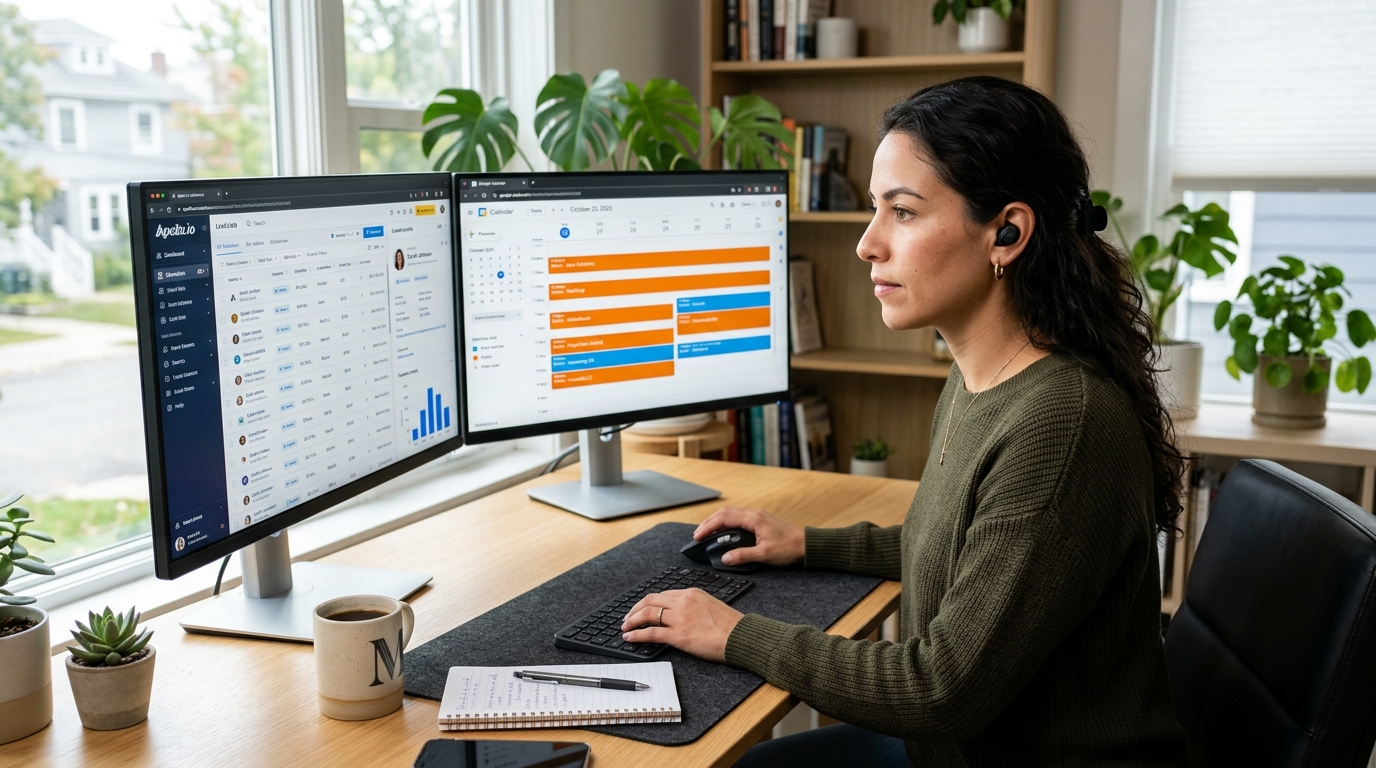
The hidden cost of a performance-based appointment setting agency isn't the per-meeting fee — it's that you're paying for meetings regardless of show rate or ICP fit, with no dedicated rep learning your product, no institutional memory building over time, and no replacement guarantee when the process breaks down.
What Does a Great Nearshore Appointment Setter Actually Do Day-to-Day?
Understanding the daily workflow helps you evaluate whether any appointment setting service — nearshore or otherwise — is actually structured for SaaS pipeline outcomes. A strong appointment setter in a SaaS context runs a repeatable daily process that looks roughly like this:
Morning Lead Review
Review new inbound form fills, trial signups, and intent signals from the previous night. Prioritize same-day outreach to any lead that entered the funnel in the last 12 hours — response speed is the highest-leverage variable in SaaS appointment setting.
Outbound Sequencing
Work cold outbound sequences across email and LinkedIn using the approved cadence. Review AI-generated first drafts, personalize with company-specific research, and push into the sequence tool.
Phone Block
Dedicated 2–3 hour calling block for high-priority prospects — warm inbounds, re-engagements, and cold calls flagged by intent data. These calls qualify against ICP criteria and book directly onto AE calendars.
CRM Hygiene + Reporting
Log every touchpoint in HubSpot, Salesforce, or your CRM of choice. Update contact stages, flag any out-of-ICP contacts for suppression, and record daily meeting count for pipeline reporting.
AE Handoff Prep
For every meeting booked, write a short pre-call brief — company context, pain points surfaced during the qualifying call, and any specific triggers that led to the booking. This single habit lifts AE close rates measurably.
If you're thinking through the full hiring process — not just the daily workflow but the vetting criteria, experience expectations, and where to source SDR talent — the deep-dive on how to hire outsourced SDR services for SaaS covers the exact screening framework Rose uses when matching appointment setters to SaaS clients.
How to Evaluate Any Appointment Setting Service in 2026: The 5 Questions
Whether you're evaluating Rose or any other provider, these five questions will separate services that produce pipeline from services that produce spreadsheets full of activity metrics.
1. What timezone do your setters work? This is non-negotiable for SaaS. If your buyers are in EST and your setter is 9 hours ahead, your speed-to-lead is dead. Nearshore Latin America teams work US hours natively — no shift premiums, no workarounds.
2. What's the English proficiency standard? Ask for a scored threshold, not a vague "fluent" claim. Rose requires 8/10 or higher on English proficiency screens for every appointment setter placed. According to SHRM research on talent acquisition costs (2022), a bad hire in a revenue-generating role costs an average of 50–60% of that employee's annual salary — clear fluency standards reduce that risk significantly.
3. What CRMs and sequencing tools can they operate on day one? Ramp time is a direct cost. An SDR who needs three weeks to learn Outreach or HubSpot sequences is three weeks of no pipeline. Ask for specific tool proficiency before you commit.
4. What happens if the setter isn't a fit? The only acceptable answer involves a replacement at no additional cost. With Rose, if the team member isn't the right fit, we replace them — that's the entire risk structure, and it's included in the flat $2,500/month rate.
5. What's the contract length? Be wary of providers requiring 6- or 12-month minimums before you've seen a single booked meeting. Rose operates month-to-month with no long-term contract — cancel with 30 days written notice if it's not working.
Nearshore Appointment Setting — Strengths
- Full US timezone overlap (EST through PST)
- English fluency screened to a measurable floor (8/10+)
- Lower cost than US in-house; no shift premiums unlike far-offshore alternatives
- Free replacement if the setter isn't a fit
- AI copilot included — trained on your specific outreach stack
- Month-to-month, no long-term contract
Nearshore Appointment Setting — Limitations
- Requires you to have a defined ICP and qualifying criteria before day one
- Best results when AEs have capacity to run demos — don't hire setters if your closing team is already overloaded
- Not a fit for ultra-niche verticals where deep technical domain knowledge is required on the first call
It's also worth benchmarking the experience level you need before you hire. The SDR hiring statistics on junior vs. senior experience levels Rose compiled shows exactly where the ROI math changes depending on whether you need a pure appointment setter or an SDR capable of higher-complexity qualification conversations.
According to U.S. Bureau of Labor Statistics data on sales representative compensation (2024), the median annual wage for wholesale and manufacturing sales reps exceeds $67,000 — a figure that doesn't include benefits, employer taxes, or recruiting costs. Nearshore appointment setters at $2,500/month represent roughly $30,000 annually all-in, including HR, payroll, and management, making the cost comparison straightforward.
According to Gallup's research on employee engagement and manager effectiveness (2023), teams with clearly defined roles and accountability structures outperform loosely structured teams on productivity metrics by a significant margin — a finding that maps directly to why dedicated nearshore appointment setters, with a single defined objective, consistently outperform shared-seat agency models where no individual rep owns your pipeline outcomes.
For a deeper look at how nearshore SDRs are structured for ongoing outbound work — beyond just appointment setting — the full guide to hiring a nearshore appointment setter covers sourcing, onboarding, and performance benchmarks in detail.
Ready to add a dedicated appointment setter to your pipeline? The Rose intake process takes under 10 minutes — describe your ICP and outreach stack, and the team handles the rest. If you want to explore the full range of revenue-support roles available beyond appointment setting, the Rose staffing overview covers the most common placements for growth-stage operators.