
Nearshore app developer recruiting has fundamentally changed how US and Canadian companies build engineering teams in 2026. Instead of paying a domestic recruiter $25,000–$35,000 in placement fees — or waiting four to six months for a senior hire — founders and CTOs are turning to nearshore staffing partners that surface vetted, English-fluent Latin America-based developers who work US business hours, communicate in real time, and cost a fraction of their onshore equivalents. If you're trying to figure out how an app developer recruiter actually works, what the process looks like, and whether nearshore talent is the right call for your team, this guide lays it out plainly.
What Is an App Developer Recruiter?
An app developer recruiter is a specialist — either an individual headhunter, an internal TA professional, or a staffing agency — whose job is to identify, screen, and present qualified software developers to hiring companies. Unlike a generalist recruiter, an app developer recruiter understands the technical stack differences between a React Native mobile engineer and a full-stack web developer, and they know how to assess GitHub profiles, code samples, and portfolio apps rather than just resumes.
The term covers a wide range of arrangements: contingency recruiters who charge a percentage of first-year salary only on placement, retained search firms that charge upfront regardless of outcome, and staffing agencies that handle sourcing and ongoing employment. In 2026, the staffing agency model has gained significant ground because it bundles recruiting, vetting, payroll, and HR into a single flat monthly engagement — eliminating the unpredictable fee structures that make traditional recruiting expensive to budget.
According to the U.S. Bureau of Labor Statistics (2024), software developer employment is projected to grow 25% from 2022 to 2032 — far faster than the average for all occupations. That supply-demand gap is exactly why companies are looking beyond domestic hiring pipelines and engaging specialist recruiters with access to international talent pools.
How Does Nearshore App Developer Recruiting Work in 2026?
Nearshore recruiting focuses on talent in Latin America — countries like Colombia, Mexico, Argentina, Brazil, and Peru — for US, Canadian, and UK clients. The "nearshore" label matters because it signals time zone alignment: a developer in Medellín or Mexico City works the same core hours as your team in Chicago or New York, which is the critical operational difference between nearshore and offshore models based in Southeast Asia or Eastern Europe. If you want a deeper breakdown of how these models compare structurally, this complete comparison of nearshore vs offshore vs onshore virtual assistants walks through every variable in detail.
A nearshore app developer recruiter typically runs a process that looks like this:
Role Definition
The recruiter works with you to define the technical stack, experience level, hours, and communication requirements — including English proficiency expectations. This scoping call usually takes 30–60 minutes and sets the match criteria.
Talent Sourcing & Pre-Screening
The recruiter draws from their Latin America candidate pool, running technical screens, English fluency assessments, and background checks before you see a single profile. You skip the 80% of unqualified applicants entirely.
Client Interviews
You interview two to four pre-vetted finalists. Because the recruiter has already filtered on your requirements, first-interview-to-offer rates are dramatically higher than open-market recruiting.
Placement & Onboarding Support
Once you select a candidate, the staffing partner handles employment paperwork, payroll in local currency, and onboarding logistics — so you never have to navigate Latin American labor compliance yourself.
Ongoing Management
Quality nearshore staffing agencies don't disappear at placement. They monitor performance, handle HR issues, and — critically — replace the team member at no additional cost if they turn out not to be the right fit.
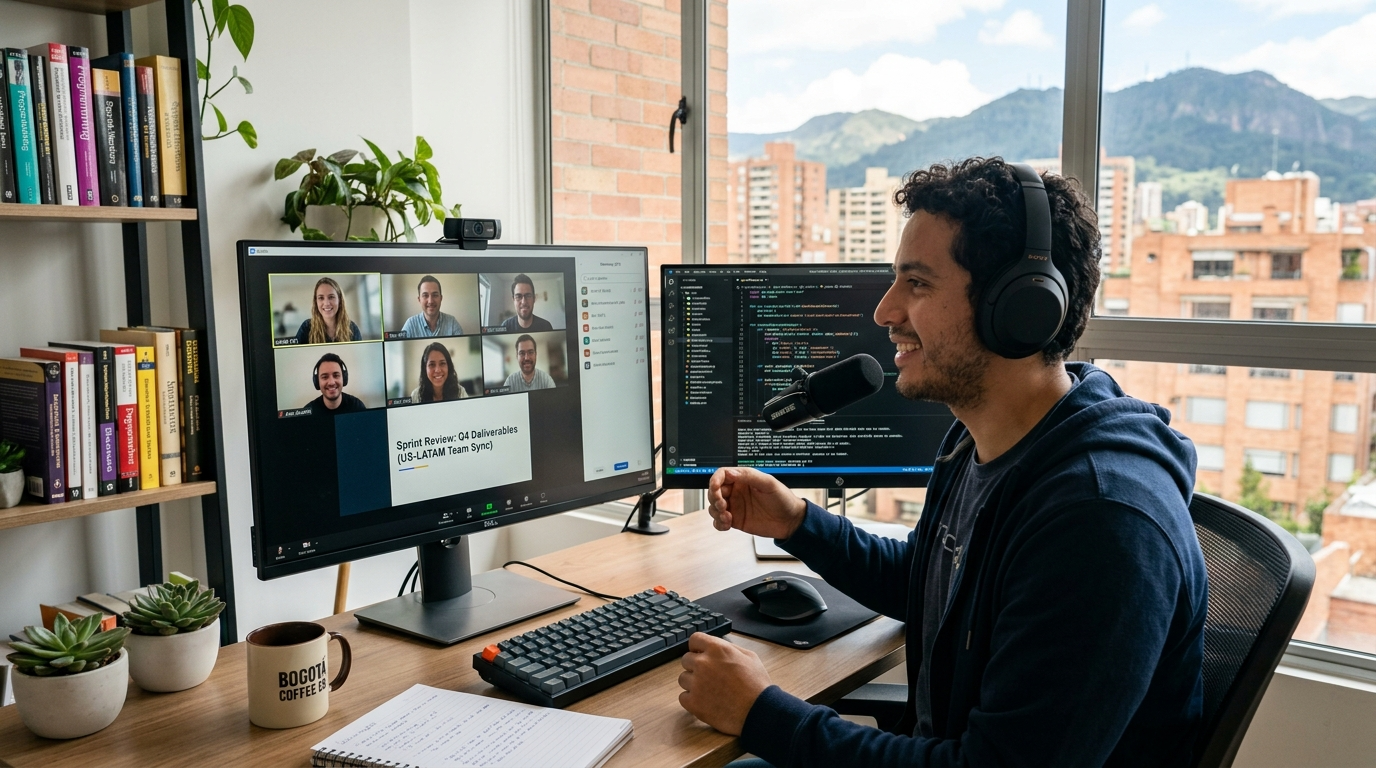
Onshore vs Offshore vs Nearshore App Developer Recruiters: 2026 Comparison
Not all app developer recruiter relationships are structured the same way. The table below compares the three main models you'll encounter when looking for development talent. Each has real trade-offs — and the right answer depends on how much real-time collaboration your project requires and what your hiring budget looks like.
| Factor | Onshore (US/Canada) | Offshore (Philippines/India) | Nearshore (Latin America) |
|---|---|---|---|
| Avg. Monthly Cost (Full-Time Dev) | $8,000–$15,000+ | $1,200–$2,000 | $2,500 (flat, all-in) |
| Time Zone Overlap with US | Full overlap | 0–2 hrs overlap (12–14 hr gap) | Full overlap (0–2 hr difference) |
| English Fluency | Native | Variable (moderate to high) | High (8/10+ screened) |
| Cultural Alignment with US | High | Moderate | High (US media, education, business norms) |
| Typical Recruiter Placement Fee | 15–25% of first-year salary | 10–15% or flat agency fee | Included in flat monthly rate |
| Payroll & HR Compliance Handled | You handle it (W-2 or 1099) | Varies by agency | Fully handled by staffing partner |
| Contract Length | Often 6–12 month guarantees | Often 3–6 month minimums | Month-to-month, no long-term contract |
| Replacement if Not a Fit | Rare; costly to re-recruit | Sometimes offered | Free replacement included |
For most US businesses running lean teams, the nearshore model wins on value. You get the time zone alignment and real-time communication of an onshore hire at roughly 20–30% of the cost, without the compliance headaches of managing a foreign contractor relationship yourself. According to Gallup's State of the American Workplace report, employees who work remotely with strong real-time communication tools report engagement scores comparable to fully in-office teams — a finding that reinforces why time zone alignment matters more than physical location. If you want to dig into the cost side, this breakdown of average Latin America virtual assistant salaries gives you a clear picture of what the market actually looks like.
What to Look for in an App Developer Recruiter in 2026
Not every recruiter who claims to specialize in app development actually does. Here's how to separate the genuine specialists from generalists who checked a box on their website.
Technical screening depth. A real app developer recruiter can tell you the difference between a junior React Native developer and a senior one — and they screen candidates on that basis before you spend an hour interviewing someone. Ask them directly: "Walk me through your technical assessment process." Vague answers are a red flag. Good answers include specifics about coding challenges, GitHub review protocols, and stack-specific knowledge tests.
The hidden cost of a bad app developer placement isn't just the recruiter fee you lose — it's the 3–6 months of ramp time, code review debt, and delayed shipping cycles that come with a developer who wasn't properly vetted. A recruiter who includes a free replacement guarantee changes the incentive structure entirely.
English proficiency standards. For developers who will join daily standups, write technical documentation, and communicate directly with clients or product managers, English fluency isn't negotiable. Rose Talent Solutions publishes a hard floor of 8/10 or higher on English proficiency screens for every team member placed — that's the kind of specific, auditable standard you should demand from any nearshore recruiter. To understand why that bar matters operationally, the onshore vs offshore virtual assistant comparison explains how communication friction compounds over time.
AI-augmented workflow readiness. In 2026, a developer who doesn't know how to use AI coding tools — GitHub Copilot, Cursor, or stack-specific AI copilots — is already running behind. The best nearshore staffing partners don't just place developers; they equip every team member with a role-specific AI copilot trained on the tools relevant to their job. That accelerates ramp time and lifts output quality from day one.
According to McKinsey & Company (2023), generative AI tools could accelerate software development tasks by 20–45% — which means a developer who arrives already fluent in those tools is measurably more productive from the first sprint.
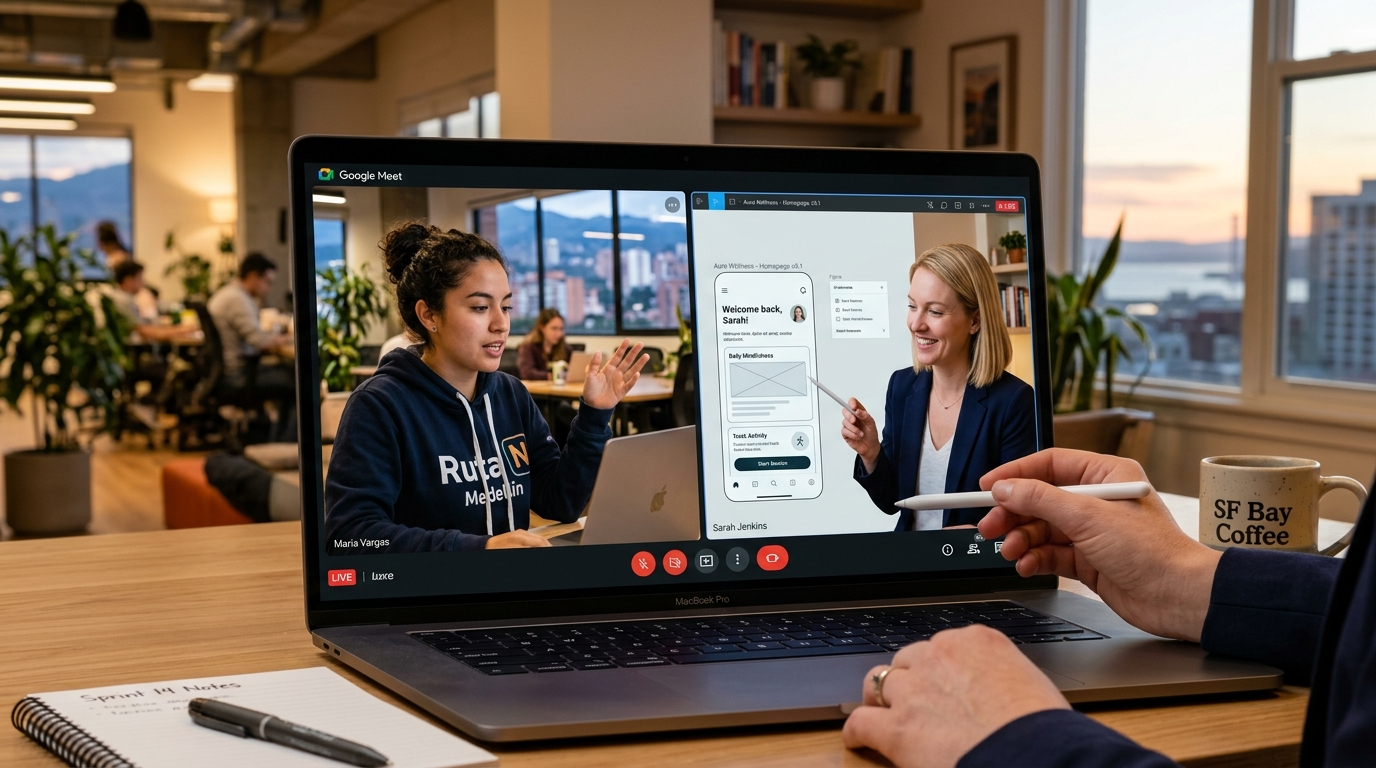
How Rose Talent Solutions Operates as a Nearshore App Developer Recruiter in 2026
Rose Talent Solutions is a nearshore staffing agency purpose-built for US and Canadian businesses that need full-time talent without the overhead of traditional recruiting. The model is straightforward: $2,500 per month, flat, all-in — that covers recruiting, vetting, payroll processing, HR compliance, and ongoing performance management. No placement percentage. No long-term contract. Month-to-month terms with 30 days written notice to cancel.
Every team member placed through Rose works 40 hours per week dedicated to your business. They're based in Latin America, work US business hours, and pass a documented 8/10 or higher English proficiency screen before they're ever presented to a client. And every placement ships with a role-specific AI copilot — trained on the tools specific to that person's job function, so they arrive with productivity infrastructure already in place.
The risk reversal is concrete: if the team member isn't the right fit, Rose replaces them at no additional cost. That's it. No complicated SLAs, no re-engagement fees, no starting the billing clock over from zero.
"The biggest shift we've seen in nearshore tech recruiting is that Latin American developers no longer need to be 'convinced' to join US-facing remote roles — they're actively seeking them, and the talent quality has caught up with the demand." — Ilan Rosen, Co-Founder at TalentAlly, speaking at SourcingCon 2024
According to SHRM's Talent Acquisition research (2024), the average cost per hire in the US now exceeds $4,700 — and that's before salary, benefits, and the productivity cost of a months-long ramp. When you compare that to a flat $2,500/month all-in model, the math shifts quickly in favor of a structured nearshore partnership.
Should You Use an App Developer Recruiter or a Nearshore Staffing Partner in 2026?
The choice between a traditional app developer recruiter and a nearshore staffing partner comes down to what problem you're actually trying to solve. If you need a very senior architect or a niche specialist — say, a machine learning engineer with domain expertise in healthcare data — a retained search firm with deep domestic networks might be the right call. But if you need a skilled full-time developer who can handle your mobile or web app work, integrate into your team, and show up every day during your business hours, a nearshore staffing partner almost always wins on speed, cost, and ongoing accountability.
Nearshore Staffing Partner
- All-in flat monthly pricing — no surprise placement fees
- Full time zone overlap with US/Canada teams
- Payroll, HR, and compliance handled for you
- Free replacement if not a fit
- Month-to-month — no long-term contract
- AI copilot included for faster ramp
Traditional App Developer Recruiter
- Placement fees often 15–25% of first-year salary
- No ongoing HR or payroll support after placement
- Replacement guarantees are rare or time-limited
- Often requires multi-month or annual contract commitments
- No AI productivity tooling bundled in
- Quality of screening varies widely by firm
For most growing startups and SMBs, the staffing partner model removes the biggest operational pain points: you don't have to manage foreign contractor compliance, you don't have to re-recruit if the placement doesn't work out, and you're not locked into a contract that outlasts your actual need. You can explore your options for getting started directly at Rose's onboarding page.
According to Statista (2024), the global IT outsourcing market is projected to reach $617 billion by 2030 — a figure that reflects how aggressively companies of all sizes are moving away from exclusively domestic hiring for technical roles. The question in 2026 isn't whether to use external talent pipelines; it's which geography and which model gives you the best combination of quality, speed, and cost.
It's worth noting that the nearshore model doesn't just apply to pure software development. According to Pew Research Center (2023), awareness and adoption of AI-assisted work tools has grown rapidly across all business functions — meaning the AI copilot advantage that nearshore staffing partners bundle in is increasingly relevant for roles like bookkeeping, operations, and customer support as well. For teams that want to see what nearshore technical support looks like across different functional areas, Rose's bookkeeping and accounting staffing page and property management staffing page show how the same model scales across roles beyond pure software development — useful context if you're building a broader nearshore team rather than just a single dev hire.