What Is a Virtual Scheduling and Messaging Medical Receptionist in 2026?
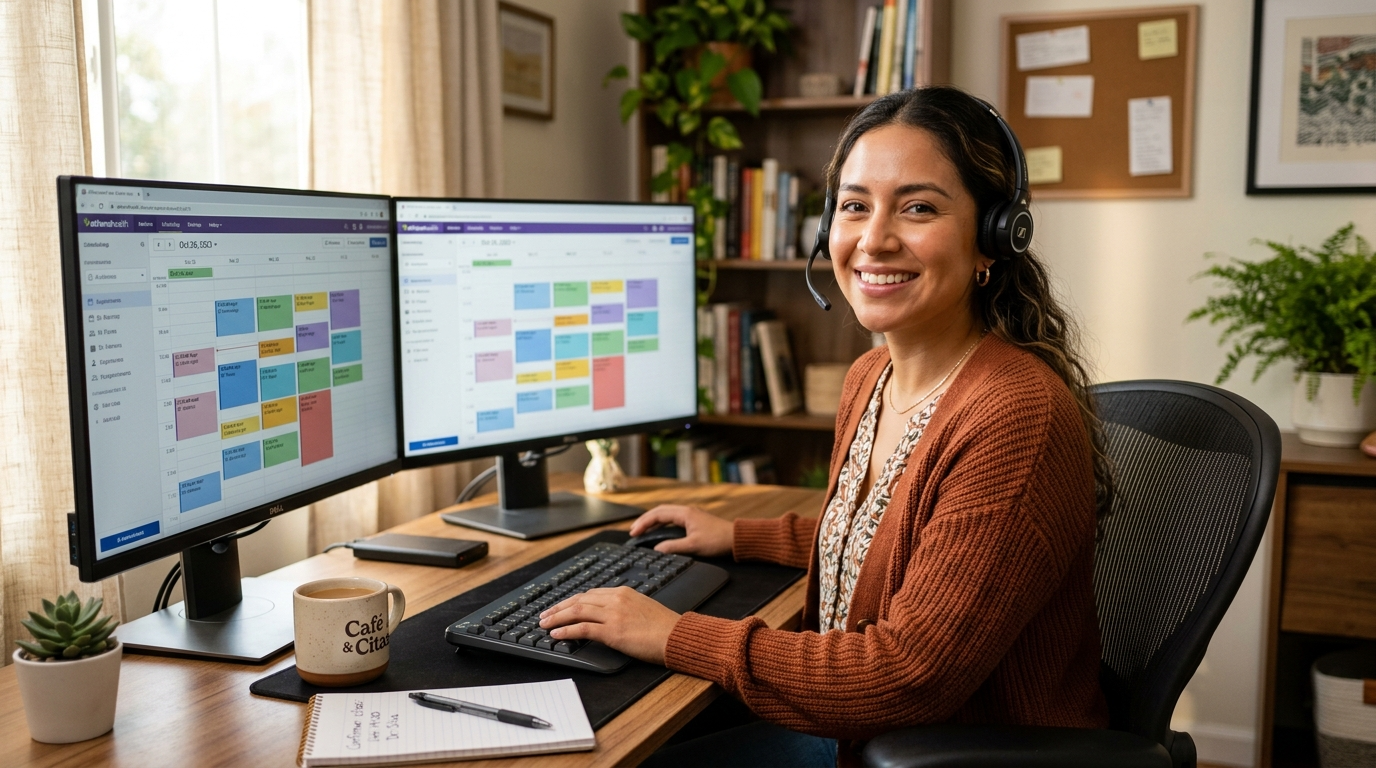
Nearshore virtual receptionists are reshaping how medical practices handle front-desk work in 2026. A virtual scheduling and messaging medical receptionist is a full-time, dedicated remote staff member based in Latin America who manages your appointment calendar, answers inbound patient calls, responds to portal messages, sends SMS and email reminders, and coordinates with your clinical team — all in real time, during your U.S. business hours. They are not a call-center bot or a shared answering service. They work for your practice only.
The term "nearshore" refers specifically to talent sourced from Latin American countries — Mexico, Colombia, Costa Rica, Argentina, and similar — rather than from the Philippines or India. The geographic and cultural proximity to the United States means these team members work the same time zones, speak English at a high level (Rose's published floor is 8/10+ on English proficiency screens), and rarely need a translator to navigate nuanced patient conversations.
Front-desk staffing is a persistent headache for clinic operators. According to the U.S. Bureau of Labor Statistics (2024), the median annual wage for a medical secretary working in-office in the United States is $39,200 — and that figure excludes benefits, payroll taxes, PTO, and recruitment costs that routinely add 25–35% on top of base salary. A nearshore virtual receptionist through Rose delivers the same function at $2,500/month flat, all-in, with recruiting, vetting, payroll, HR, and ongoing management included.
How a Virtual Medical Receptionist Handles Scheduling and Messaging Day-to-Day in 2026
The core task set is broader than most clinic owners initially expect. A well-trained virtual scheduling and messaging medical receptionist manages the full patient communication loop — from the first inbound call through post-visit follow-up. Here is what that looks like in practice.
Scheduling. They own your scheduling software — whether that is Kareo, Athenahealth, AdvancedMD, or a simpler Google Calendar setup — and keep your providers' days optimally filled. They handle new-patient intake, existing-patient reschedules, cancellations, and waitlist management. If your practice uses automated waitlist software, they work alongside it, not against it.
Messaging. Patient portal messages, text threads, and voicemails pile up fast. A dedicated virtual receptionist processes them in batches throughout the day and routes clinical questions to the right provider while resolving administrative ones themselves. This is the workflow that tends to break down when practices rely on a part-time in-office person who is also checking patients in at the front desk simultaneously.
Appointment reminders. No-shows cost U.S. medical practices an estimated $150 billion per year, according to HealthLeaders Media (2023). A virtual receptionist running a structured reminder sequence — phone call 48 hours out, SMS 24 hours out, final text the morning of — can cut no-show rates measurably without any additional software cost beyond what your practice already owns.
If your clinic needs a dedicated patient scheduling virtual assistant who lives inside your EHR and does nothing but fill your calendar, Rose places that role specifically — it is not a generalist position.
How Nearshore Compares to Offshore and In-Office Receptionists for Medical Practices
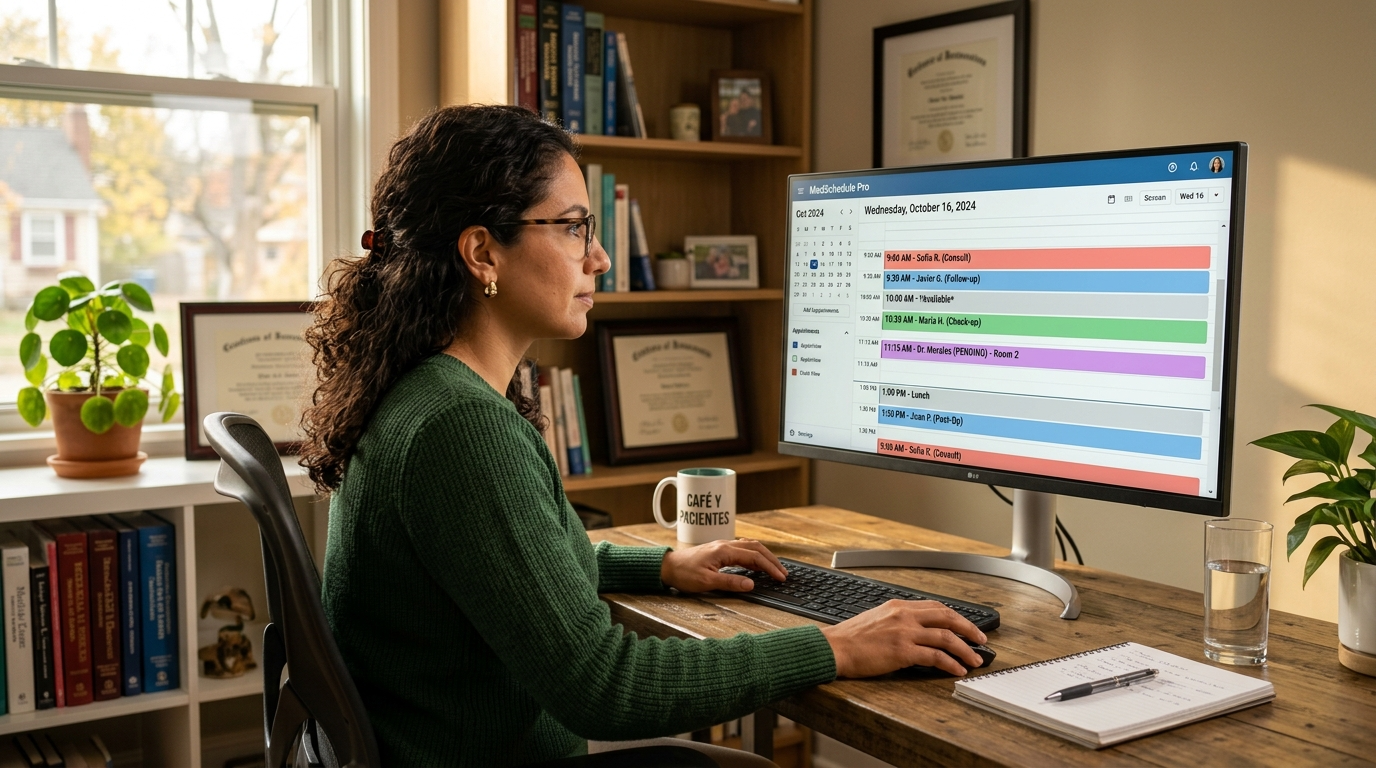
Not all remote receptionist solutions are equivalent. The differences between an offshore call center agent, an in-office hire, and a nearshore dedicated virtual receptionist are significant enough to change clinical outcomes — not just your operating budget.
| Factor | In-Office (U.S.) | Offshore (Philippines / India) | Nearshore VA (Latin America) |
|---|---|---|---|
| Monthly cost (all-in) | ~$4,500–$6,000+ | ~$1,200–$1,800 | $2,500 flat |
| Time zone alignment | ✅ Same time zone | ❌ 10–14 hour gap | ✅ Same U.S. business hours |
| English proficiency | ✅ Native | ⚠️ Variable (accent, idiom gaps) | ✅ 8/10+ screened minimum |
| EHR / scheduling software training | ⚠️ You train them | ⚠️ You train them | ✅ AI copilot pre-trained on your software |
| Dedicated to your practice only | ✅ Yes | ❌ Often shared agent pools | ✅ Yes, full-time |
| Recruiting, HR, payroll managed | ❌ Your burden | ⚠️ Varies by agency | ✅ Fully managed by Rose |
| Contract commitment | Employment law applies | Varies | Month-to-month, 30-day notice |
"Practices that implement structured virtual front-desk workflows report a measurable reduction in patient no-shows and administrative staff burnout within the first 90 days." — Cheryl Bisera, Patient Experience Consultant and author of Your Patient is Waiting (2023)
What the AI Copilot Does for a Virtual Medical Receptionist in 2026
Every Rose team member ships with a role-specific AI copilot trained on the software they will actually use in your practice. For a virtual scheduling and messaging medical receptionist, that means the copilot is configured for tools like Kareo, Athenahealth, AdvancedMD, or whatever EHR you already run — not a generic assistant.
The AI copilot handles lookup tasks, drafts routine patient messages for human review, surfaces scheduling conflicts before they become double-bookings, and guides the receptionist through less-common workflows (like multi-provider scheduling logic or insurance-specific intake requirements) without needing to interrupt your clinical staff. The result is a ramp time that is dramatically shorter than hiring and onboarding an in-office person from scratch.
According to McKinsey's research on generative AI in the workplace (2023), AI assistance can increase knowledge worker productivity by 20–45% on tasks like drafting correspondence, summarizing information, and navigating complex software — exactly the task set a virtual receptionist handles every day.
Practices that also need revenue-cycle support alongside scheduling often pair a virtual receptionist with a specialist who handles insurance verification as a dedicated virtual assistant role. These two roles are distinct in training requirements, and Rose places them separately so each person is deeply skilled rather than broadly spread.
The AI copilot is not a chatbot answering patients. It is a behind-the-scenes tool that makes your virtual receptionist faster, more accurate, and self-sufficient on software tasks — so your clinical team fields fewer interruptions from the front desk.
Which Medical Specialties Benefit Most from a Virtual Receptionist in 2026?
High-volume outbound communication and appointment-heavy schedules are the clearest indicators that a practice is ready for a dedicated virtual scheduling and messaging medical receptionist. The following specialties see the fastest ROI.
Primary care and family medicine. These practices handle the highest raw volume of appointment requests and the most diverse patient population. A single in-office front-desk person cannot keep pace during busy windows. A virtual receptionist dedicated to scheduling alone frees your in-person staff to focus on check-in and insurance verification.
Mental health and behavioral health. Session-based scheduling with high rescheduling frequency and intake paperwork requirements makes this an ideal use case. According to SHRM's workforce research (2023), mental health services demand has increased by more than 35% since 2020, putting enormous pressure on solo and group practices to scale their administrative capacity without hiring full clinical staff.
Chiropractic and physical therapy. These practices often run tight, 15-to-30-minute appointment slots with high patient volume. If you operate a chiropractic clinic and are evaluating broader administrative support, there is a detailed breakdown of what a chiropractic office virtual assistant covers day-to-day that maps directly to this use case.
Specialty practices with prior authorization requirements. Cardiology, orthopedics, pain management, and similar specialties deal with the added complexity of payer approval workflows stacked on top of normal scheduling. For those practices, a second dedicated VA handling prior authorization as a standalone virtual assistant role pairs naturally with a scheduling receptionist — keeping the two workflows separate and accountable.
How Rose Places a Virtual Scheduling Receptionist in Your Practice — Step by Step
The placement process is fast and low-risk. Rose handles every part of the search, screen, and match — you review one or two candidates and make a call. Here is the standard sequence.
Intake call (30 minutes)
Rose's team learns your EHR, scheduling software, call volume, hours of operation, and any specialty-specific requirements. This call is what makes the match accurate rather than generic.
Candidate search and vetting
Rose screens English proficiency (8/10+ floor), reviews prior healthcare administrative experience, and tests software familiarity. You never see candidates who didn't pass the screen.
You meet your top match
Rose presents one to two qualified candidates. You interview and select. Most practices choose within one meeting.
AI copilot configuration
Before day one, Rose configures the role-specific AI copilot for your scheduling software — so your new receptionist is productive from the first morning, not after a three-week ramp.
Ongoing management and replacement guarantee
Rose manages HR, payroll, and performance. If the team member is not a fit at any point, Rose replaces them at no additional cost. The engagement is month-to-month with 30 days written notice to cancel.
There is no long-term contract locking you in. The flat rate of $2,500/month covers everything — recruiting, vetting, payroll processing, HR support, and the AI copilot license. If you want to explore how this fits alongside other administrative roles, the intake process starts here with a brief call.
Nearshore vs. Offshore for Medical Scheduling: The Real Tradeoffs in 2026
The price difference between a nearshore and offshore virtual receptionist is real — roughly $700–$1,300 per month depending on the offshore provider. But for a medical practice, the operational tradeoffs of offshore scheduling support are significant enough that most practices who try it switch back within six months.
The core problem is real-time communication. Patients calling to schedule an appointment do not leave a voicemail and wait 12 hours for a callback. They call the next clinic on their insurance list. A scheduling receptionist working from a 10–14 hour offshore time zone cannot handle live inbound calls during your business day — they handle recorded ones overnight. That delay costs you new patients and frustrates existing ones.
A nearshore receptionist working from Bogotá, Mexico City, or San José works Eastern, Central, or Pacific time, depending on your practice location. They pick up the phone when it rings. They respond to portal messages before the patient's lunch break. The time zone alignment is not a minor convenience — it is the functional difference between a receptionist and an answering service.
According to Gallup's global workforce engagement research (2023), workers who feel their role has clear purpose and real-time communication with their team show 23% higher productivity — a dynamic that applies directly to virtual staff who are integrated into a live workflow versus isolated in an asynchronous one.
Nearshore Virtual Receptionist — Pros
- Works your exact U.S. business hours in real time
- English proficiency screened to 8/10+ minimum
- Cultural proximity reduces communication friction with U.S. patients
- AI copilot pre-trained on your EHR from day one
- Fully managed: HR, payroll, and replacement guarantee included
Offshore Virtual Receptionist — Cons
- 10–14 hour time zone gap prevents live call handling
- Often shared across multiple clients, not dedicated
- English accent and idiom gaps create patient-facing friction
- You typically manage onboarding, training, and HR yourself
- Software training is your responsibility — no copilot
For practices that also need support with financial operations — claim tracking, reconciliation, or accounts payable — Rose's bookkeeping and accounting virtual assistant service covers that layer separately, so your scheduling receptionist stays focused on the patient-facing workflow rather than getting pulled into billing questions.
If you want to see the full range of what Rose places in healthcare settings, the service overview gives a clear picture of how the staffing model works across different verticals — the principles are the same whether the software is Athenahealth or AppFolio.