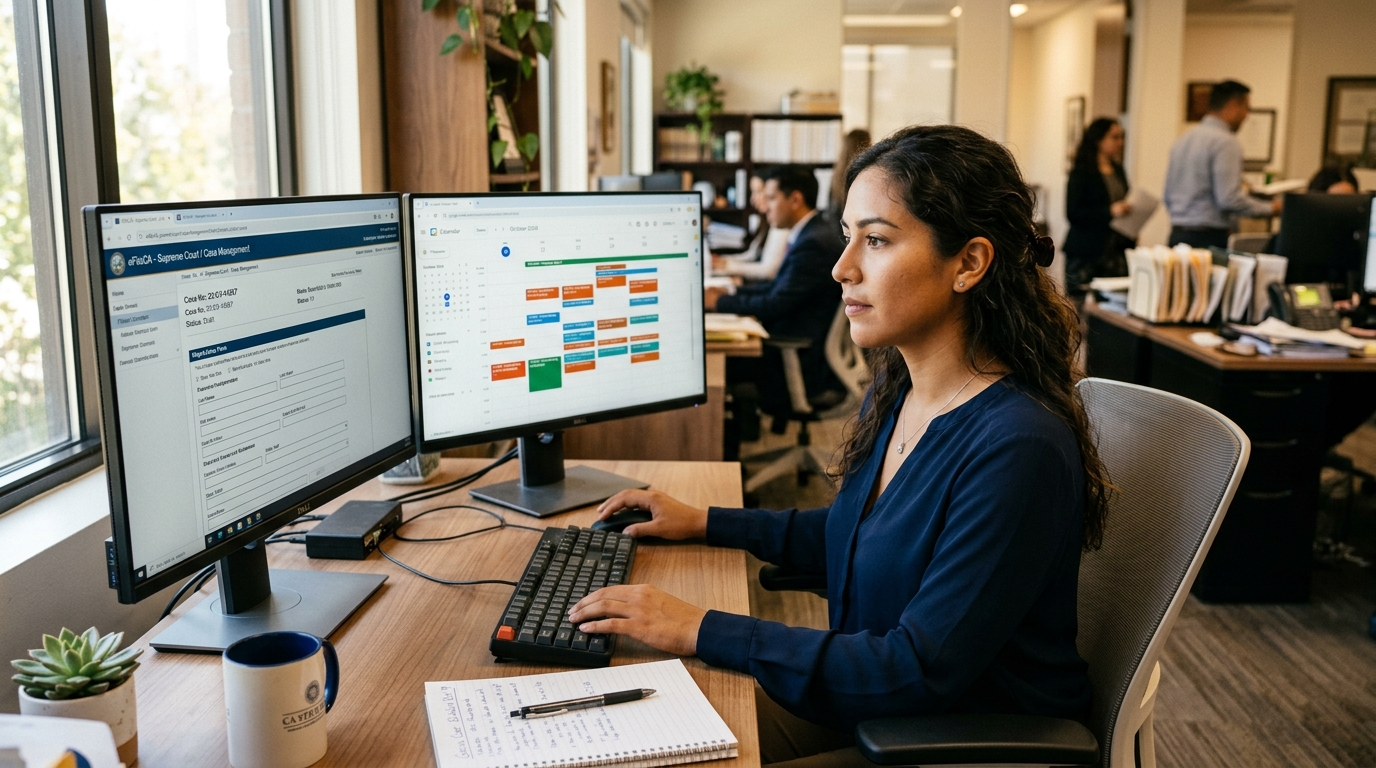
Nearshore virtual court filing assistants are quietly replacing the second paralegal seat at hundreds of small and mid-size law firms across the US. If your firm is losing billable hours to e-filing queues, missed proof-of-service deadlines, or a front desk that doubles as a docket clerk, this guide explains exactly how the model works in 2026, what it costs, and how to vet a provider before you sign anything.
Court filing is one of the most deadline-driven, error-sensitive tasks in any legal practice. A missed filing window can mean a dismissed motion, a malpractice exposure, or a client relationship that never recovers. That risk is precisely why more firms are routing this work to dedicated, trained virtual staff rather than splitting the responsibility across overloaded in-house employees.
According to the American Bar Association's Legal Technology Survey Report (2023), 67% of small law firms cite administrative overload as their top operational challenge — and court filing sits at the center of that burden. A dedicated virtual filing assistant removes the task entirely from your attorneys' and paralegals' plates.
What Are Virtual Court Filing Assistant Services in 2026?
A virtual court filing assistant is a trained remote professional who manages the end-to-end process of submitting legal documents to federal, state, or local courts on behalf of a law firm or in-house legal team. The role covers more than clicking "submit" on an e-filing portal. It includes document preparation checks, formatting to court-specific requirements, filing fee tracking, confirmation of acceptance, and calendar entries for response deadlines.
In 2026, the best virtual court filing assistants also operate AI-assisted workflows — cross-referencing local court rules automatically, flagging formatting errors before submission, and syncing accepted filings directly into practice management software like Clio, MyCase, or PracticePanther. If you want to understand how this role fits into a broader legal support stack, our guide on how to hire a virtual legal assistant for your law firm covers the full hiring framework.
What a virtual court filing assistant typically handles:
- Electronic filing on PACER, File & ServeXpress, Tyler Technologies (OdysseyFile), and state-specific portals
- Document formatting to local court rules (margin, font, exhibit labeling)
- Filing fee payment coordination and receipt tracking
- Proof of service preparation and filing
- Docket deadline entry and attorney calendar sync
- Filing confirmation monitoring and rejection correction
- Court correspondence and status request management
How Nearshore Filing Assistants Outperform Offshore in 2026
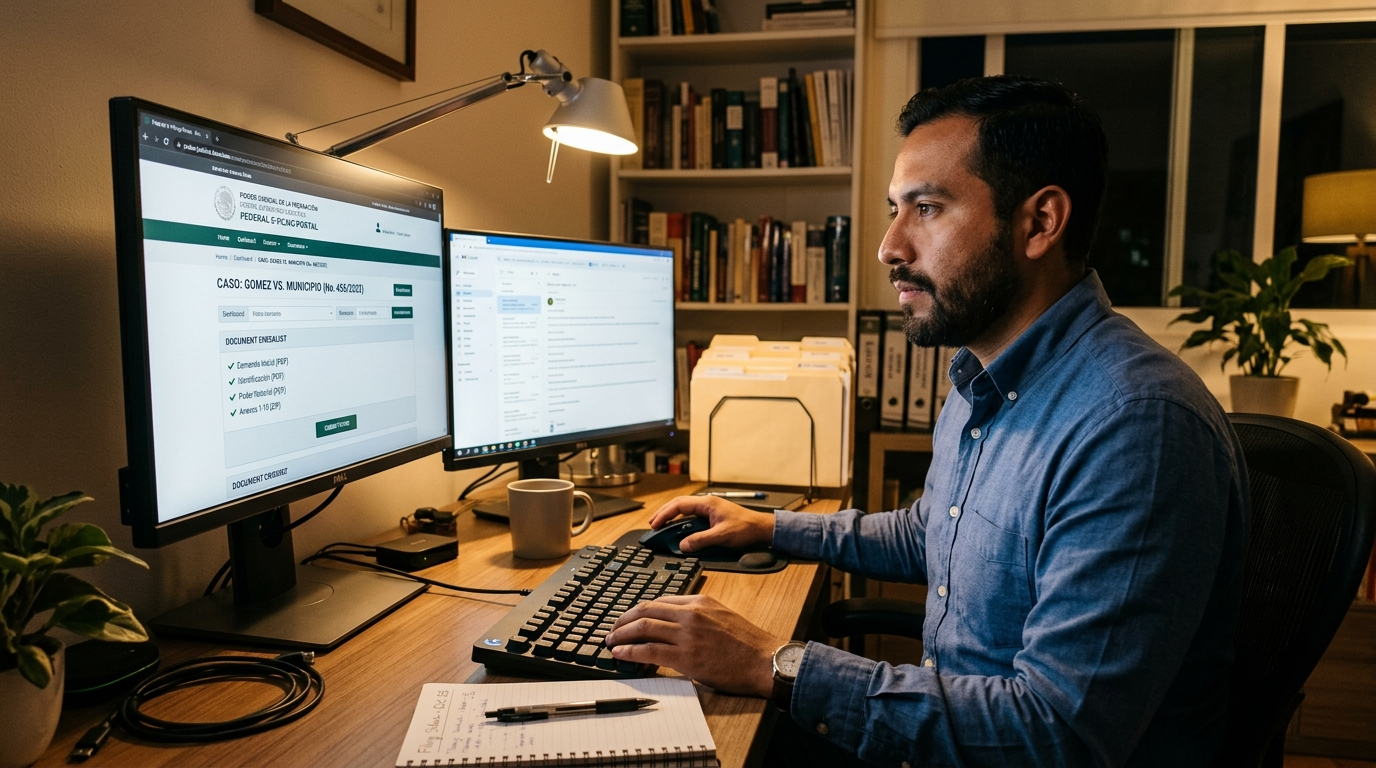
The timezone problem is the core reason offshore filing support fails law firms. A virtual filing assistant based in the Philippines or India operates 10–13 hours behind US Eastern time. Court filing portals have submission cutoff windows — often 11:59 PM local court time, but rejection notices and same-day corrections happen during business hours. When your filing assistant is asleep during your business day, a rejected filing sits unresolved until the next morning.
Nearshore assistants based in Latin America work on US business hours in real time. When a federal court rejects a PDF for incorrect bookmarking at 2:00 PM Eastern, a nearshore assistant corrects and resubmits before 3:00 PM. That's not a minor convenience — it's the difference between making a filing deadline and missing it.
"The number-one complaint we hear from firms that tried offshore legal support is the lag. By the time the VA sees the problem, it's tomorrow morning and the deadline has passed." — Zach Posner, Co-Founder at Lawclerk (2023)
English fluency compounds the timezone advantage. Court filing requires precise written communication — cover letters to clerks, correspondence challenging improper rejections, and status inquiries that need to sound like they came from a professional legal office. Rose's published English proficiency floor is 8/10 or higher on structured screening, which places nearshore candidates well above the average offshore hire. Firms that need broader legal communication support — such as client intake calls and attorney scheduling — often pair filing assistants with dedicated virtual receptionists for law firms as a two-role stack.
The legal staffing market reflects this shift. According to IBISWorld's US Legal Services Industry Report (2024), demand for outsourced legal administrative roles has grown at a compound annual rate of 6.2% over the past four years — driven largely by small and mid-size firms seeking cost-effective alternatives to full-time paralegal hires.
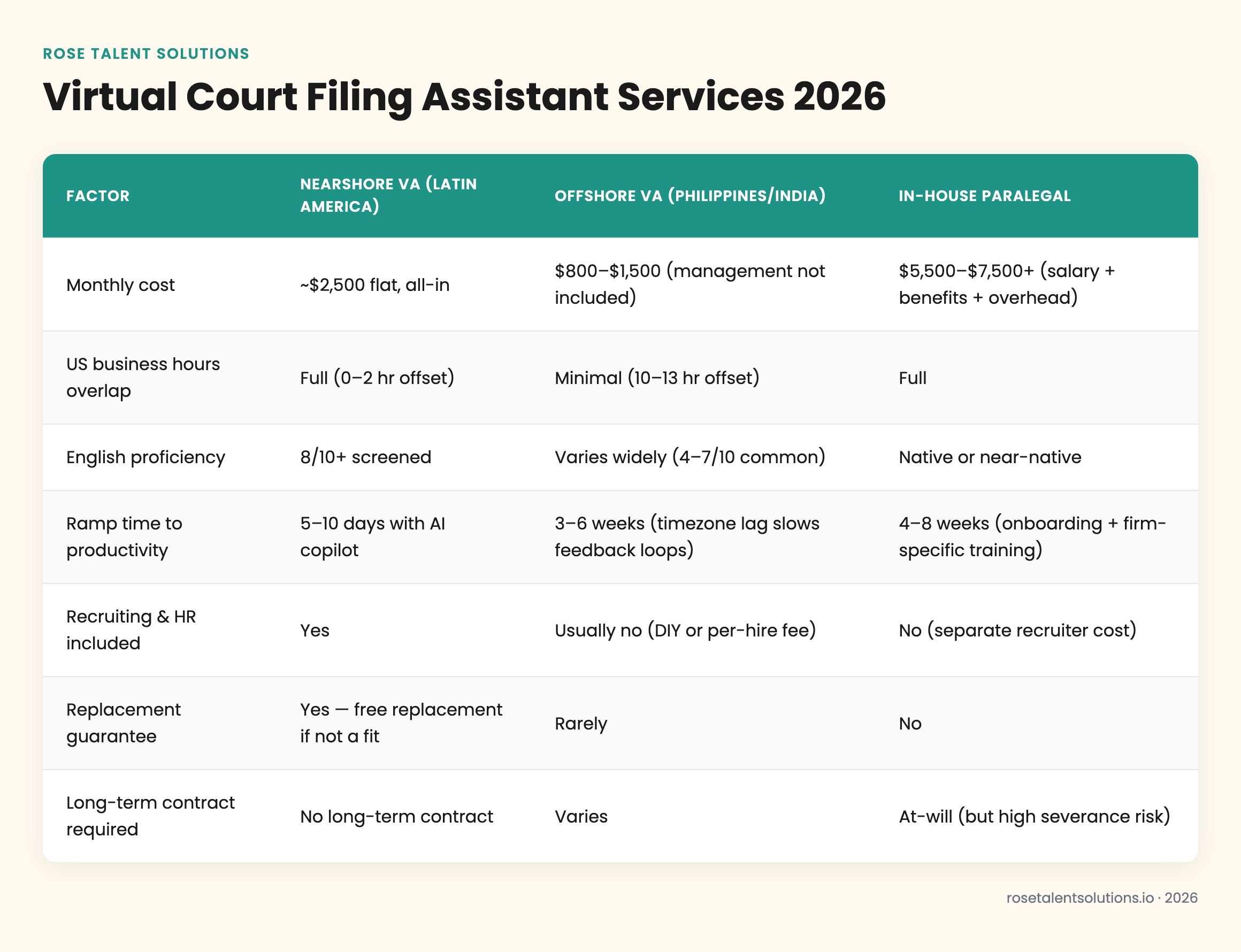
| Factor | Nearshore VA (Latin America) | Offshore VA (Philippines/India) | In-House Paralegal |
|---|---|---|---|
| Monthly cost | ~$2,500 flat, all-in | $800–$1,500 (management not included) | $5,500–$7,500+ (salary + benefits + overhead) |
| US business hours overlap | Full (0–2 hr offset) | Minimal (10–13 hr offset) | Full |
| English proficiency | 8/10+ screened | Varies widely (4–7/10 common) | Native or near-native |
| Ramp time to productivity | 5–10 days with AI copilot | 3–6 weeks (timezone lag slows feedback loops) | 4–8 weeks (onboarding + firm-specific training) |
| Recruiting & HR included | Yes | Usually no (DIY or per-hire fee) | No (separate recruiter cost) |
| Replacement guarantee | Yes — free replacement if not a fit | Rarely | No |
| Long-term contract required | No long-term contract | Varies | At-will (but high severance risk) |
How the AI Copilot Makes 2026 Filing Assistants Faster and More Accurate
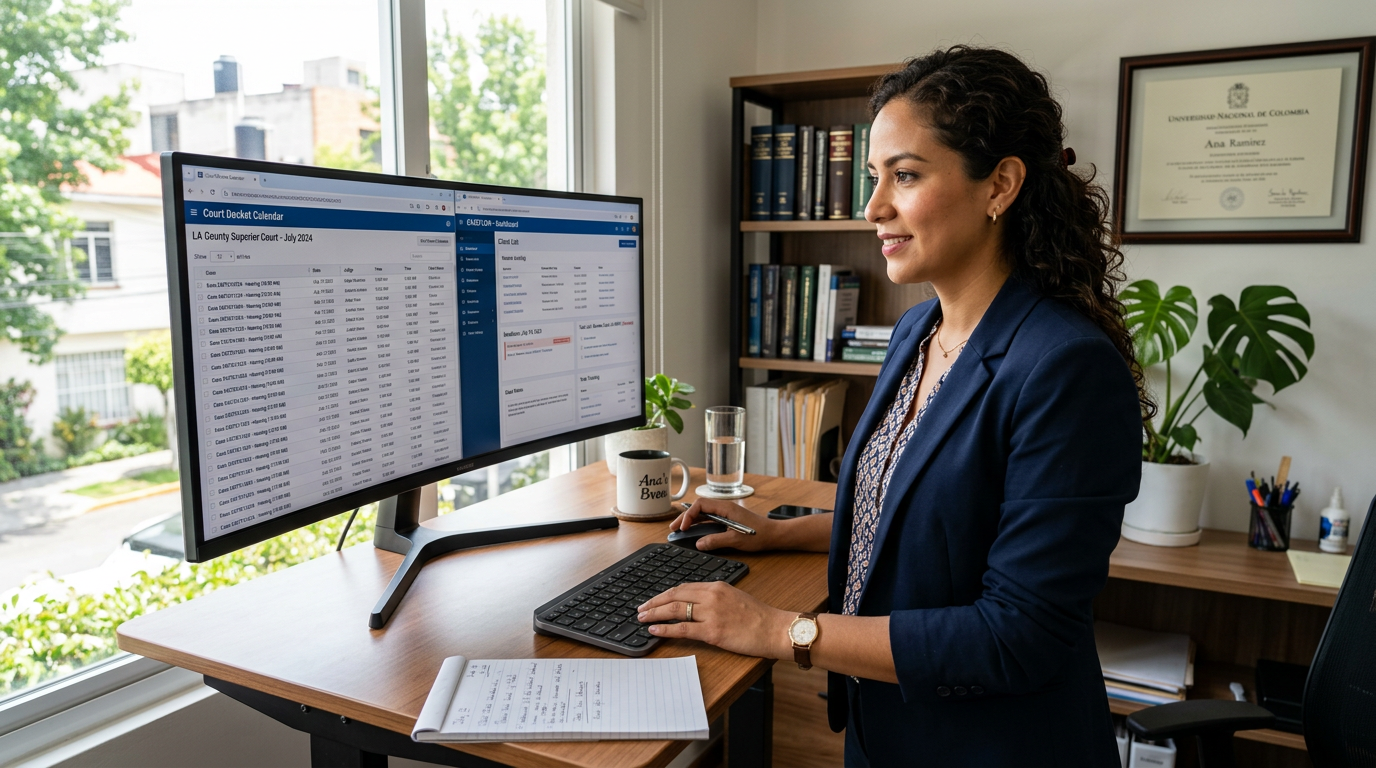
Every virtual court filing assistant placed through Rose ships with a role-specific AI copilot trained on the software and court systems they'll actually use. For filing roles, that means the AI is pre-loaded with local court rules for common jurisdictions, common rejection reasons by portal, and formatting checklists for federal vs. state filings. The assistant uses the copilot to pre-screen documents before submission — flagging issues a human reviewer might miss on a busy afternoon.
This is a meaningful operational upgrade. The US Bureau of Labor Statistics (2024) notes that paralegal and legal assistant roles are growing 4% annually, but firms are struggling to retain them at market rates. AI-augmented virtual assistants fill the gap: they handle the high-volume, rule-based filing work at a fraction of the cost, while your licensed paralegals focus on substantive legal research and client-facing tasks.
The AI copilot also integrates with practice management platforms. When a filing is accepted, the assistant logs the confirmation in Clio or MyCase, sets the response deadline on the attorney's calendar, and sends a summary email — all without the attorney touching the workflow. For firms that handle document-heavy litigation, pairing a filing assistant with a legal transcription virtual assistant creates a full document lifecycle team: transcription in, filing out.
The AI copilot doesn't replace the filing assistant — it makes them faster. A trained nearshore VA using an AI pre-screening tool catches formatting rejections before they happen, not after a clerk kicks the document back at 4:45 PM on a Friday.
According to McKinsey & Company's report on the economic potential of generative AI (2023), legal functions stand to automate 23% of task time through AI-assisted tools — among the highest of any professional service category. Firms that pair human judgment with AI workflows will consistently out-process those relying on either alone.
The adoption curve is accelerating. Gallup's State of the Global Workplace Report (2023) found that remote-capable professional workers are now 23% more likely to report high productivity when their role includes structured digital tooling versus roles without it — a finding that maps directly to AI-assisted filing workflows where checklists, auto-formatting rules, and deadline sync replace manual, error-prone steps.
What Does It Cost, and How Does Pricing Work in 2026?
Rose Talent Solutions prices virtual court filing assistants at $2,500 per month, flat. That covers a full-time team member (40 hours per week), recruiting and vetting, payroll processing, HR oversight, and ongoing performance management. There is no setup fee, no per-filing charge, and no long-term contract — you can cancel with 30 days' written notice.
For context, the Bureau of Labor Statistics Occupational Employment data (2024) puts the median annual wage for US paralegals at $60,350 — roughly $5,030 per month in salary alone, before benefits, payroll taxes, office space, or software licenses. A nearshore virtual filing assistant at $2,500/month delivers equivalent filing-specific output at less than half the fully-loaded cost.
If the team member isn't a fit for your firm — whether it's a workflow mismatch or a personality issue — Rose replaces them at no additional cost. That's the risk reversal: no re-recruiting fee, no gap in coverage, no scrambling to post a job listing. Firms comparing this model against the traditional hiring path should also read our breakdown of law firm virtual assistants versus in-house staff — the full cost delta is larger than most managing partners expect.
According to SHRM's Human Capital Benchmarking Report (2023), the average cost-per-hire for professional and administrative roles in the US now exceeds $4,700 — before salary, benefits, or onboarding time. A nearshore virtual filing assistant eliminates that upfront cost entirely, since recruiting and vetting are included in the flat monthly rate. For a high-volume litigation firm filing dozens of documents per week, the operational ROI compounds quickly.
Pros of Virtual Court Filing Assistants
- Full-time, dedicated capacity at ~50% of paralegal cost
- Real-time US hours coverage — no overnight filing lag
- AI copilot reduces rejection rates and speeds ramp
- Recruiting, HR, and payroll fully managed for you
- Free replacement if not a fit — no re-hiring cost
- No long-term contract — month-to-month flexibility
Limitations to Plan Around
- Not a licensed paralegal — cannot give legal advice or sign documents
- Requires attorney-supervised workflow for filings with strategic decisions
- Initial onboarding (1–2 weeks) requires time investment from your team
- Best for firms with consistent, recurring filing volume — not one-off projects
How to Get Started with a Virtual Court Filing Assistant in 2026
The onboarding process at Rose is built to get a filing assistant productive within the first week. The steps below reflect the standard placement sequence for legal roles.
Intake call and role scoping
Rose's team maps your filing volume, portal mix (PACER, state e-file, etc.), practice management software, and communication preferences. This 30-minute call determines the exact candidate profile.
Candidate matching and vetting
Rose screens candidates against your portal requirements and English proficiency bar (8/10+ minimum). You receive a shortlist, review profiles, and select — typically within 5–7 days.
AI copilot configuration
Before day one, the assistant's AI copilot is pre-loaded with your jurisdiction's local court rules, your firm's style guide, and your practice management software workflows.
Supervised live filing (days 1–5)
The assistant handles real filings under light attorney supervision during the first week. Most filing assistants reach independent productivity by day 7–10.
Ongoing management and performance review
Rose handles HR, payroll, and performance oversight on a continuous basis. You manage the day-to-day workflow; Rose manages the employment relationship.
Law firms that want to explore the full range of virtual legal staffing options — from filing assistants to intake coordinators to billing support — can start the conversation with Rose here or review Rose's AI advantage overview to understand how the copilot stack works before committing to a placement.