
Nearshore virtual medical scribes are quietly transforming how US physician practices handle clinical documentation — and in 2026, the market has matured enough that you can find a genuinely excellent one without guesswork. The challenge is knowing what separates a scribe who saves you two hours a day from one who creates more work than they prevent. This guide covers exactly that: what to look for, what to pay, which model wins on value, and how to get started without locking yourself into a long-term contract.
What Is a Virtual Medical Scribe, and Why Does It Matter in 2026?
A virtual medical scribe is a trained documentation specialist who listens to a provider-patient encounter — either live via audio/video or from a recording — and enters structured notes directly into the electronic health record (EHR) in real time. The scribe handles SOAP notes, HPI, assessment and plan, orders, and referral documentation so the physician never has to type during or after the visit. They are not billing coders, though their accurate documentation directly supports cleaner claims downstream.
The role has exploded in demand because physician burnout is at a crisis level. Physicians spend nearly 2 hours on EHR documentation for every 1 hour of direct patient care, according to the National Institutes of Health (2020). That ratio has worsened with the adoption of value-based care models that demand richer documentation. A virtual scribe directly attacks the root cause — not just the symptom.
Virtual scribes differ from in-person scribes in two critical ways: they cost significantly less (no benefits, no office space, no turnover friction), and the best ones — particularly nearshore professionals based in Latin America — work on your exact schedule without the timezone drag you get from offshore providers in Asia or Eastern Europe.
How Nearshore Scribes in 2026 Outperform Offshore Alternatives
The word "virtual" doesn't tell you where the scribe sits, and location matters more than most practices realize. An offshore scribe based in the Philippines or South Asia may be working the graveyard shift just to cover US Eastern hours. That fatigue shows up in note quality. A nearshore scribe in Colombia, Mexico, or Argentina operates in a timezone that's 0–3 hours off US Eastern, working a normal daytime schedule. The cognitive difference is measurable.
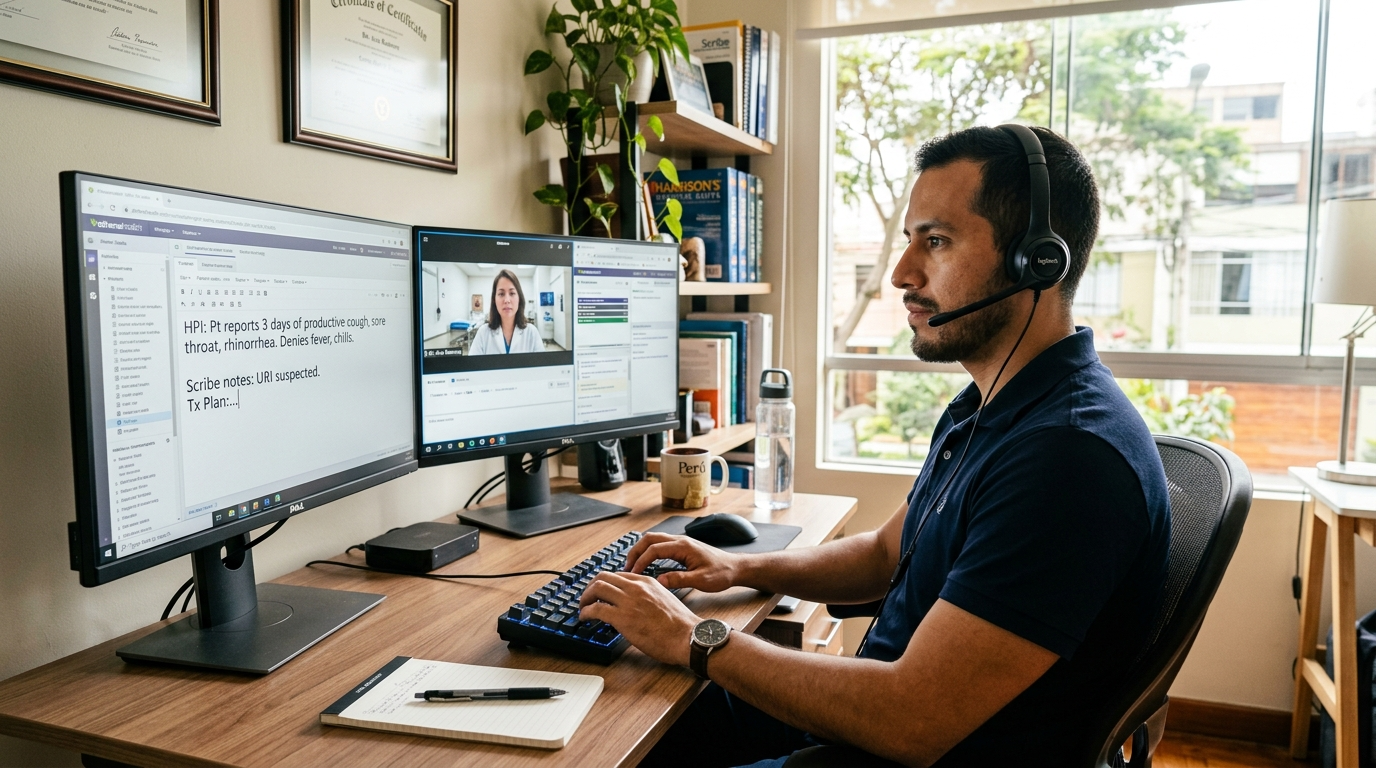
English fluency is the other variable. Rose Talent Solutions screens every candidate against an 8/10 or higher English proficiency threshold. Medical documentation demands precise language — "bilateral lower extremity edema" cannot be approximated. Fluency isn't a nice-to-have; it's a patient safety consideration.
Practices that also use virtual support for adjacent workflows — like insurance eligibility verification or patient appointment scheduling — find that nearshore teams collaborate naturally because they're in the same working hours window. No hand-off delays across continents.
According to the U.S. Bureau of Labor Statistics (2024), demand for physician support roles is growing in step with a projected 3% increase in physician employment through 2032. More physicians entering the workforce means more documentation volume — and virtual scribes are positioned as the scalable solution.
How to Compare Your Virtual Medical Scribe Options in 2026
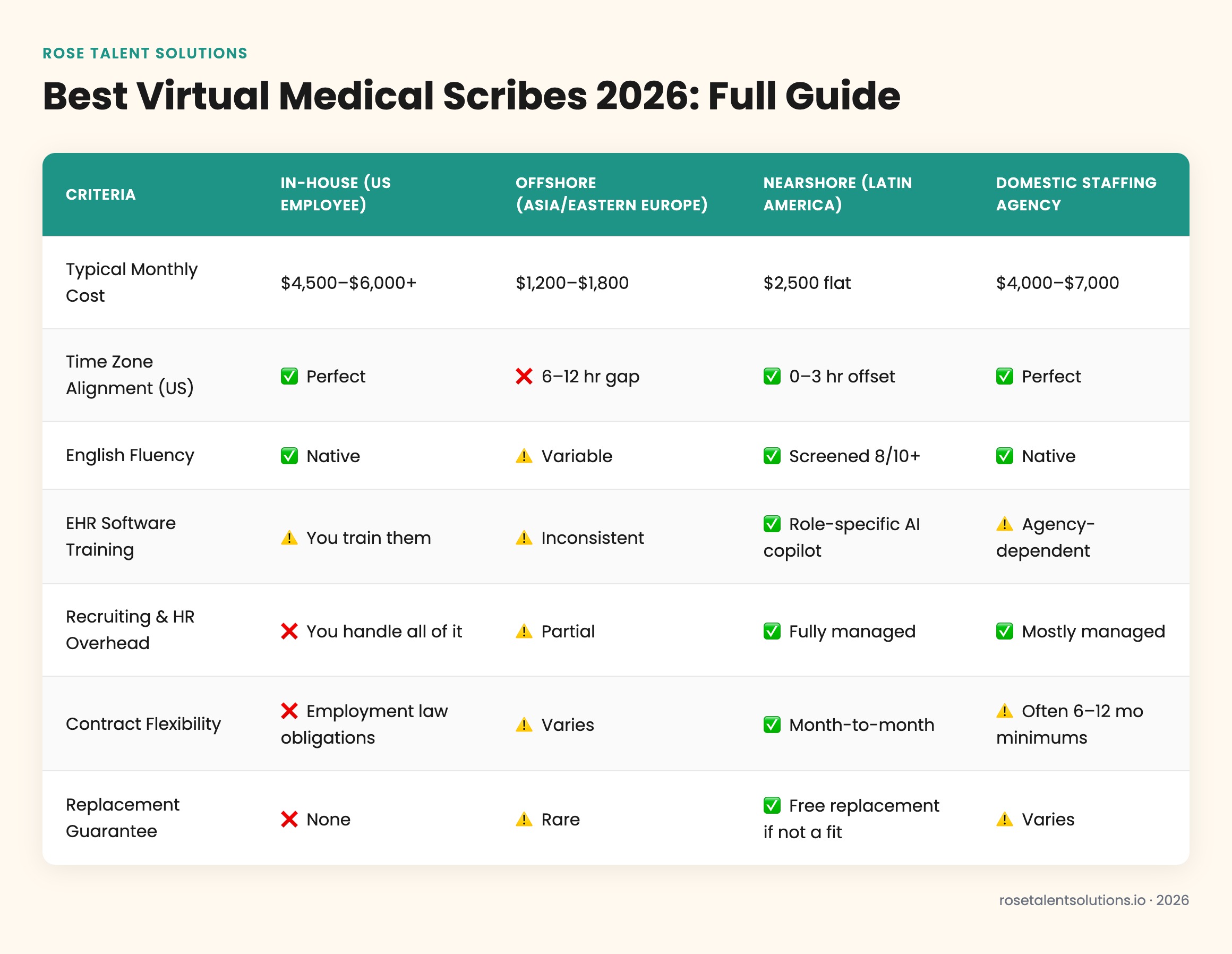
There are four delivery models for virtual medical scribes: in-house employees, domestic staffing agencies, offshore outsourcing firms, and nearshore staffing agencies. Each sits in a different position on the cost-quality-reliability matrix. The table below makes that comparison concrete.
| Criteria | In-House (US Employee) | Offshore (Asia/Eastern Europe) | Nearshore (Latin America) | Domestic Staffing Agency |
|---|---|---|---|---|
| Typical Monthly Cost | $4,500–$6,000+ | $1,200–$1,800 | $2,500 flat | $4,000–$7,000 |
| Time Zone Alignment (US) | ✅ Perfect | ❌ 6–12 hr gap | ✅ 0–3 hr offset | ✅ Perfect |
| English Fluency | ✅ Native | ⚠️ Variable | ✅ Screened 8/10+ | ✅ Native |
| EHR Software Training | ⚠️ You train them | ⚠️ Inconsistent | ✅ Role-specific AI copilot | ⚠️ Agency-dependent |
| Recruiting & HR Overhead | ❌ You handle all of it | ⚠️ Partial | ✅ Fully managed | ✅ Mostly managed |
| Contract Flexibility | ❌ Employment law obligations | ⚠️ Varies | ✅ Month-to-month | ⚠️ Often 6–12 mo minimums |
| Replacement Guarantee | ❌ None | ⚠️ Rare | ✅ Free replacement if not a fit | ⚠️ Varies |
What the Best Virtual Medical Scribes Are Trained On in 2026
EHR fluency is the single biggest performance differentiator between a good virtual scribe and a great one. The most widely used platforms in US ambulatory care — Epic, Cerner, Athenahealth, eClinicalWorks, and Kareo — each have distinct documentation structures, templating logic, and order entry workflows. A scribe who knows Epic inside out will be useless in an Athenahealth-first practice without retraining.
This is where Rose Talent Solutions' AI copilot advantage becomes a concrete differentiator. Every team member placed through Rose ships with a role-specific AI copilot trained on the software your clinic actually uses. For a virtual medical scribe, that means EHR-specific prompting support, documentation templates aligned to your specialty, and real-time guidance — not a generic "virtual assistant" who Googles the EHR manual on day one.
"The scribes who perform best aren't just fast typists — they understand clinical context well enough to know when a physician's shorthand needs to be expanded into compliant documentation language." — Barb Zarowitz, PharmD, Clinical Documentation Specialist, HealthLeaders Media (2023)
Specialty matters too. A family medicine scribe workflow looks very different from a cardiology or orthopedics scribe workflow. The best virtual medical scribes have specialty-specific training — not just generic clinical documentation exposure. When evaluating providers, ask specifically: "Has this scribe documented for my specialty before, and in my EHR?"
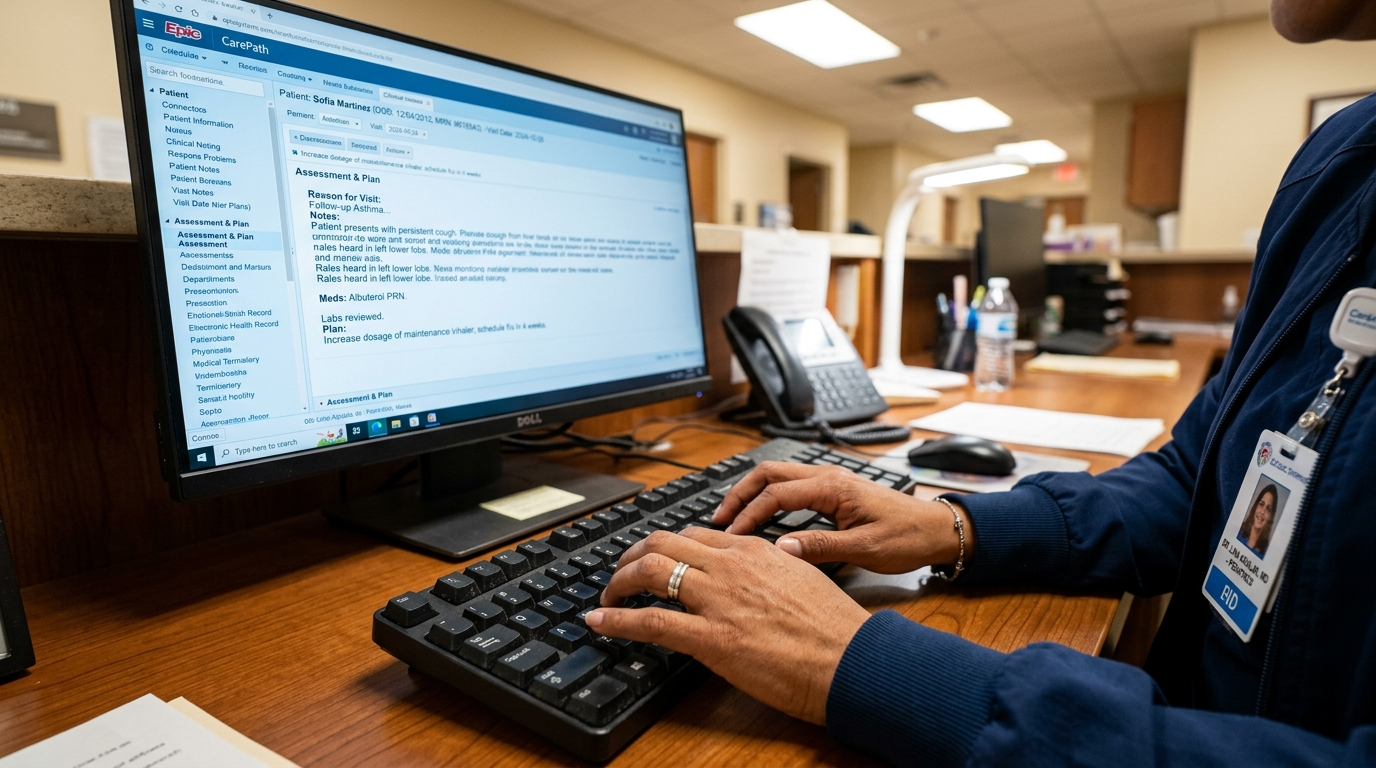
The hidden cost of a generic virtual scribe isn't their hourly rate — it's the physician time spent correcting, amending, and signing off on notes that weren't accurate enough the first time. Specialty-trained scribes reduce amendment rates significantly, which protects both billing accuracy and compliance.
For practices that also need support with revenue cycle tasks, it's worth knowing that well-documented notes directly upstream of billing create cleaner claims. Our post on the best medical billing virtual assistant services in 2026 covers how to pair scribe documentation with billing support for a complete revenue cycle operation.
How Much Do the Best Virtual Medical Scribes Cost in 2026?
Pricing for virtual medical scribes varies wildly depending on the delivery model. Domestic in-person scribes employed through a hospital or large practice group can cost $35,000–$55,000 annually when you factor in wages, benefits, and administrative overhead, according to SHRM's benefits cost benchmarks (2024). Per-encounter scribe services charge $1.50–$4.00 per note, which adds up fast for high-volume practices.
The nearshore model flips the math. At $2,500/month flat through Rose Talent Solutions, you get a full-time (40 hours/week) dedicated scribe with recruiting, vetting, payroll, HR, and ongoing management included. That's roughly $15/hour all-in for a trained, English-fluent, EHR-ready professional working your exact hours — with no long-term contract and a free replacement if the fit isn't right.
Multi-specialty group practices and solo practitioners alike use this model. For smaller specialty clinics — chiropractic, for example — the same economics apply. If you're curious how this plays out in a chiropractic setting, our overview of virtual assistants for chiropractic offices breaks down the workflows in detail.
The Medical Group Management Association (MGMA) (2023) reports that the average physician loses $50,000–$150,000 in annual revenue potential due to documentation-related inefficiency — time that could be spent on additional patient encounters. Against that number, $2,500/month is not an expense; it's an investment with a calculable return.
Discovery Call
Rose's team learns your specialty, EHR, patient volume, and hours of coverage needed — typically a 20-minute conversation.
Candidate Matching
Rose presents pre-vetted nearshore scribes with matching EHR experience and specialty background — usually within 5–7 business days.
AI Copilot Onboarding
Your scribe is paired with a role-specific AI copilot configured for your EHR and specialty workflows before their first day.
Live Documentation Begins
Your scribe joins encounters — live or recorded — and enters notes in real time. You sign and go home on time.
Ongoing Management
Rose handles HR, performance monitoring, and any replacement needs. You have one point of contact, not an HR department to manage.
How to Evaluate and Hire the Best Virtual Medical Scribe in 2026
The evaluation process should mirror how you'd hire a clinical staff member — structured, documented, and focused on role-specific competency rather than general impressions. Here is what to test in any scribe interview or trial period.
EHR live test: Give the candidate a sample encounter recording (de-identified) and ask them to document it in your EHR. Grade accuracy, completeness, and time-to-completion. This single exercise eliminates 80% of weak candidates immediately.
Medical terminology depth: Ask them to explain the difference between a chief complaint and the history of present illness, or to define common abbreviations used in your specialty. Scribes who have memorized terminology without understanding it will fail in complex encounters.
Real-time listening speed: Physician encounters are fast. A scribe who can only document from recordings won't help you if you need live chart closure. Test both modes.
HIPAA knowledge: Every virtual scribe must demonstrate understanding of patient privacy obligations, secure connection requirements, and what happens when a breach occurs. This isn't optional.
According to Gallup's employee engagement research (2023), workers who receive structured onboarding are 69% more likely to remain with an organization for three years. The same principle applies to virtual scribes — the practices that invest in structured onboarding week one see dramatically lower turnover and faster performance ramp-ups.
Why Nearshore Scribes Win
- Work US hours without overnight fatigue
- English fluency screened at 8/10+ before placement
- $2,500/month flat — all-in, no hidden fees
- EHR-specific AI copilot included at no extra cost
- Month-to-month terms, cancel with 30 days written notice
- Free replacement if the scribe isn't a fit
Where to Be Cautious
- Offshore scribes often work overnight shifts — fatigue affects accuracy
- Generic VA platforms rarely vet for medical terminology depth
- Per-encounter pricing models become expensive at scale
- Long-term contracts with domestic agencies lock you in before trust is established
Ready to stop charting after hours? Visit Rose's get-started page to match with a nearshore virtual medical scribe in as little as one week — no long-term contract required.