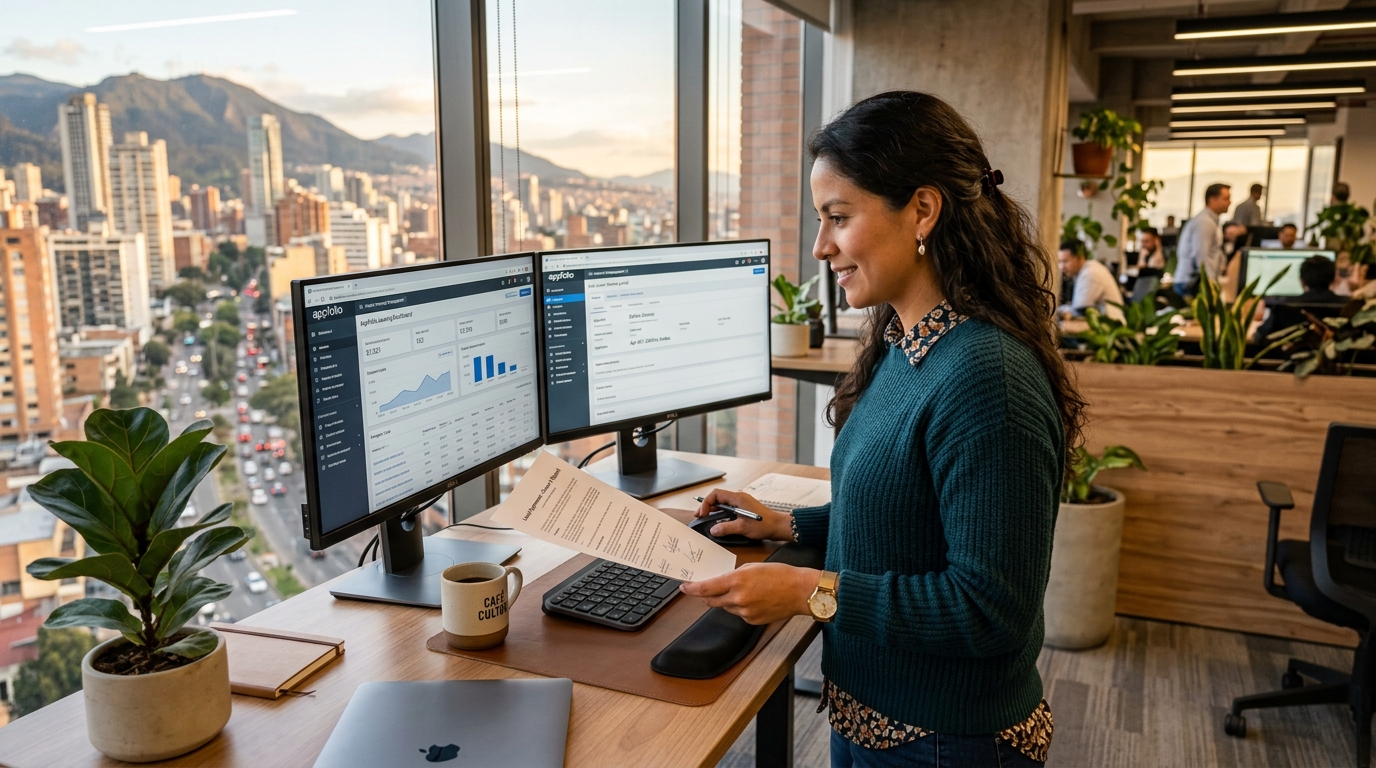
Why Hiring a Nearshore Property Management Assistant in 2026 Makes Financial Sense
Nearshore property management assistants — based in Latin America, working your US business hours, fluent in English — are now the default staffing move for PM operators who want to scale without ballooning overhead. The math is hard to argue with: the median annual salary for an in-office assistant property manager in the United States sits at roughly $47,000–$52,000 before you add payroll taxes, benefits, PTO, and recruiting fees. A nearshore virtual assistant through Rose Talent Solutions costs $2,500/month flat, all-in — that's $30,000/year with recruiting, vetting, payroll, HR, and ongoing management included.
The staffing gap in property management is real. According to Buildium's State of the Property Management Industry Report (2024), 60% of property management companies say hiring and retaining staff is their single biggest operational challenge. If you've tried posting on Indeed for a leasing coordinator lately, you already know the pipeline is thin and the turnover is brutal. This guide breaks down exactly what a property management assistant does, what they cost, and how to find the right one — fast.
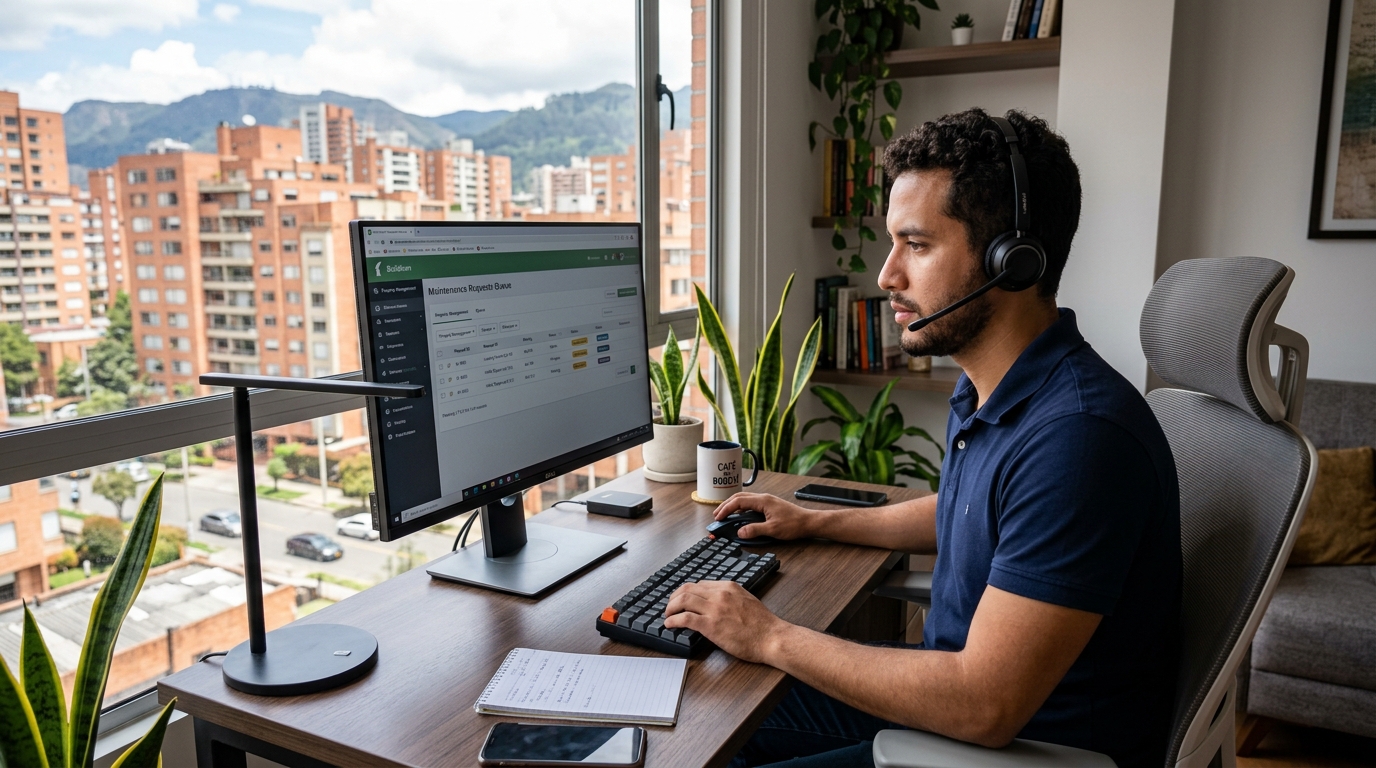
What Does an Assistant to a Property Manager Do in 2026?
A property management assistant is the operational backbone of a PM business. The role sits between the property manager — who handles owner relationships, strategy, and high-stakes decisions — and the day-to-day execution layer of tenant communication, maintenance coordination, and leasing administration. In a well-structured PM office, the assistant handles everything that is repeatable, time-sensitive, and document-heavy.
Here is a realistic breakdown of daily responsibilities:
- Tenant communication: Answering inbound calls and emails about lease terms, maintenance status, and payment questions. This alone can consume 3–4 hours per day on a 200+ unit portfolio.
- Maintenance coordination: Logging work orders in AppFolio or Buildium, dispatching vendors, tracking completion, and closing tickets.
- Leasing support: Scheduling showings, processing rental applications, running background and credit checks, and preparing lease documents.
- Rent collection follow-up: Sending payment reminders, posting payments, and flagging delinquencies to the property manager.
- Bookkeeping tasks: Reconciling owner statements, categorizing expenses, and preparing reports — often in QuickBooks or directly inside the PM software. (If your assistant needs dedicated bookkeeping support, see how Rose structures bookkeeping and accounting virtual assistants for PM companies.)
- Document management: Filing signed leases, inspection reports, vendor certificates of insurance, and move-in/move-out documentation.
- Vacancy marketing: Syndicating listings to Zillow, Apartments.com, and Facebook Marketplace; updating availability on the PM software.
The best property management assistants are not just task-takers — they are proactive communicators who flag issues before they escalate. According to the U.S. Bureau of Labor Statistics Occupational Outlook Handbook (2024), property, real estate, and community association manager roles are projected to grow 3% through 2032, a pace that reflects steady demand for support staff in the sector.
Hire Property Management Assistant Salary: What the Numbers Say in 2026
One of the most common searches when evaluating this role is "hire property management assistant salary" — because the cost decision drives everything else. Let's look at the full picture.
When you factor in the true cost of a W-2 hire — employer payroll taxes (7.65% FICA), health insurance contributions ($6,000–$8,000/year), PTO accrual, workers' comp, and recruiting fees (typically 15–20% of first-year salary) — a $47,000 base salary becomes a $62,000–$70,000 annual expense. The Society for Human Resource Management (SHRM) consistently benchmarks total employee cost at 1.25–1.4x base salary for administrative roles.
A nearshore VA at $2,500/month is all-in pricing — no recruiting fee, no benefits administration, no payroll taxes, no replacement cost if the fit is wrong. Rose replaces any team member who isn't working out at no additional charge.
For context on local market salaries: if you're searching "hire property management assistant near me" in a mid-tier market like Tulsa, Oklahoma, Glassdoor and Indeed data show assistant property manager salaries clustering between $38,000 and $48,000 annually, according to Glassdoor (2024). Tulsa's cost of living is below the national average, but that wage compression also means fewer candidates — qualified applicants in smaller markets often have multiple competing offers. The nearshore model sidesteps the local talent scarcity entirely.
How Nearshore VAs Compare to Offshore and Onshore Hires for Property Management
Not all virtual assistants are created equal. The term "VA" gets applied to everything from a $5/hour task worker in Southeast Asia to a $35/hour US-based contractor. For property management specifically — where real-time tenant communication and same-timezone vendor coordination are non-negotiable — the staffing model you choose has direct operational consequences.
| Staffing Model | Monthly Cost | Timezone Overlap | English Proficiency | PM Software Training | Recruiting Included |
|---|---|---|---|---|---|
| Onshore W-2 (US) | $4,500–$6,000+ | Full | Native | Varies by candidate | No (pay recruiter separately) |
| Offshore VA (Philippines/India) | $800–$1,500 | 6–12 hrs behind | Variable (4–7/10 typical) | Rarely pre-trained | Sometimes |
| Nearshore VA via Rose | $2,500 flat | Full US hours | 8/10+ screened | Role-specific AI copilot included | Yes — fully managed |
| US-based Freelance VA | $2,800–$4,000 | Full | Native | Varies | No |
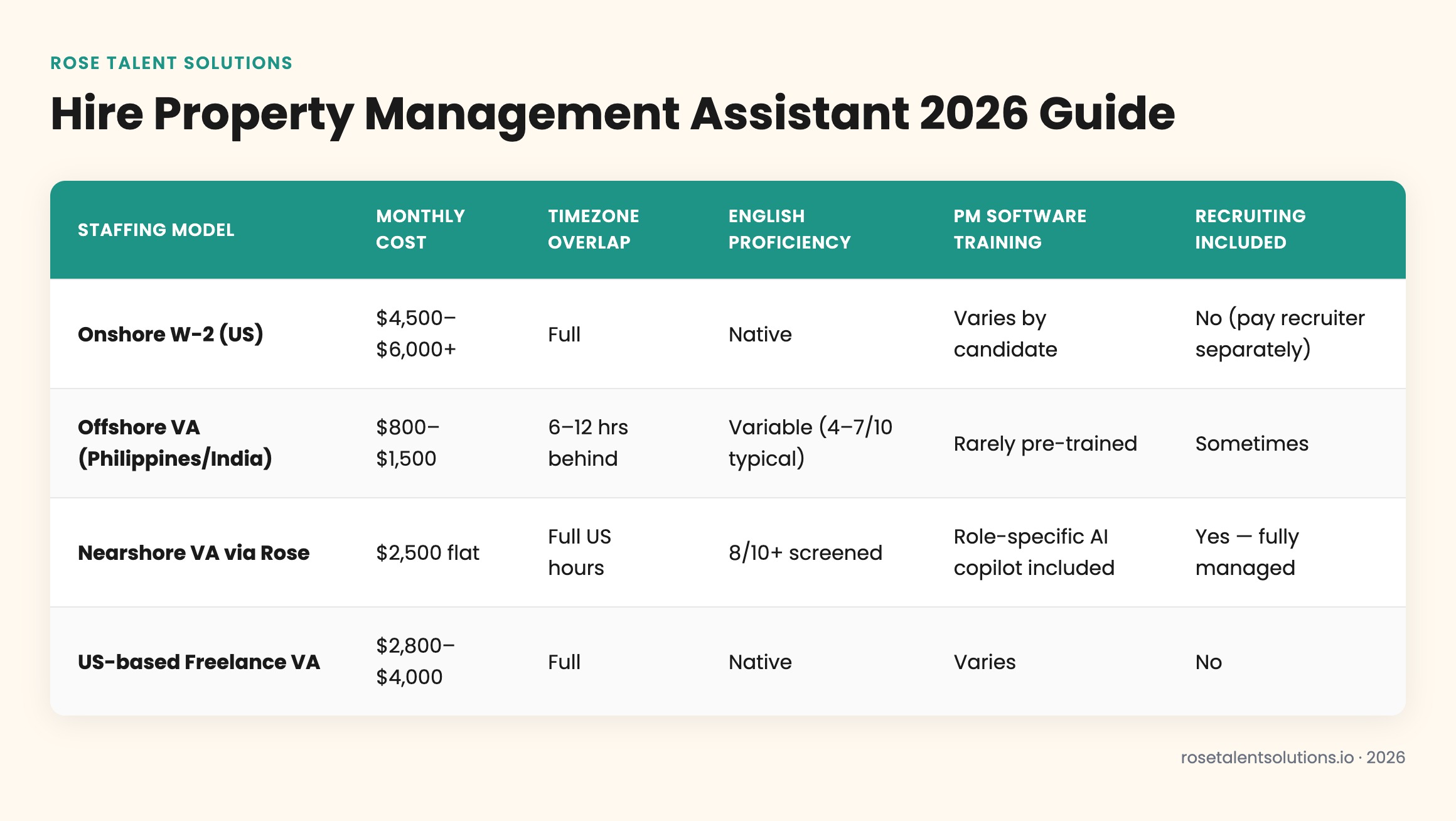
The offshore model looks attractive on price until you pressure-test it against PM realities. A tenant calling about a burst pipe at 9am EST needs a resolution in hours, not a batched response at midnight. According to the National Association of Realtors (2023), 68% of renters say responsiveness is the top factor in their satisfaction with property management. A 6–12 hour timezone gap structurally undermines that score.
Every Rose team member also ships with a role-specific AI copilot trained on their primary software — AppFolio, Buildium, Yardi, QuickBooks, and others. That means your VA arrives knowing the platform, not learning it on your dime.
The hidden cost of offshore VAs isn't the hourly rate — it's the 6–12 hour timezone gap that turns every urgent tenant issue into an overnight delay, and the software ramp time you absorb because the VA has never touched your PM platform before day one.
How the Rose Hiring Process Works: From Brief to Day One in 2026
One of the most common hesitations PM operators have about virtual staffing is the "how do I actually get started?" question. The Rose process is built specifically to remove that friction. Here is the exact sequence:
Role Discovery Call
You spend 30 minutes with a Rose placement specialist mapping your portfolio size, software stack, and the specific tasks you need off your plate. No generic intake form — this is a real conversation about your operation.
Candidate Matching
Rose sources from a pre-vetted pool of Latin America-based candidates who have already cleared English proficiency (8/10+ screen), background checks, and skills assessments for your PM software. You typically see 2–3 matched profiles within 5–7 business days.
Interview and Selection
You interview your top pick — same as you would any hire. You make the call. Rose handles the offer, onboarding paperwork, and payroll setup.
AI Copilot Activation
Before day one, your VA's role-specific AI copilot is configured for your software environment — AppFolio workflows, Buildium work order queues, or whatever your stack requires. This cuts ramp time from weeks to days.
Ongoing Management
Rose handles HR, payroll, and performance oversight. If the placement isn't the right fit, Rose replaces the team member at no additional cost — no difficult conversations, no recruiting fees, no starting over from scratch.
The engagement runs month-to-month with no long-term contract. Cancel with 30 days written notice. For a deeper look at how Rose structures property management virtual staffing specifically, see the property management virtual assistant service page.

Nearshore vs. Local Hire: Pros and Cons for Property Management Operators
There are legitimate scenarios where a local, in-office hire makes more sense — particularly if your operation requires physical presence for inspections, key handoffs, or walk-in tenant interactions. But for the majority of PM administrative work, the tasks are fully remote-executable. According to McKinsey Global Institute (2021), over 70% of administrative and coordination tasks in real estate services can be performed remotely without productivity loss. That number has only strengthened as PM software has become more cloud-native.
Nearshore VA via Rose
- $2,500/month all-in — roughly half the true cost of a US W-2 hire
- Full US business hours, real-time communication
- Pre-trained on AppFolio, Buildium, Yardi, QuickBooks
- No long-term contract — month-to-month with 30-day cancellation
- Free replacement if placement isn't a fit
- Recruiting, HR, payroll, and management handled by Rose
Local In-Office Hire
- $62,000–$70,000/year true cost after benefits and taxes
- 15–20% recruiting fee if using a staffing agency
- 2–4 month time-to-hire in tight local markets
- Turnover risk — PM admin roles see high churn at the junior level
- Software training is your responsibility and your cost
- No replacement guarantee — rehire cycle starts from zero
The decision comes down to one honest question: how many of your assistant's daily tasks actually require physical presence? For most PM companies operating 50–500 units, the answer is fewer than you think. Maintenance vendors don't need the assistant on-site — they need a work order logged and a callback confirmed. Prospective tenants don't need an in-person tour coordinator — they need someone who answers the phone before they call the next listing.
According to the National Multifamily Housing Council (NMHC) (2024), 78% of apartment operators now use cloud-based property management software as their primary operational platform — meaning the entire workflow your assistant needs to execute lives in a browser, accessible from anywhere in the Western Hemisphere.